9 Best Robotic Pool Cleaners for Algae (November 2026)
The best robotic pool cleaners for algae include the Dolphin Automatic Robotic Pool Vacuum Cleaner for active wall scrubbing, the iGarden K Series Pool Cleaner for adjustable cleaning zones, and the Aiper Scuba S1 2026 Robotic Pool Cleaner for dual-stage fine filtration.
On this page (6 sections)
The best robotic pool cleaner for algae pairs active brushing with filtration fine enough for loosened debris. The AIPER Cordless Robotic Pool Cleaner lists a 3μm filter and dual brushes, while the Dolphin Automatic Robotic Pool Vacuum Cleaner offers active scrubbing and wall climbing.
Robots collect debris, but they don't kill algae or correct water conditions. Brush affected surfaces first, run the cleaner, and maintain the pool's water care routine.
For a broader shortlist, see our best robotic pool cleaners. If you're deciding between a robot and another cleaning tool, this guide to how a robotic cleaner differs from a surface skimmer explains the jobs each one handles.
Our picks at a glance
-
1
 Best for active wall scrubbing
Dolphin Automatic Robotic Pool Vacuum Cleaner
9.7/10 our score
See it on Amazon -
2

-
3
 Best for dual-stage fine filtration
Aiper Scuba S1 2026 Robotic Pool Cleaner
9.5/10 our score
See it on Amazon
- 4
 Check it
WYBOT B1 Cordless Robotic Pool Vacuum Pool
Best for varied floor layouts - 5
 Check it
Letexpool S1 Pro Cordless Robotic Pool Cleaner
Best for above-ground floor debris - 6
 Check it
(2026 Upgrade) TALOSBO C1 Wall Climbing Robotic
Best for wall and waterline passes - 7
 Check it
(2026 New) AIPER Cordless Robotic Pool Cleaner
Best for the finest stated filter - 8
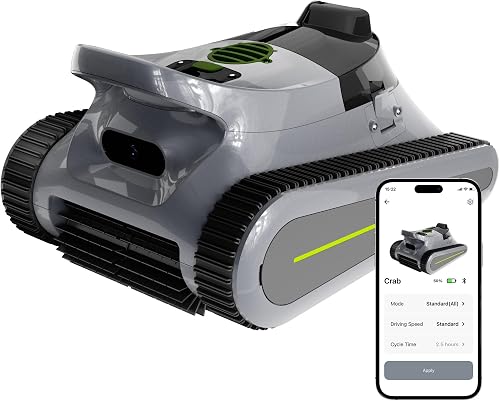 Check it
Nepturox Cordless Robotic Pool Cleaner
Best for three targeted modes - 9
 Check it
CZYBYTE Cordless Robotic Pool Vacuum Cleaner
Best for a large top-loading basket
How we chose robotic pool cleaners for algae
The strongest algae-focused options combine surface contact with filtration that can catch the debris brushing releases. We compared cleaning modes, brush features, filter details, and whether each unit can reach walls or the waterline.
An algae cleaner for a pool is most useful after you loosen the growth from the surface. A filter with a stated micron size makes particle capture easier to compare, while a model without one may still suit larger debris, but gives less detail about fine filtration.
Scores reflect how well the listed features match algae cleanup needs, including brushing, filtration, and coverage. Our score weighs specs and features against what you're shopping for.
If corded power fits your pool and cleaning routine, compare our best corded pool cleaners for inground pools. For more electric options, see the best electric pool cleaner guide.
| Product | Best for | Pool type | Cleaning | Filter access | Our score |
|---|---|---|---|---|---|
| Dolphin Automatic Robotic Pool Vacuum Cleaner | active wall scrubbing | In-ground pools up to 40 ft long | Floor and walls | Top-load basket | 9.7 |
| iGarden K Series Pool Cleaner | adjustable cleaning zones | 9.6 | |||
| Aiper Scuba S1 2026 Robotic Pool Cleaner | dual-stage fine filtration | 9.5 | |||
| WYBOT B1 Cordless Robotic Pool Vacuum Pool | varied floor layouts | 9.4 | |||
| Letexpool S1 Pro Cordless Robotic Pool Cleaner | above-ground floor debris | Above-ground pools | 9.3 | ||
| (2026 Upgrade) TALOSBO C1 Wall Climbing Robotic | wall and waterline passes | 9.1 | |||
| (2026 New) AIPER Cordless Robotic Pool Cleaner | the finest stated filter | 9.1 | |||
| Nepturox Cordless Robotic Pool Cleaner | three targeted modes | 8.6 | |||
| CZYBYTE Cordless Robotic Pool Vacuum Cleaner | a large top-loading basket | 8.4 |
Best robotic pool cleaners for algae by use
The best choice depends on where algae forms and whether you need to capture fine particles or mainly collect loosened debris. These picks are ordered by score, with the top-rated options first.
Dolphin Automatic Robotic Pool Vacuum Cleaner: Best for active wall scrubbing
- Active scrubbing brush
- Wall climbing
- Top-load filter basket
- Plug-and-play operation
An active scrubbing brush and wall-climbing design suit pools where algae film needs to be loosened before debris reaches the filter. The top-load basket makes collected material easier to remove.
Pros
- Active scrubbing brush
- Climbs walls
- Easy-access top-load basket
Cons
- Corded plug-and-play design
- No fine-mesh rating specified
The Dolphin Automatic Robotic Pool Vacuum Cleaner is the top pick for active scrubbing on pool walls and floors. Its active scrubbing brush is designed to loosen debris, while the wall-climbing design can reach surfaces where algae film often appears.
The cleaner has a top-load filter basket, which is convenient when you need to remove collected algae and rinse the filter. Dolphin describes it as suitable for in-ground pools up to 40 ft in length and says it completes a cleaning cycle in 2 hours.
It uses plug-and-play operation, so it needs a power connection and cord management around the pool deck. It has no stated filter micron rating, so buyers focused on very fine suspended material may prefer one of the 3μm options below.
Choose it if brushing and wall coverage matter more than a cordless setup. For an explanation of how suction and filtration work in robotic models, read how a robotic pool cleaner filters water.
iGarden K Series Pool Cleaner: Best for adjustable cleaning zones
- Floor, wall, and waterline modes
- 180μm mesh
- Dual active rubber brushes
- Up to 7 hours floor-only runtime
Four modes let you target the floor, walls, and waterline based on where algae appears. Its dual active brushes loosen surface debris, while the 180μm mesh captures fine debris alongside larger leaves.
Pros
- Four selectable cleaning modes
- Dual active brushes
- 4 L basket
Cons
- 180μm mesh is less fine than the 3-micron options here
- App connection works only on land
The iGarden K Series stands out for its four cleaning modes and dual active rubber brushes. You can select floor-only, wall and waterline, full coverage, or wall and waterline followed by the floor, depending on where algae has accumulated.
Its 180μm mesh is designed to capture large leaves and fine debris. That is useful for collecting loosened material, though it is not as fine as a 3μm filter when the main concern is very small particles.
The 4 L basket gives you room for a cleaning session before emptying. The cordless cleaner is rated for up to 7 hours in floor-only mode or 3.75 hours from floor to wall, and its app connection works only when the unit is on land.
Pick it if you want to direct cleaning to a particular zone and prefer a cordless robot. Check the filter often after brushing algae, since a loaded basket can reduce effective debris collection.
Aiper Scuba S1 2026 Robotic Pool Cleaner: Best for dual-stage fine filtration
- Replaceable 3-micron filter
- 180-micron standard filter
- Floor, walls, waterline, and shallow areas
- 11 high-precision sensors
Its replaceable 3-micron filter is designed to capture fine dust and sand after brushing loosens residue. Multiple cleaning zones help cover algae-prone areas beyond the pool floor.
Pros
- Replaceable 3-micron filter
- Four cleaning zones
- Adaptive navigation
Cons
- Runtime varies by mode
- App support is required for Eco Mode
The Aiper Scuba S1 2026 pairs a replaceable 3-micron filter with a 180-micron standard filter. That double filtration design makes it one of the clearest choices for fine debris loosened during brushing.
It covers the floor, walls, waterline, and shallow areas over 12 in. Eleven high-precision sensors and dual-path algorithms support its navigation, while the app provides Eco Mode with up to 270 minutes of runtime.
The other modes are listed for up to 180 minutes. Since runtime varies with mode, plan for the pool's shape and the areas that need cleaning rather than assuming one cycle duration applies to every setting.
Choose this model if fine filtration and multiple pool zones are your main needs. Replaceable fine filters may need more frequent cleaning when you are collecting heavy algae debris.
WYBOT B1 Cordless Robotic Pool Vacuum Pool: Best for varied floor layouts
- Five cleaning modes
- Bottom roller brushes
- Dual front side brushes
- Up to 120 minutes runtime
The roller and front side brushes help work across uneven floors, edges, and corners where algae may gather. Its five modes let you select floor or wall cleaning to match the affected area.
Pros
- Five selectable modes
- Brushes for edges and corners
- 6 L capacity
Cons
- No filter micron rating specified
- Up to 120 minutes per charge
The WYBOT B1 offers five cleaning modes and brushes intended to help with edges and corners. Its bottom roller brushes improve traction, while dual front side brushes are designed for more thorough edge cleaning.
The cleaner captures leaves, sand, dirt, hair, and fine debris, but it does not specify a filter micron rating. That makes it a practical option for routine debris pickup after brushing, though there is less information to compare for very small algae particles.
The rechargeable battery supports up to 120 minutes of cleaning, and its 6 L capacity provides substantial room for collected material. App control lets you choose modes and manage schedules.
Choose the WYBOT when floor layout and edge coverage matter. If algae growth concentrates at the waterline, confirm the selected mode covers that area before starting a cleaning cycle.
Letexpool S1 Pro Cordless Robotic Pool Cleaner: Best for above-ground floor debris
- Dual-motor floor cleaning
- Up to 130 minutes runtime
- Large-capacity debris basket
- Auto parking
This cordless cleaner is aimed at above-ground pool floors and collects common debris such as dirt, sand, and leaves. Its large basket can hold more material between cleanouts, though no fine-filter rating is specified.
Pros
- Up to 130 minutes runtime
- Large debris basket
- Simple one-button operation
Cons
- Not for in-ground pools with a bottom main drain
- No filter micron rating specified
The Letexpool S1 Pro is designed for above-ground pool floors and collects leaves, dirt, sand, and small twigs. Its dual-motor setup and large debris basket suit everyday floor cleanup after algae has been brushed loose.
The cleaner runs for up to 130 minutes per charge and parks near the pool wall when the cycle ends or the battery runs low. That makes retrieval simpler, but its stated use is limited to above-ground pools and it is not for in-ground pools with a bottom main drain.
No filter micron size is specified, so this is a better fit for collecting common debris than for shoppers who want a stated fine-particle threshold. Empty the basket as needed during algae cleanup.
Choose it for an above-ground pool where cordless floor cleaning and a larger basket matter. Verify pool compatibility, especially the main-drain restriction, before choosing it.
(2026 Upgrade) TALOSBO C1 Wall Climbing Robotic: Best for wall and waterline passes
- Wall and waterline scrubbing
- Dual-layer filtration
- Dual roller brushes
- 7 app cleaning modes
Dual brushes and wall climbing suit algae that clings above the floor, while dual-layer filtration handles large debris and fine particles. Seven modes give you options for different pool shapes.
Pros
- Scrubs floors, walls, and waterline
- Dual-layer filtration
- Seven cleaning modes
Cons
- No micron rating specified
- Runtime depends on cleaning mode
The TALOSBO C1 combines dual roller brushes with cleaning for floors, walls, and the waterline. Its wall-climbing design suits algae that clings above the floor, while the dual-layer filtration is intended to capture large debris and fine particles.
Seven app-controlled modes let you tailor cleaning to the pool shape. TALOSBO gives a runtime of up to 180 minutes in Eco Mode, while noting that Full Pool Mode runs about 90 to 100 minutes in its product guidance.
The filtration has no stated micron rating, so the phrase “fine particles” does not give a precise comparison against the 3μm options. Clear the basket when it fills to keep the robot moving and climbing as intended.
Choose it if wall and waterline scrubbing are priorities and you want multiple modes. It can climb steps, but its guidance says it does not clean narrow step surfaces well.
(2026 New) AIPER Cordless Robotic Pool Cleaner: Best for the finest stated filter
- 3μm MicroMesh Ultra-Fine Filter
- Dual front PVC brushes
- Floor, wall, and waterline cleaning
- Dual jets
The 3μm filter and dual front brushes make this a strong match for collecting fine debris loosened from pool surfaces. It also reaches 2 in above the waterline for horizontal cleaning.
Pros
- 3μm filtration
- Dual front brushes
- Wireless charging dock
Cons
- No runtime figure in the product description
- No shallow-area mode specified
The AIPER Cordless Robotic Pool Cleaner has the finest stated filter in this roundup at 3μm. Its MicroMesh Ultra-Fine Filter is designed for small particles, and dual front PVC brushes address stubborn wall stains.
The robot cleans the floor, walls, and waterline, reaching 2 in above the waterline for horizontal cleaning. A wireless charging dock supports charging and storage, with a stated 4 hours for a full charge.
The product description highlights fine sand, pebbles, and algae among the debris it targets. That can make it a strong algae cleanup match, but the information here does not give a runtime figure to compare with other cordless options.
Pick it if fine filtration is your main priority and your pool needs wall and waterline passes. You still need to brush surfaces and manage water treatment separately.
Nepturox Cordless Robotic Pool Cleaner: Best for three targeted modes
- Floor, wall, or all-coverage modes
- 250μm filtration basket
- 180-minute runtime
- Smart mapping
Choose floor, wall, or all-coverage cleaning to focus on the area where algae is collecting. The 250μm basket captures fine silt and larger debris, though it is not as fine as the 3μm filters.
Pros
- Three direct cleaning modes
- Up to 180 minutes runtime
- Smart mapping
Cons
- 250μm mesh is coarser than the fine filters here
- No active brush details specified
The Nepturox Cordless Robotic Pool Cleaner offers three direct modes: floor, wall, or all coverage. That makes it easy to focus a cleaning session where algae debris has been loosened.
Its 250μm filtration basket is specified for fine silt and larger debris. This mesh is coarser than the 150μm, 180μm, and 3μm filters in this roundup, so it is better suited to larger loosened material than the finest particles.
The cleaner is rated for up to 180 minutes of runtime and uses smart mapping to reduce duplicate paths. Its brush details are not specified, so compare it with options that clearly name active brushes if algae is firmly attached to walls.
Choose it for mode selection and long stated runtime. Pair it with careful manual brushing when growth is stuck to surfaces.
CZYBYTE Cordless Robotic Pool Vacuum Cleaner: Best for a large top-loading basket
- 4 L top-loading basket
- 150μm mesh
- Three cleaning modes
- S-shaped route planning
A 4 L basket with 150μm mesh gives this cleaner room for collected leaves and smaller particles from floors, walls, and the waterline. The three modes help adapt cleaning to the affected sections.
Pros
- 4 L top-loading basket
- 150μm mesh
- Three cleaning modes
Cons
- No specific runtime stated in the product description
- Requires app setup for app controls
The CZYBYTE cordless cleaner has a 4 L top-loading basket fitted with 150μm mesh. Its three modes cover the floor, walls, and waterline, and S-shaped route planning supports pool coverage.
The basket size is useful when brushing releases a lot of material, since it can hold more debris before emptying. Its mesh captures particles and leaves, but it is not as fine as the 3μm options for small suspended debris.
The product description includes app support and automatic parking at the water surface when cleaning finishes or the battery runs low. It also instructs users to cover the charging port before submerging the unit.
Choose it for a larger basket and multiple cleaning zones. Follow charging-port instructions and check the filter after the first pass through algae debris.
Which filter should a pool cleaner use for algae?
A finer stated filter can capture smaller loosened particles, while a larger mesh can be suitable for leaves and heavier debris. The Aiper Scuba S1 2026 and AIPER Cordless Robotic Pool Cleaner specify 3μm filtration, the CZYBYTE has 150μm mesh, and the Nepturox has a 250μm basket.
Filter micron figures are not the only factor. Brushing, basket capacity, cleaning zones, and how often you clear the filter affect whether the robot can complete its job.
For thick algae, brush first and remove heavy debris before running a robot. This keeps the cleaner focused on collecting loosened material rather than trying to dislodge growth by suction alone.
Do robotic pool cleaners remove algae from walls?
Robotic cleaners with wall-climbing and active brushes can loosen and collect algae debris from pool walls. The Dolphin, iGarden, TALOSBO, and AIPER models in this group describe wall cleaning or brushes.
A wall-capable robot still may not scrub every narrow step or stubborn patch. Brush corners and steps by hand, then run the cleaner to collect the debris.
If buildup is along a fiberglass waterline, see our guide to the best fiberglass pool waterline cleaner. For filter maintenance after heavy cleanup, compare the best pool filter cleaner.
How should you use a pool cleaner for algae?
Brush algae from the floor and walls, remove large debris, then run the cleaner with an empty filter basket. After the cycle, inspect the filter and rinse it before another pass if it is clogged.
Robotic cleaning helps collect loosened algae debris, but it is one part of pool maintenance. Use your normal water testing and treatment routine to address algae in the water and reduce the chance it returns.
Choose the model by the surfaces you need to clean and the filter detail that suits your debris. A corded robot may fit a regular in-ground cleaning routine, while a cordless model gives you more flexibility around the pool deck.
Which robotic pool cleaner is best for algae?
Choose the AIPER Cordless Robotic Pool Cleaner if you want the finest stated filtration, or the Dolphin if active wall scrubbing is your priority. The Aiper Scuba S1 2026 is a strong fit when you want 3-micron filtration with floor, wall, waterline, and shallow-area cleaning.
For algae that clings to surfaces, prioritize brushing and wall coverage, then select filtration based on how fine the loosened debris is. A robotic pool cleaner for algae can collect debris, while brushing and water care remain part of the job.
Our top 3 picks at a glance
-
1
Best for active wall scrubbing
Dolphin Automatic Robotic Pool Vacuum Cleaner
9.7/10 our score
See it on Amazon -
2
-
3
Best for dual-stage fine filtration
Aiper Scuba S1 2026 Robotic Pool Cleaner
9.5/10 our score
See it on Amazon
Frequently asked questions
Can a robotic pool cleaner remove algae?
A robotic cleaner can collect algae debris after brushing loosens it from pool surfaces. Choose a model with active brushes and filtration suited to the particles you need to capture.
A cleaner does not treat the water or correct the cause of algae growth.
Brush and filter alongside your normal water-care routine.
What filter size is best for algae debris?
A finer filter can catch smaller particles, but the best choice depends on whether algae has been loosened into fine debris or larger clumps. The Aiper Scuba S1 2026 and AIPER Cordless Robotic Pool Cleaner list 3-micron filtration.
Check and clean the filter often when collecting heavy debris.
Should I brush algae before using a robotic pool cleaner?
Yes, brushing helps loosen algae clinging to walls, steps, and the floor so a cleaner can collect the debris. Brush affected areas, then run the robot with a clean filter basket.
Follow the pool's usual treatment guidance as well, since a robot moves debris but does not sanitize the water.
Can a robotic cleaner prevent algae from coming back?
A robotic cleaner can help remove debris from surfaces, but it cannot prevent algae on its own. Keeping water chemistry within the recommended range and maintaining circulation are also part of routine pool care.
Use your pool test results and product instructions to guide water treatment.


