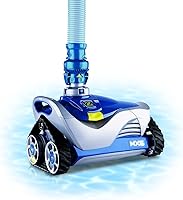
Polaris MAXX Pool Cleaner Review: Worth It? (November 2026)
The Polaris MAXX is worth considering if you want a tracked suction-side cleaner and are comfortable replacing its tracks when they wear. Choose a robotic cleaner for separate electric operation, or the Zodiac G3 for a suction cleaner with a 39 ft hose included.
On this page (9 sections)
- Is the Polaris MAXX worth considering?
- What does the Polaris MAXX track system do?
- Polaris MAXX track replacement
- How does the Polaris MAXX compare with other cleaners?
- What should you check before buying a Polaris MAXX?
- Polaris MAXX versus Zodiac G3
- Polaris MAXX versus robotic cleaning
- How should you care for a tracked suction cleaner?
- Which pool cleaner should you choose?
The Polaris MAXX is a tracked suction-side pool cleaner for buyers who want grip on slopes and walls without switching to a separate robotic system. Its main ownership question is track care, because the tracks keep the cleaner at the intended distance from the pool bottom.
It suits owners who already have a pool set up for suction-side cleaning. It also suits owners who are comfortable checking moving parts on a regular basis.
Tracks are wear items, so you should expect to inspect them over time. Replace them when grip or movement changes.
When the tracks are in good shape, the cleaner can keep its intended distance from the bottom and grip slopes and walls as designed. When they wear down, movement can become less consistent.
Checking them early is a simple habit that can help you decide whether a replacement part is all you need. It can also help you decide whether a different cleaner type would suit you better.
The MAXX makes more sense when your pool already suits suction-side cleaning and you want a tracked design. It is less appealing if you prefer a cleaner that can operate on its own power and carry its own filter basket for debris.
If you want active scrubbing with a separate electric cleaner, the Dolphin Nautilus CC Plus is a better fit. That option places the cleaning work in a robotic unit with wall climbing and a top-load filter basket, rather than in a suction-side body.
If you want another suction cleaner with a hose included, consider the Zodiac G3. Its stated package includes a 39 ft push-fit hose, which can make setup easier to judge before you buy.
The right choice depends on how you prefer to maintain the pool. A tracked suction cleaner keeps the work within the existing pool system, while a robotic cleaner separates that work into its own device.
For many owners, the decision comes down to maintenance style. Some prefer fewer moving parts to service by hand, while others prefer a self-contained cleaner that they can lift out and empty after each run.
Looking at the MAXX through that lens helps keep expectations realistic. Its long-term value depends on how well the track system continues to suit your pool shape and surface layout.
Is the Polaris MAXX worth considering?
The Polaris MAXX is worth considering when tracked movement matters more to you than a separate robotic motor. The track design is intended to provide grip for climbing slopes and walls while keeping the cleaner a specific distance off the pool bottom.
That distance matters in everyday use because it shapes how the cleaner travels across the floor. A cleaner that stays at a set distance is meant to move in a more controlled way than one that drags or lifts unevenly.
Grip is the other half of the design. Slopes and walls ask more from a cleaner than a flat floor does, so a tracked body can be a practical answer for pools where the cleaner must change direction and climb.
That design also creates a maintenance point. When the tracks wear, you need the correct replacement part and the correct quantity.
Wear can be gradual, which means the cleaner may still run while its movement becomes less reliable. The MAXX uses 2 tracks, so a matching 2-pack is the natural replacement format.
Buying the pair at once helps you replace both sides together and avoid a mismatch in grip or wear. Before you order, confirm that your cleaner is a Polaris MAXX and that it uses Track V2 parts with model number R0916500.
If that check is wrong, a replacement part will not solve the problem. Model matching is more important than price or convenience when you are buying a part that must fit a specific panel and movement system.
The MAXX is worth considering for owners who know they want suction-side cleaning. It is a narrower choice than a robotic cleaner, and that narrow focus is part of its appeal for the right pool.
It is less worth considering if you want a cleaner with its own motor, brush and filter basket. In that case, the tracked design may feel like extra maintenance without the features you actually want.
This review focuses on the MAXX suction-side design and the replacement-track choice supplied for it. It is not trying to be a robotic cleaner, and it is not supplied as a complete suction package with a hose included.
So the value question comes back to fit. If tracked grip and suction-side operation match your pool and your habits, the MAXX has a clear reason to be on your shortlist.
What does the Polaris MAXX track system do?
The Polaris MAXX tracks help the cleaner maintain its position and grip as it moves across the pool. The track design is meant to keep the cleaner a specific distance from the bottom and help it climb slopes and walls.
That does not mean every pool will produce the same cleaning pattern. Pool shape, suction flow, surface condition and the arrangement of drains, lights and fittings can affect how an automatic cleaner moves.
If you need a refresher on cleaner types, How Do Automatic Pool Cleaners Work? explains the basic differences between suction-side, pressure-side and robotic systems.
Tracked cleaners and wheeled cleaners also solve movement differently. Read How Do Tracked Pool Cleaners Differ from Wheeled Cleaners? before choosing a design based on wall or slope coverage.
Polaris MAXX track replacement
The Apopip replacement is a 2-pack of Track V2 parts for the Polaris MAXX, model R0916500. Each track is part of a system designed to provide grip and maintain the cleaner's distance from the pool bottom.
Apopip 2 Pcs Track V2 for Polaris: Best for MAXX track replacement

- 2 replacement tracks
- For Polaris MAXX
- Model R0916500
- 7.7 x 4.6 x 1.2 in
A replacement-track option for a Polaris MAXX suction-side cleaner. The 2-pack matches the MAXX's stated track count.
Pros
- 2 tracks in one pack
- Designed for Polaris MAXX
- Tracks pull off and push back on
Cons
- Replacement parts only
- Correct model matching is essential
The dimensions are 7.7 x 4.6 x 1.2 inches, and the pack weighs 3.87 ounces. Those measurements describe the replacement part package and help you check storage, but model matching is the key buying decision.
Installation is described as simple: pull the old track off the panel and push the replacement track back on. Before ordering, confirm that your cleaner is a Polaris MAXX and that it uses 2 R0916500 tracks.
A replacement track does not add a new cleaner to your pool. It is a maintenance purchase for restoring the track system when the original parts no longer provide the movement or grip you need.
How does the Polaris MAXX compare with other cleaners?
The MAXX is the most directly relevant choice when you specifically want a tracked Polaris suction cleaner. The alternatives below serve different needs, so the right comparison depends on how you want the cleaner powered and maintained.
The Dolphin Nautilus CC Plus is an electric robotic cleaner for in-ground pools up to 40 ft in length. It climbs walls, uses an active scrubbing brush and has a top-load filter basket.
Its plug-and-play setup means you plug it in, place it in the pool and power it on.
The Zodiac G3 stays closer to the MAXX's cleaning category because it is also a suction-side in-ground cleaner. It uses a 36-fin disc, wheel deflector and 39 ft push-fit feed hose, and connects to a skimmer or dedicated suction line.
The MAXX's replacement-track option is different from both alternatives because it supports an existing cleaner rather than replacing the whole cleaning system.
What should you check before buying a Polaris MAXX?
Check your pool's cleaning system, surface layout and replacement-part fit before buying. A suction-side cleaner needs a suitable connection and enough flow for the cleaner to move as intended.
Start by confirming that your pool setup supports a suction-side cleaner. Then consider the areas you want the cleaner to reach, including slopes, walls, steps and the space around drains or fittings.
The MAXX's tracks are most relevant if you want a cleaner with grip during movement. They are less relevant if your priority is an electric brush, a separate filter basket or a defined robotic cleaning cycle.
For a wider comparison of this category, see our guide to the best suction side pool vacuum cleaner. It can help you decide whether the suction-side format fits your maintenance routine before you focus on one model.
Polaris MAXX versus Zodiac G3
The Polaris MAXX and Zodiac G3 are both suited to buyers comparing suction-side pool cleaning, but their details emphasize different strengths. The MAXX focuses on tracked movement, while the G3 includes a 36-fin disc, wheel deflector and 39 ft hose.
The G3 is compatible with low-flow and variable-speed pumps and cleans multiple in-ground surfaces, including tile, vinyl, gunite and fiberglass. It also connects to a skimmer or dedicated suction line.
The MAXX may be the better fit if tracked grip is the reason you are shopping. The G3 may be easier to evaluate as a complete setup because its 39 ft push-fit feed hose is included.
Read our Zodiac G3 Pool Cleaner Review for a closer look at that alternative. Buyers comparing another tracked option can also see the Zodiac MX6 Pool Cleaner Review.
Polaris MAXX versus robotic cleaning
The Polaris MAXX and Dolphin Nautilus CC Plus use different power and maintenance approaches. The MAXX is a suction-side cleaner, while the Dolphin is an AC/DC electric robotic cleaner with a top-load filter basket.
That power difference changes the daily routine. A suction-side cleaner depends on the pool system for its movement, while a robotic cleaner carries its own electric operation from plug to pool.
The Dolphin is intended for in-ground pools up to 40 ft in length. It has wall climbing, an active scrubbing brush and a stated 2-hour cleaning cycle, so it suits buyers who want a separate cleaner that does not depend on the pool suction connection.
The 2-hour cycle gives you a defined window for the pool to be cleaned. That differs from relying on the cleaner to travel while the pool system runs.
Active scrubbing is another practical difference. Instead of relying mainly on suction and movement, the Dolphin uses a brush that works against the surface as it travels along the floor and walls.
The top-load filter basket also changes care after each run. You can lift the cleaner out, remove the basket from the top and empty the collected debris without reaching into a separate pool filter.
That design suits owners who like a self-contained routine. The cleaner is plugged in, placed in the water and switched on, and the main tasks are handling the unit and emptying its basket.
The MAXX may be preferable if you already want suction-side cleaning and tracked movement. Its tracks are meant to keep it at a set distance from the bottom and provide grip on slopes and walls.
The trade-off is that you stay tied to the pool system. You need a suitable suction connection, and you need to keep an eye on tracks and other moving parts over time.
The Dolphin may be preferable if active scrubbing and a removable top-load filter basket matter more than keeping the cleaner within the suction system. Neither approach is automatically better for every pool.
In short, pick the MAXX for tracked suction cleaning and the Dolphin for separate robotic cleaning. Your pool connection, surface layout and preferred maintenance routine should decide which one fits better.
How should you care for a tracked suction cleaner?
Care for a tracked suction cleaner by checking movement parts, connection points and debris flow regularly. Rinse parts when needed, inspect the tracks for wear and keep the cleaner stored in a dry place when it is not in use.
If the cleaner stops climbing or moves unevenly, check the tracks before assuming the whole cleaner has failed. A worn or damaged track can affect grip and movement across slopes and walls.
Replace tracks as a matched set when the cleaner uses 2 tracks. The Apopip replacement is designed for the Polaris MAXX and uses the R0916500 model number, so check that number before ordering.
Also inspect the suction connection and hose path for blockages. A cleaner cannot move properly when debris restricts the flow it needs.
Which pool cleaner should you choose?
Choose the Polaris MAXX if your priority is a tracked suction-side cleaner and you are prepared to monitor its 2 replacement tracks over time.
Choose the Dolphin Nautilus CC Plus if you want an electric robotic cleaner with wall climbing, active scrubbing and a top-load filter basket for an in-ground pool up to 40 ft.
Choose the Zodiac G3 if you want a suction-side alternative with a 36-fin disc, wheel deflector and 39 ft hose. If you are comparing another tracked suction design, our Zodiac MX8 Pool Cleaner Review is a useful next comparison.
Our score weighs specs, features and buyer feedback against what you are shopping for. The MAXX remains a focused choice for tracked suction cleaning, while the alternatives are stronger when your priority is robotic operation or a more complete suction-side package.
Frequently asked questions
Is the Polaris MAXX a suction-side pool cleaner?
Yes. The Polaris MAXX is a suction-side pool cleaner, so its cleaning action depends on the pool's suction system rather than a separate electric motor.
Its tracked design is intended to help it keep a set distance from the pool bottom and grip slopes and walls.
What tracks does the Polaris MAXX use?
The Polaris MAXX uses 2 Track V2 tracks with model number R0916500. The Apopip 2 Pcs Track V2 for Polaris MAXX is a matching replacement option, and the pack contains 2 tracks.
Confirm the model before ordering replacement parts.
Is the Polaris MAXX better than a robotic pool cleaner?
The Polaris MAXX may suit you if you want a suction-side cleaner that works through your pool system. A robotic cleaner is a different setup: the Dolphin Nautilus CC Plus uses AC/DC power, has active scrubbing and a top-load filter basket, and is intended for in-ground pools up to 40 ft.
What is a good alternative to the Polaris MAXX?
The Zodiac G3 is the closest alternative here because it is also a suction-side in-ground cleaner. It includes a 39 ft push-fit hose, uses a 36-fin disc and wheel deflector, and connects to a skimmer or dedicated suction line.
The Dolphin is the better alternative if you prefer robotic cleaning.