9 Best Automatic Pool Cleaners (November 2026)
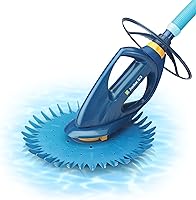
The best automatic pool cleaners include the Zodiac G3 Suction-Side Inground Vacuum Pool Cleaner for simple suction setup, the Zodiac MX6 Suction-Side In-Ground Pool Cleaner for lower-flow pump setups, and the Dolphin Automatic Robotic Pool Vacuum Cleaner for floor and wall scrubbing.
On this page (7 sections)
- Which automatic pool cleaners fit different pools?
- How should you compare automatic pool cleaner types?
- How do automatic pool cleaners work with your pool equipment?
- What should you check before buying an automatic pool cleaner?
- Why can automatic cleaners miss stairs and benches?
- Why does an automatic cleaner not replace the pool filter?
- Which automatic pool cleaner should you choose?
The best automatic pool cleaner for most in-ground pools is the Dolphin Nautilus CC Plus, which scrubs floors and walls and collects debris in a top-load filter basket. For suction-based cleaning, consider the Zodiac G3 or MX6; for a pressure-side cleaner with a separate debris bag, look at the Polaris Vac-Sweep 280.
Automatic pool cleaners differ in how they connect to your pool and where debris goes. Match the cleaner type to your pump, plumbing and pool surfaces, then check its stated coverage against your pool’s shape and cleaning needs.
For a quick overview of each type, start with how automatic pool cleaners work. If you’re choosing between the two most common options, compare robotic pool cleaners vs suction cleaner.
Our picks at a glance
-
1
 Best for simple suction setup
Zodiac G3 Suction-Side Inground Vacuum Pool Cleaner
9.7/10 our score
See it on Amazon -
2
 Best for lower-flow pump setups
Zodiac MX6 Suction-Side In-Ground Pool Cleaner
9.7/10 our score
See it on Amazon -
3
 Best for floor and wall scrubbing
Dolphin Automatic Robotic Pool Vacuum Cleaner
9.7/10 our score
See it on Amazon
- 4
 Best for cordless cleaning modesCheck it
- 5
 Best for above-ground pool floorsCheck it
- 6
 Check it
Polaris Vac-Sweep 280 Pressure-Side In-ground Pool Cleaner
Best for collecting larger debris - 7
 Check it
Hayward Poolvergnuegen Suction Pool Cleaner
Best for a two-wheel suction cleaner - 8
 Check it
Hayward AquaNaut 400 Suction Pool Cleaner
Best for larger in-ground pools - 9
 Best for cordless cleaning presetsCheck it
Which automatic pool cleaners fit different pools?
The right automatic pool cleaner depends on whether you want an internal filter, a connection to your pool’s suction line or a pressure-side bag. These picks cover those approaches and several pool sizes.
Zodiac G3 Suction-Side Inground Vacuum Pool Cleaner: Best for simple suction setup
- Connects to a skimmer or dedicated suction line
- Compatible with low-flow and variable-speed pumps
- 36-fin disc
- 39 ft hose
The G3 connects to a skimmer or dedicated suction line and uses the pool’s filtration system. Its 36-fin disc is designed to maintain grip and reduce hang-ups on pool fittings.
Pros
- Works with low-flow and variable-speed pumps
- Wheel deflector helps with tight corners
- Three-step setup
Cons
- Debris goes through the pool filtration system
- Requires a compatible suction connection
The Zodiac G3 suits an in-ground pool with a skimmer or dedicated suction line. It uses the pool pump and filtration system, so it can fit a setup where you want a cleaner without a separate electrical connection.
Zodiac says the G3 works with low-flow and variable-speed pumps. Its 36-fin disc is designed to keep contact with pool surfaces and reduce hang-ups on lights, drain covers and fittings.
The wheel deflector helps the cleaner move around tight corners. The package includes a 39 ft push-fit feed hose, which you should compare with the distance from the connection point to the farthest area of your pool.
This is a practical pick if you want a suction-side cleaner with a short setup process. Keep in mind that debris goes through the pool filtration system, so the cleaner does not remove filter maintenance from your routine.
Zodiac MX6 Suction-Side In-Ground Pool Cleaner: Best for lower-flow pump setups
- Cyclonic turbine
- X-Trax grip
- 32 ft hose
- No batteries or separate electricity
The MX6 connects to a skimmer or dedicated suction line and sends debris to the pool filtration system. Zodiac describes it as compatible with variable-speed pumps and lower flow rates.
Pros
- Hydraulic navigation drives internal gears
- X-Trax helps it climb walls at proper flow
- No batteries to charge
Cons
- Depends on suitable pool pump flow
- Debris goes to the pool filtration system
The Zodiac MX6 suits an in-ground pool where lower flow rates or a variable-speed pump are part of the setup. It connects through a skimmer or dedicated suction line and sends debris to the pool’s filtration system.
Its X-Trax are designed to provide grip, while the cyclonic turbine creates downforce. Zodiac says the cleaner can climb walls when set to the proper flow, so correct flow setup matters for coverage.
The MX6 uses hydraulic suction to drive its internal gears and navigation. Its 32 ft twist-lock hose is shorter than the G3’s included hose, making pool dimensions and connection placement worth checking.
Choose the MX6 if a compact suction cleaner and pump compatibility are your priorities. If you are weighing the trade-offs between this style and an independent robotic cleaner, see our best pool cleaners guide.
Dolphin Automatic Robotic Pool Vacuum Cleaner: Best for floor and wall scrubbing
- Active scrubbing brush
- Top-load filter basket
- Plug-and-play setup
- 2-hour cleaning cycle
The Dolphin Nautilus CC Plus plugs in and cleans the pool floor and walls. Its top-load filter basket collects debris for separate cleaning.
Pros
- Active scrubbing brush
- Top-load filter access
- Does not rely on suction plumbing
Cons
- Requires a power connection
- Filter basket needs regular cleaning
The Dolphin Nautilus CC Plus suits in-ground pools up to 40 ft when floor and wall scrubbing are priorities. It plugs in, goes into the pool and runs a stated 2-hour cleaning cycle.
An active scrubbing brush handles debris on pool surfaces, and a top-load filter basket gives you direct access to collected material. Because the robot has its own filter basket, you remove debris there instead of sending it through the pool’s suction line.
Dolphin describes this model as suitable for different pool shapes and surfaces. It is a stronger fit for buyers who want a robotic cleaner than for someone who specifically needs a pressure-side bag or a suction-line connection.
The power cord and filter care are part of the routine. If you want to understand how robotic models differ from suction and pressure cleaners, read what is the difference between a pool vacuum and a robotic cleaner?.
iGarden K Series Pool Cleaner: Best for cordless cleaning modes
- Cordless robotic cleaner
- Up to 7 hours in floor-only mode
- Four cleaning modes
- 4 L basket with 180 μm mesh
The iGarden K70 offers floor, wall and waterline modes, with a floor-only runtime of up to 7 hours. Its app connection works on land because the signal is lost underwater.
Pros
- Cordless operation
- Several floor and wall cleaning modes
- Fine-layer filtration
Cons
- Runtime varies by cleaning mode
- App connection is unavailable underwater
The iGarden K70 suits buyers who want cordless operation and multiple cleaning modes. It offers floor-only, wall-and-waterline, and full-coverage options, including a mode designed for pools with shallow ledges.
The stated runtime is up to 7 hours for floor-only cleaning or 3.75 hours for floor-to-wall cleaning. A 4 L basket with 180 μm mesh is designed to catch leaves and finer debris, and the maker says the app connection works only on land.
The K70 can be set for wall and waterline cleaning, but its runtime depends on the selected mode. Check that the operating time fits your pool and intended schedule before choosing a cordless model.
Choose it when you value a cordless cleaner and adjustable coverage modes. The app’s underwater connection limit is worth knowing if you expect to control settings while it is running.
Dolphin: Best for above-ground pool floors
- Active scrubbing brush
- Top-load filter access
- Smart Navigation Technology
- 1.5-hour cleaning cycle
The Dolphin Nautilus AG is designed for above-ground pools up to 33 ft. It cleans the floor, but does not clean walls or the waterline.
Pros
- Top-load filter access
- Smart navigation
- Plug-and-play setup
Cons
- Does not clean walls or waterline
- Designed for above-ground pools
The Dolphin Nautilus AG is designed for above-ground pools up to 33 ft and cleans the floor. For more, see pool cleaners for small pools.
It does not clean walls or the waterline, so it is best suited to a pool where floor coverage is the main need.
Its active scrubbing brush works with Smart Navigation Technology, and the top-load filter basket makes debris access straightforward. The stated cycle is 1.5 hours, and setup is plug-and-play.
This model’s above-ground focus separates it from the Nautilus CC Plus, which is described for in-ground pools and wall cleaning. Confirm your pool type and the areas you expect the robot to reach.
Pick the Nautilus AG for floor cleaning in a compatible above-ground pool. If wall or waterline cleaning is essential, choose a model whose stated coverage includes those areas.
Polaris Vac-Sweep 280 Pressure-Side In-ground Pool Cleaner: Best for collecting larger debris
- Booster-pump powered
- 31 ft feed hose
- Single-chamber debris bag
- 2.25 in inlet
The Polaris 280 uses a separate booster pump and collects debris in its own bag. Its 2.25 in inlet is designed to pick up larger debris such as leaves, acorns and pebbles.
Pros
- Separate debris bag
- Cleans floors and walls
- Designed for several pool shapes and surfaces
Cons
- Requires a separate booster pump
- Needs a dedicated return line
The Polaris Vac-Sweep 280 suits in-ground pools where collecting debris in a separate bag is useful. For more, see Polaris Vac-Sweep 280.
Its 2.25 in inlet is designed for larger debris such as leaves, acorns and pebbles.
This pressure-side cleaner uses a separate Polaris booster pump and connects to a dedicated return line. For more, see pressure-side cleaner.
It sweeps and scrubs the floor and walls, and the included 31 ft feed hose and single-chamber bag define the basic setup.
Polaris says the 280 can clean in 3 hours or less. It is built for buyers who have the needed return line and booster pump or are prepared to account for that equipment.
Choose it if a debris bag and larger-debris pickup fit your pool routine. A suction cleaner may make more sense when you want to use an existing skimmer or suction line instead.
Hayward Poolvergnuegen Suction Pool Cleaner: Best for a two-wheel suction cleaner
- Two-wheel design
- 33 ft hose
- No booster pump required
- Adjustable roller skirts
This two-wheel Poolvergnuegen connects to a suction port or skimmer and uses the existing pool pump. Its steering sequences and tire treads are designed to help with coverage and obstacle movement.
Pros
- No booster pump required
- Designed for floors, steps and waterline
- Turbine vanes help prevent clogs
Cons
- Designed for pools up to 16 x 32 ft
- Debris passes through the pool filtration system
The Hayward Poolvergnuegen two-wheel cleaner is designed for in-ground pools up to 16 x 32 ft. It connects to a suction port or skimmer, so no booster pump is required.
Patented turbine vanes are designed to reduce clogging, while adjustable roller skirts help maintain suction on uneven surfaces. The cleaner also uses internal steering sequences and tire treads to change direction and handle obstacles.
Its stated coverage includes the floor, steps and waterline. The 33 ft hose should be considered alongside your pool’s shape and the location of the suction connection.
This pick fits a smaller in-ground pool where suction-side operation is preferred. Debris still travels through the pool’s filtration system, so check filter baskets and pressure as part of regular care.
Hayward AquaNaut 400 Suction Pool Cleaner: Best for larger in-ground pools
- Four-wheel drive
- V-Flex turbine
- Designed for pools up to 20 x 40 ft
- No booster pump required
The AquaNaut 400 is designed for in-ground pools up to 20 x 40 ft, including pools with deep ends. It connects to a suction port or skimmer and is described as suitable for variable-speed pumps.
Pros
- Four-wheel drive
- V-Flex turbine vanes
- Designed for steps and waterline
Cons
- Depends on pump suction
- Debris goes to the pool filtration system
The Hayward AquaNaut 400 suits larger in-ground pools, with a stated design range up to 20 x 40 ft. Its four-wheel drive and tire treads are intended to aid traction and movement around pool obstacles.
The cleaner connects to a suction port or skimmer and does not require a booster pump. Hayward’s V-Flex turbine is designed to handle debris while maintaining suction at different flow levels, and the model is described as suitable for variable-speed pumps.
Coverage includes the floor, steps and waterline. As with other suction-side cleaners, debris moves into the pool’s filtration system rather than an onboard robot basket.
Choose the AquaNaut 400 if your pool is larger than the Poolvergnuegen’s stated size range and your pump setup is compatible. Measure the pool and confirm the hose connection plan before deciding.
BRINBO C1 Robot Pool Cleaner: Best for cordless cleaning presets
- Cordless robotic cleaner
- Up to 180 minutes in Eco mode
- Seven cleaning modes
- Dual filtration
The BRINBO C1 offers cordless floor, wall and waterline cleaning with seven modes. Its settings need to be preset before the cleaner enters the water.
Pros
- Dual filtration
- Washable, reusable filters
- App control and timer settings
Cons
- Runtime is shorter in Full Pool Mode
- Cannot thoroughly clean narrow step areas
The BRINBO C1 suits buyers who want a cordless robot with multiple presets and dual filtration. It offers seven cleaning modes and can clean floors, walls and waterlines.
Its Eco mode runtime is up to 180 minutes, while full-pool mode runs about 90 to 100 minutes. The settings need to be preset before the robot enters the water, and narrow step areas may not be cleaned thoroughly.
The washable, reusable filters capture larger particles and fine debris. The C1 also includes app control and timer settings, with an advertised 2-year warranty.
Choose it for cordless convenience and preset cleaning options, while allowing time to set its mode on shore. Buyers focused on narrow stairs should plan to brush those areas by hand.
How should you compare automatic pool cleaner types?
Compare automatic pool cleaners by their power source, debris path and pool connection. Those three details determine what equipment you need and where you’ll clean debris from.
| Product | Best for | Cleaner type | Pool type | Hose | Our score |
|---|---|---|---|---|---|
| Zodiac G3 Suction-Side Inground Vacuum Pool Cleaner | simple suction setup | Suction-side | In-ground | 39 ft | 9.7 |
| Zodiac MX6 Suction-Side In-Ground Pool Cleaner | lower-flow pump setups | Suction-side | In-ground | 32 ft | 9.7 |
| Dolphin Automatic Robotic Pool Vacuum Cleaner | floor and wall scrubbing | Robotic | In-ground pools up to 40 ft | 9.7 | |
| iGarden K Series Pool Cleaner | cordless cleaning modes | Cordless robotic | 9.6 | ||
| Dolphin | above-ground pool floors | Robotic | Above-ground pools up to 33 ft | 9.6 | |
| Polaris Vac-Sweep 280 Pressure-Side In-ground Pool Cleaner | collecting larger debris | Pressure-side | In-ground | 9.5 | |
| Hayward Poolvergnuegen Suction Pool Cleaner | a two-wheel suction cleaner | Suction-side | 33 ft | 9.1 | |
| Hayward AquaNaut 400 Suction Pool Cleaner | larger in-ground pools | Suction-side | 9.0 | ||
| BRINBO C1 Robot Pool Cleaner | cordless cleaning presets | Cordless robotic | 8.3 |
A robotic cleaner has its own drive and filter basket, so it does not depend on a suction line to move debris. A suction-side cleaner uses the pool pump and routes debris to the pool filtration system.
A pressure-side model uses water pressure and may collect debris in a separate bag. The Polaris 280, for example, uses a separate booster pump and a dedicated return line.
Pool size and surfaces come next. Check stated pool dimensions, whether the cleaner is meant for above-ground or in-ground use, and whether it is designed to clean walls, waterlines or steps.
How do automatic pool cleaners work with your pool equipment?
Automatic pool cleaners use suction, water pressure or an onboard drive to move and collect debris. The type you choose determines how it connects to the pool and which filter or bag you maintain.
Suction cleaners attach to a skimmer or dedicated suction line. The pump pulls water through the cleaner, and debris travels to the pool filter, so a clogged basket or dirty filter can affect circulation.
Pressure-side cleaners connect to a return line and move with water pressure. Models such as the Polaris 280 use a separate debris bag, which keeps collected material out of the pool’s main filtration path.
Robotic cleaners use their own motor and filter basket. They need an electrical or battery power source, depending on the model, and you clean the basket after a cycle.
For a deeper explanation of the three mechanisms, read how automatic pool cleaners work. To compare the common robotic and suction options directly, see robotic pool cleaners vs suction cleaner.
What should you check before buying an automatic pool cleaner?
Check pool type, dimensions, pump setup, surfaces and debris before buying an automatic pool cleaner. A model can have useful features and still be a poor fit if its connection or coverage does not match your pool.
First, identify whether you have an in-ground or above-ground pool. Then measure the pool’s longest length and note where the skimmer, suction line or return line sits.
Next, check your pump and plumbing. Suction models rely on pool pump flow, and pressure-side models may need a booster pump and dedicated return line.
Consider the debris you usually remove. A separate bag can help collect larger debris, while a robotic cleaner’s filter basket keeps material in the robot for you to empty.
Finally, match cleaning coverage to the surfaces you care about. Some models cover floors and walls, while the Nautilus AG is described for floors only; step and bench coverage can also vary.
Why can automatic cleaners miss stairs and benches?
Automatic cleaners can miss narrow stairs and benches because their shape, grip and programmed route may not fit those areas. Even models that list steps as part of their coverage may leave tight corners or small ledges for manual brushing.
Check the maker’s coverage description and consider the width and depth of your steps. A robot may climb a wall or ledge but still fail to scrub a narrow step surface thoroughly.
Allow for a brush-and-net pass as part of regular maintenance if those surfaces collect dirt. Our guide explains why automatic cleaners can miss stairs and benches.
Why does an automatic cleaner not replace the pool filter?
An automatic cleaner does not replace the pool filter because the pool filter cleans circulating water as the pump moves it through the system. A cleaner focuses on debris removal from pool surfaces or the water it draws through its own path.
Suction cleaners send debris to the pool’s filtration system, which means the filter still needs attention. Robotic cleaners collect debris in an internal basket, but the pool circulation and filtration system still serves its separate role.
Keep the pool filter clean and follow its maintenance schedule even if a cleaner runs often. Read why an automatic cleaner does not replace the pool filter for more detail.
Which automatic pool cleaner should you choose?
Choose the cleaner that matches your pool’s connection, debris and coverage needs. The best automatic pool cleaners are the ones that fit your existing equipment and the surfaces you want cleaned.
For a suction-side setup with low-flow pump compatibility, compare the Zodiac G3 and MX6. Choose the Polaris 280 if its booster-pump and return-line requirements fit and you want a separate debris bag.
For an in-ground pool where floor and wall scrubbing matter, the Dolphin Nautilus CC Plus is the leading fit in this group. For cordless cleaning modes, compare the iGarden K70 and BRINBO C1, and confirm their run times and step coverage work for your pool.
If you’re deciding whether a robotic model fits your needs, the Beatbot AquaSense 2 Ultra review offers another robotic-cleaner comparison. Then use best pool cleaners to continue narrowing your options.
Our top 3 picks at a glance
-
1
Best for simple suction setup
Zodiac G3 Suction-Side Inground Vacuum Pool Cleaner
9.7/10 our score
See it on Amazon -
2
Best for lower-flow pump setups
Zodiac MX6 Suction-Side In-Ground Pool Cleaner
9.7/10 our score
See it on Amazon -
3
Best for floor and wall scrubbing
Dolphin Automatic Robotic Pool Vacuum Cleaner
9.7/10 our score
See it on Amazon
Frequently asked questions
What type of automatic pool cleaner is best?
The best type depends on your pool setup and debris. A robotic cleaner has its own filter, while a suction-side cleaner sends debris to the pool filtration system.
A pressure-side cleaner uses water pressure and often collects debris in a separate bag.
Check what plumbing connections and pump equipment your pool already has before choosing.
Do automatic pool cleaners replace pool filters?
No. An automatic cleaner removes debris from pool surfaces or water, but the pool filter still handles water circulation and filtration.
Suction cleaners send debris to the pool filtration system, while many robotic cleaners collect it in an internal basket.
See why an automatic cleaner does not replace the pool filter for the difference.
Can automatic pool cleaners clean stairs and benches?
Some can reach steps, but narrow or raised areas may still need brushing by hand. Cleaner movement depends on the shape of the steps, the connection or power source, and the model’s coverage design.
Read why automatic cleaners can miss stairs and benches before expecting full step coverage.
Are robotic pool cleaners different from pool vacuums?
A robotic pool cleaner is one kind of automatic pool vacuum. It moves through the pool using its own drive and collects debris in an internal filter, while suction and pressure cleaners use the pool’s circulation system in different ways.
Our guide to the difference between a pool vacuum and a robotic cleaner explains the terms.