8 Best Pressure Side Pool Cleaners (November 2026)
The best pressure-side pool cleaners include the Zodiac G3 Suction-Side Inground Vacuum Pool Cleaner for low-flow suction setups, the Zodiac MX6 Suction-Side In-Ground Pool Cleaner for compact suction cleaning, and the Lodoba [2026 Release] Automatic Robotic Pool Vacuum for cordless cleaning modes.
On this page (8 sections)
- Which pressure-side pool cleaners fit your plumbing?
- Pressure-side and alternative pool cleaner picks
- How do pressure-side cleaners collect debris?
- How should you match a cleaner to debris?
- What plumbing should you check first?
- What is the practical difference between the Polaris 280 and 360?
- More guides on this topic
- Which pressure-side pool cleaner should you choose?
The best pressure side pool cleaners for most pools are the Polaris 280 and 360, but they suit different plumbing. Choose the 280 when you have a separate booster pump; choose the 360 when your return line can power a cleaner without one.
This roundup compares eight pool-cleaning options by connection type, debris collection and pump needs. Several are suction-side or robotic models, included as alternatives for pools where pressure-side plumbing is unavailable or unsuitable.
Our picks at a glance
-
1
 Best for low-flow suction setups
Zodiac G3 Suction-Side Inground Vacuum Pool Cleaner
9.7/10 our score
See it on Amazon -
2
 Best for compact suction cleaning
Zodiac MX6 Suction-Side In-Ground Pool Cleaner
9.7/10 our score
See it on Amazon -
3
 Best for cordless cleaning modes
Lodoba [2026 Release] Automatic Robotic Pool Vacuum
9.6/10 our score
See it on Amazon
- 4
 Check it
Polaris Vac-Sweep 280 Pressure-Side In-ground Pool Cleaner
Best for pools with a booster pump - 5
 Check it
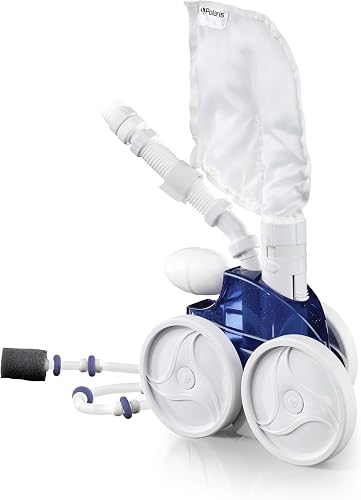
Polaris Vac-Sweep 360 Pressure-Side Cleaner for In-Ground
Best for return-line pressure - 6
 Check it
Hayward Poolvergnuegen Suction Pool Cleaner
Best for smaller pools without a booster - 7
 Check it
Hayward Poolvergnuegen Suction Pool Cleaner
Best for larger suction-side pools - 8
 Check it
MAKHOON Upgrade Pool Pressure Side Sweeper
Best for an existing booster setup
Which pressure-side pool cleaners fit your plumbing?
The Polaris 280 and 360 are the two pressure-side choices here, and their pump requirements are the key difference. The other models use suction or robotic systems, so they can help if your pool has no compatible pressure connection.
We compared the stated connection types, debris collection features and included hose details. Our score weighs specs, features and buyer feedback against what you're shopping for.
For the basic mechanics, see how a pressure-side pool cleaner collects debris. If you want to compare pressure-side models for an in-ground pool specifically, our guide to the best pressure side inground pool cleaner covers that choice.
| Product | Best for | Cleaner type | Connection | Hose | Our score |
|---|---|---|---|---|---|
| Zodiac G3 Suction-Side Inground Vacuum Pool Cleaner | low-flow suction setups | Suction-side | Skimmer or dedicated suction line | 39 ft | 9.7 |
| Zodiac MX6 Suction-Side In-Ground Pool Cleaner | compact suction cleaning | Suction-side | Skimmer or dedicated suction line | 32 ft | 9.7 |
| Lodoba [2026 Release] Automatic Robotic Pool Vacuum | cordless cleaning modes | Robotic | 9.6 | ||
| Polaris Vac-Sweep 280 Pressure-Side In-ground Pool Cleaner | pools with a booster pump | Pressure-side | 31 ft | 9.5 | |
| Polaris Vac-Sweep 360 Pressure-Side Cleaner for In-Ground | return-line pressure | Pressure-side | 31 ft | 9.3 | |
| Hayward Poolvergnuegen Suction Pool Cleaner | smaller pools without a booster | Suction-side | Suction port or skimmer | 9.1 | |
| Hayward Poolvergnuegen Suction Pool Cleaner | larger suction-side pools | Suction-side | Suction port or skimmer | 8.9 | |
| MAKHOON Upgrade Pool Pressure Side Sweeper | an existing booster setup | Pressure-side | 8.8 |
Pressure-side and alternative pool cleaner picks
The pressure-side picks are the Polaris 280, Polaris 360 and MAKHOON sweeper, with different booster-pump needs. The remaining cleaners use suction or battery power, so match the cleaner type to the plumbing you already have.
Zodiac G3 Suction-Side Inground Vacuum Pool Cleaner: Best for low-flow suction setups
- Connects to a skimmer or dedicated suction line
- Works with low-flow and variable-speed pumps
- 36-fin disc
- 39 ft push-fit feed hose
This is a suction cleaner, not a pressure-side model. It suits buyers comparing pool cleaners who have a low-flow pump and a suction connection.
Pros
- Low-flow and variable-speed pump compatibility
- 36-fin disc for surface grip
- Wheel deflector for tight corners
Cons
- Does not collect debris in a pressure-side bag
- Requires a suction-side connection
The Zodiac G3 is a suction-side cleaner, so it belongs in this comparison as an alternative rather than a pressure-side recommendation. It connects to a skimmer or dedicated suction line and works with low-flow and variable-speed pumps.
Its 36-fin disc is designed to hold to pool surfaces, while the wheel deflector helps it move around tight corners. The 39 ft push-fit feed hose is included, which gives you a concrete length to compare against your pool dimensions.
Choose the G3 if your pool has a suitable suction connection and you want a cleaner powered by the pool pump. Skip it if you specifically need a debris bag that separates collected material from the pool filtration system.
Zodiac MX6 Suction-Side In-Ground Pool Cleaner: Best for compact suction cleaning
- Connects to a skimmer or dedicated suction line
- X-Trax for grip
- Hydraulic X-Drive navigation
- 32 ft twist-lock hose
The MX6 routes debris to the pool filtration system and is powered by pump suction. It is a comparison option for pools without pressure-side plumbing.
Pros
- No separate electricity or batteries
- Works with lower flow rates
- Wall climbing when set to proper flow
Cons
- Not a pressure-side cleaner
- Debris goes to the pool filtration system
The Zodiac MX6 is another suction-side alternative, connecting through the skimmer or a dedicated suction line. It sends debris to the pool filtration system rather than collecting it in a pressure-side bag.
Its X-Trax provide grip, and hydraulic suction powers its internal gears for coverage of the floor and walls. Zodiac also describes the cyclonic turbine as creating downforce for wall climbing when the cleaner is set to the proper flow.
The included hose is 32 ft and uses twist-lock connections. Consider how that length compares with your pool layout, and confirm you can set the flow correctly.
Choose the MX6 if suction plumbing is already available and you want an option that does not need separate electricity or batteries. For a pressure-only shortlist, compare it with our best Polaris pressure pool cleaner guide.
Lodoba [2026 Release] Automatic Robotic Pool Vacuum: Best for cordless cleaning modes
- Cordless robotic design
- Floor, wall or full coverage modes
- Up to 190 minutes runtime
- Separate debris collection
This robot does not use pressure-side plumbing. Consider it if you want a separate cleaner type and selectable cleaning modes.
Pros
- Cordless operation
- Multiple cleaning modes
- Does not connect to pool return plumbing
Cons
- Not a pressure-side cleaner
- Needs charging between cleaning sessions
The Lodoba is a cordless robotic cleaner, not a pressure-side model. Its separate battery-powered design avoids a return-line or suction-line connection, making it an option to consider when you prefer a standalone cleaner.
It offers floor, wall and full-coverage modes, plus a stated runtime of up to 190 minutes. The maker also describes sonar navigation and tracks for climbing slopes, but a pool's shape and surface can affect how well any cleaner covers it.
This option needs charging between sessions, with a stated recharge time of 2.5 hours. Make sure its pool-size and cleaning-mode claims suit your own layout before choosing it.
Choose a robot if avoiding pressure plumbing is more important than matching this roundup's pressure-side focus. Read how automatic pool cleaners work to compare the main cleaner types.
Polaris Vac-Sweep 280 Pressure-Side In-ground Pool Cleaner: Best for pools with a booster pump
- Separate Polaris booster pump required
- Dual venturi jets
- 2.25 in inlet
- 31 ft feed hose and debris bag
The 280 is a pressure-side cleaner for an in-ground pool with a separate booster pump. Its filter bag catches debris before it reaches the pump basket or filter.
Pros
- Bag collects leaves, acorns and pebbles
- Dual venturi jets
- Sweeps and scrubs floors and walls
Cons
- Requires a separate booster pump
- Needs compatible return-line plumbing
The Polaris 280 is the clearest fit for a pool that already has a separate booster pump and dedicated return line. Its dual venturi jets create suction, while the 2.25 in inlet and single-chamber bag are designed to collect larger debris such as leaves, acorns and pebbles.
The 31 ft feed hose is included. Polaris says the cleaner sweeps and scrubs pool floors and walls, and the bag catches debris before it reaches the pump basket or filter.
The separate booster pump is a deciding factor, not a minor detail. If your pool does not already have one and you do not plan to add the needed equipment, the 280 is a poor match.
Choose it when your setup supports its connection and you want debris collected in a dedicated bag. Compare it with our Polaris Vac-Sweep 360 review if you're deciding whether a booster-free model better suits your return line.
Polaris Vac-Sweep 360 Pressure-Side Cleaner for In-Ground: Best for return-line pressure
- No separate booster pump required
- Three venturi jets
- 2.25 in inlet
- 31 ft feed hose and debris bag
The 360 runs from return-line water pressure and collects debris in its own bag. Confirm your pool's return setup can provide the connection it needs.
Pros
- No separate booster pump
- Bag keeps collected debris out of the filter
- Three venturi jets
Cons
- Needs a suitable return-line setup
- Not compatible with a dedicated pressure line and booster pump
The Polaris 360 is the pressure-side pick for buyers who want to avoid a separate booster pump. It runs from water pressure at the pool return line and collects debris in its own bag.
Three venturi jets and a 2.25 in inlet support its debris pickup, while the included 31 ft feed hose gives you a length to check against your pool. The 360 is intended for a dedicated cleaner return line, though a standard return line may be retrofitted with a suitable kit.
Confirm the return-line setup before buying. The 360 is not compatible with a dedicated pressure line and booster pump, so it is not simply an interchangeable version of the 280.
Choose the 360 when your pool can supply the right return-line pressure and you want a bag to catch debris. Check your connection with a pool professional if you aren't sure whether a standard return can be adapted.
Hayward Poolvergnuegen Suction Pool Cleaner: Best for smaller pools without a booster
- Two-wheel suction cleaner
- Designed for pools up to 16 x 32 ft
- No booster pump required
- 33 ft hose
This two-wheel model connects to the suction port or skimmer and uses the existing pool pump. It is an alternative if pressure-side plumbing is not a fit.
Pros
- No booster pump required
- Turbine vanes help prevent clogs
- Steering sequences change direction
Cons
- Not a pressure-side cleaner
- Uses the pool's suction system
The Hayward Poolvergnuegen two-wheel model is a suction-side alternative for pools up to 16 x 32 ft. It attaches to a suction port or skimmer and does not require a booster pump.
Hayward describes turbine vanes to help prevent clogs and adjustable roller skirts to maintain suction on uneven surfaces. Tire treads and internal steering sequences are designed to help with obstacles and direction changes.
The 33 ft hose is longer than the supplied hose on some compact suction cleaners, but hose reach depends on the pool's shape and where the connection sits. Measure the route rather than relying only on the pool's maximum dimensions.
Choose this model when you have suction plumbing and a pool size within its stated range. It won't provide the separate debris bag that makes pressure cleaners appealing for collecting larger material.
Hayward Poolvergnuegen Suction Pool Cleaner: Best for larger suction-side pools
- Four-wheel suction cleaner
- Designed for pools up to 20 x 40 ft
- No booster pump required
- 40 ft hose
The four-wheel model is a suction-side option for larger pools. Its longer hose and stated pool size help distinguish it from the two-wheel version.
Pros
- No booster pump required
- Four-wheel design
- Tire treads support climbing and maneuvering
Cons
- Not a pressure-side cleaner
- Uses the pool's suction system
The four-wheel Poolvergnuegen is the larger suction-side option, designed for pools up to 20 x 40 ft. It connects to a suction port or skimmer and uses the existing pool pump, with no booster pump required.
Its 40 ft hose, four-wheel structure, tire treads and adjustable roller skirts distinguish it from the two-wheel version. Hayward also describes internal steering sequences that change direction during operation.
This is still a suction cleaner: debris travels to the pool filtration system, rather than into a pressure-side bag. Check your filter and pump setup if debris collection is the reason you're considering a pressure cleaner.
Choose it for a larger pool with suitable suction plumbing when a booster pump is not part of your plan. If your pool is smaller, the two-wheel version may be a closer fit.
MAKHOON Upgrade Pool Pressure Side Sweeper: Best for an existing booster setup
- Four-wheel structure
- Separate booster pump required
- Threaded 1 1/2 in female pipe fitting
- Debris bag parts compatible with 380
This pressure-side sweeper requires a separate booster pump and suitable piping. Check the fitting and hose arrangement against your pool before choosing it.
Pros
- Four-wheel structure
- Adjustable jet direction
- Bag replacement parts compatible with 380
Cons
- Requires a separate booster pump
- May need added pump and piping
The MAKHOON sweeper is a pressure-side option for buyers who already have a separate booster pump. It uses a four-wheel structure and requires a threaded 1 1/2 in female pipe fitting.
The sweeper's instructions call for adjusting the feed hose to the pool length and the jet direction to suit the pool. Those setup details matter if your pool has corners or areas the cleaner struggles to reach.
Its booster pump requirement is explicit. If you don't have that pump and the needed piping, account for those additions before comparing its cost or convenience with the Polaris 360, which does not need a separate booster.
Choose MAKHOON only after checking the pump, fitting and hose requirements against your pool. The stated compatibility of its debris-bag replacement parts with 380 models may also matter when planning upkeep.
How do pressure-side cleaners collect debris?
Pressure-side cleaners use water returning to the pool to move the cleaner and gather debris, often into a dedicated bag. That arrangement can keep larger collected material out of the pool's pump basket and filter.
A pressure-side cleaner's plumbing is different from a suction cleaner's. Suction models draw debris through the skimmer or a suction line, while robotic cleaners operate separately from both systems.
The 280 and MAKHOON need a separate booster pump, while the 360 uses return-line pressure without one. For a deeper explanation of the collection process, see how a pressure-side pool cleaner collects debris.
How should you match a cleaner to debris?
Choose a pressure cleaner with a bag if you want collected leaves and other larger debris held separately from the filtration system. The Polaris 280 and 360 list a 2.25 in inlet and a debris bag, while the MAKHOON's details focus on pump and fit requirements.
The bag still needs regular attention as it fills. A cleaner's inlet size, bag design and the debris in your pool all affect how often you need to clear it.
If your pool mainly needs fine material removed, consider how the cleaner works with your existing filtration system. Suction-side cleaners send debris into that system, while a robot uses its own collection approach.
What plumbing should you check first?
Check the return line, suction connection and booster-pump setup before choosing a model. A pressure cleaner won't become compatible just because its hose reaches the pool.
For the Polaris 280, confirm a separate booster pump and dedicated return line. For the Polaris 360, confirm a suitable dedicated or retrofitted return connection and remember that it should not share a dedicated pressure line with a booster pump.
For the MAKHOON, check the stated threaded fitting and whether you have the separate booster pump and piping it requires. If the plumbing details are unclear, ask a pool professional to identify the available connection.
What is the practical difference between the Polaris 280 and 360?
The 280 needs a separate booster pump, while the 360 runs on return-line pressure without one. Both collect debris in a bag and include a 31 ft feed hose, but their pump requirements and plumbing compatibility differ.
Choose the 280 when the pool already has the booster setup it needs. Choose the 360 when a suitable return line can power it and you want to avoid adding a separate booster pump.
Don't choose between them by model number alone. Confirm whether the pool has a dedicated cleaner return or an approved retrofit, and check that the hose reaches the whole pool.
More guides on this topic
Which pressure-side pool cleaner should you choose?
Pick the Polaris 280 if your pool has a booster pump and dedicated return line, or the Polaris 360 if your return setup can power a cleaner without a booster. Consider the MAKHOON only if its pump and fitting requirements match your plumbing.
If pressure plumbing doesn't fit your pool, choose by the connection you do have: the Hayward or Zodiac suction cleaners use a suction port or skimmer, and the Lodoba is a cordless robot. For more Polaris-specific comparisons, see our best Polaris pressure pool cleaners.
A quick check of the pump, return line and hose reach can prevent a mismatch. Once those fit, choose the bag and cleaner type that best suit the debris you want to collect.
Our top 3 picks at a glance
-
1
Best for low-flow suction setups
Zodiac G3 Suction-Side Inground Vacuum Pool Cleaner
9.7/10 our score
See it on Amazon -
2
Best for compact suction cleaning
Zodiac MX6 Suction-Side In-Ground Pool Cleaner
9.7/10 our score
See it on Amazon -
3
Best for cordless cleaning modes
Lodoba [2026 Release] Automatic Robotic Pool Vacuum
9.6/10 our score
See it on Amazon
Frequently asked questions
Do pressure-side pool cleaners need a booster pump?
Some do, and some run from the pool's existing return-line pressure. The Polaris 280 and MAKHOON sweeper require a separate booster pump, while the Polaris 360 does not.
Check your plumbing and pump setup before choosing a model, since the connection affects whether it can run.
How does a pressure-side pool cleaner collect debris?
A pressure-side cleaner uses water returning to the pool to move and collect debris in a bag attached to the cleaner. That bag can catch larger material before it reaches the pool's pump basket or filter.
The exact connection and pump needs vary by model.
Can I connect a pressure-side cleaner to a suction line?
No. Pressure-side cleaners need a suitable return or pressure connection, while suction-side cleaners attach to a skimmer or suction line.
If your pool lacks a compatible return setup, compare suction-side or robotic cleaners instead of assuming an adapter will make a pressure cleaner work.
What should I check before buying a pressure-side cleaner?
Check whether the cleaner requires a booster pump, whether your pool has a dedicated return line, and whether the hose can reach the pool's full length. Also consider the debris bag and the size of debris it can collect.
Ask a pool professional to confirm an uncertain plumbing setup.