9 Best Pressure Side Inground Pool Cleaners (November 2026)
The best pressure-side inground pool cleaners include the Polaris Vac-Sweep 280 Pressure-Side In-ground Pool Cleaner for a booster-pump setup, the Polaris Vac-Sweep 360 Pressure-Side Cleaner for In-Ground for using the pool return line, and the MAKHOON Upgrade Pool Pressure Side Sweeper for a four-wheel design.
On this page (6 sections)
- How we chose pressure-side inground pool cleaners
- What should you compare before choosing a pressure cleaner?
- Pressure-side cleaners for different pool setups
- What if your pool does not have pressure-side plumbing?
- How do you choose between a pressure cleaner and a pool cover?
- Which pressure-side inground pool cleaner should you choose?
The best pressure side inground pool cleaner for a pool with a booster pump is the Polaris Vac-Sweep 280. It uses dual venturi jets and a debris bag, while the Polaris 360 suits a compatible return-line setup without a separate booster pump.
The right pick depends first on your plumbing. Pressure-side cleaners use the pool's return water and can collect debris in a bag, but the models differ in pump needs, line connections and bag design.
If you want a broader comparison, see our best pressure side pool cleaners guide. For the basics of how this cleaner type picks up debris, read how a pressure-side pool cleaner collects debris.
Our picks at a glance
-
1
 Best for a booster-pump setup
Polaris Vac-Sweep 280 Pressure-Side In-ground Pool Cleaner
9.5/10 our score
See it on Amazon -
2
 Best for using the pool return line
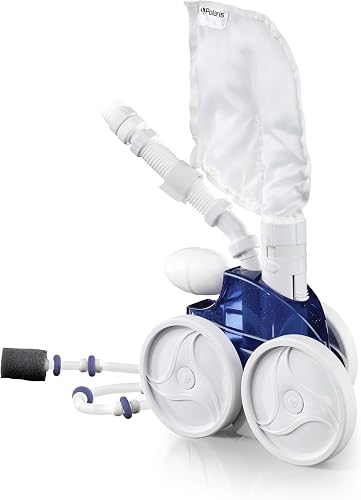
Polaris Vac-Sweep 360 Pressure-Side Cleaner for In-Ground
9.3/10 our score
See it on Amazon -
3
 Best for a four-wheel design
MAKHOON Upgrade Pool Pressure Side Sweeper
8.8/10 our score
See it on Amazon
- 4
 Check it
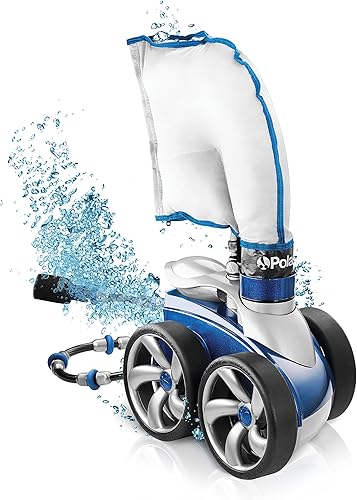
Polaris Vac-Sweep 3900 Sport Pressure Side Pool
Best for a larger debris bag - 5
 Check it
Polaris Vac-Sweep 380 Pressure Side Pool Cleaner
Best for triple-jet cleaning - 6
 Check it
Polaris MAXX Premium Suction-Side Automatic Pool Cleaner
Best for fine debris without a pressure line - 7
 Check it
Zodiac G3 Suction-Side Inground Vacuum Pool Cleaner
Best for a simple suction hookup - 8
 Check it
Zodiac MX6 Suction-Side In-Ground Pool Cleaner
Best for compact suction-side cleaning - 9
 Check it
Dolphin Automatic Robotic Pool Vacuum Cleaner
Best for an independent robotic option
How we chose pressure-side inground pool cleaners
We compared pump and line requirements, debris collection, pool coverage and the details that affect setup. Our score weighs specs, features and buyer feedback against what you're shopping for.
A pressure cleaner can be a poor fit if your pool lacks the required plumbing, even when its cleaning features match your needs. We included suction-side and robotic options as alternatives for pools where a pressure connection is not the best route.
What should you compare before choosing a pressure cleaner?
The most useful comparison is the pool connection and pump setup, followed by the way each cleaner captures debris. Confirm those two points before comparing extras such as jet count or wheel design.
The Polaris 280 and 380 need a separate booster pump, as does the 3900 Sport. The 360 is designed for return-line pressure without a separate booster pump, but it still needs a suitable return-line setup.
See why some pressure cleaners need a booster pump before deciding whether your pool is ready.
The bag matters if you want debris collected before it reaches the pool pump basket or filter. The 280 and 360 have a single-chamber bag, while the 3900 Sport has a 5-liter dual-chamber bag.
| Product | Best for | Power setup | Debris collection | Coverage | Our score |
|---|---|---|---|---|---|
| Polaris Vac-Sweep 280 Pressure-Side In-ground Pool Cleaner | a booster-pump setup | Separate booster pump and dedicated return line | Single-chamber filter bag; 2.25 in inlet | Sweeps and scrubs floor and walls | 9.5 |
| Polaris Vac-Sweep 360 Pressure-Side Cleaner for In-Ground | using the pool return line | Pool return-line pressure; no separate booster pump | Filter bag; 2.25 in inlet | Sweeps and scrubs pool bottom and walls | 9.3 |
| MAKHOON Upgrade Pool Pressure Side Sweeper | a four-wheel design | Separate booster pump required | 8.8 | ||
| Polaris Vac-Sweep 3900 Sport Pressure Side Pool | a larger debris bag | Booster pump and dedicated pressure line | 5-liter dual-chamber bag; 2.5 in inlet | Vacuums, sweeps and scrubs floor and walls | 8.6 |
| Polaris Vac-Sweep 380 Pressure Side Pool Cleaner | triple-jet cleaning | Separate booster pump | Single-chamber bag; 2.25 in inlet | Sweeps and scrubs floor and walls | 8.6 |
| Polaris MAXX Premium Suction-Side Automatic Pool Cleaner | fine debris without a pressure line | Floor to waterline on in-ground pool surfaces | 9.1 | ||
| Zodiac G3 Suction-Side Inground Vacuum Pool Cleaner | a simple suction hookup | 9.7 | |||
| Zodiac MX6 Suction-Side In-Ground Pool Cleaner | compact suction-side cleaning | Pool floor and walls when set to proper flow | 9.7 | ||
| Dolphin Automatic Robotic Pool Vacuum Cleaner | an independent robotic option | Pool floor and walls | 9.7 |
Pressure-side cleaners for different pool setups
The Polaris 280 is the strongest fit here for an existing booster-pump setup, while the 360 is the clearest choice if you want to avoid adding a separate booster pump. The other pressure-side models are worth comparing when their specific bag, jet or wheel design suits your pool.
Polaris Vac-Sweep 280 Pressure-Side In-ground Pool Cleaner: Best for a booster-pump setup
- Separate booster pump
- Dual venturi jets
- Single-chamber debris bag
- 31 ft feed hose
The 280 suits pools already equipped for a booster pump and dedicated return line. Its bag captures small and large debris before it reaches the pool pump basket or filter.
Pros
- Bag collects leaves, acorns and pebbles
- In-line backup valve helps free it if cornered
- Suitable for multiple in-ground pool surfaces
Cons
- Needs a separate booster pump
- Requires a dedicated return line
The 280 is a straightforward choice when your inground pool already has a booster pump and dedicated return line. Its dual venturi jets create vacuum power, and the single-chamber bag collects small and large debris such as leaves, acorns and pebbles.
A 2.25 in inlet gives it a clear debris-collection detail to compare with the 3900 Sport. The 280 sweeps and scrubs the floor and walls, and its in-line backup valve is designed to free it if it gets cornered.
It is listed as suitable for vinyl, fiberglass, gunite, pebble and tile surfaces. If your pool has no booster pump, include the added equipment and plumbing in your decision rather than treating the cleaner alone as the full setup.
Choose it for a pool already equipped for a booster pump, especially if collecting leaves and similar debris in a separate bag is a priority.
Polaris Vac-Sweep 360 Pressure-Side Cleaner for In-Ground: Best for using the pool return line
- No separate booster pump
- Three venturi jets
- Single-chamber debris bag
- 31 ft feed hose
The 360 is a pressure-side option for a suitable dedicated cleaner return line or a compatible retrofit. Its own bag collects debris before it reaches the pump basket or filter.
Pros
- Does not need a separate booster pump
- Bag captures larger debris
- Suitable for multiple in-ground pool surfaces
Cons
- Needs a suitable return-line setup
- Not compatible with a dedicated pressure line and booster pump
The 360 uses pressure from the pool's return line, so it does not need a separate booster pump. That makes it the pressure-side pick to examine when you want to use existing return pressure.
It has three venturi jets, a 2.25 in inlet and a single-chamber bag. Polaris says it sweeps and scrubs the pool bottom and walls, with the bag collecting debris before it reaches the pump basket or filter.
A dedicated cleaner return line is one setup option. A standard return line may be retrofitted, but confirm that your plumbing is suitable before buying.
The 360 is not compatible with a dedicated pressure line and booster pump.
Choose it when your return-line setup can power it and you don't want a separate booster pump.
MAKHOON Upgrade Pool Pressure Side Sweeper: Best for a four-wheel design
- Four-wheel structure
- Separate booster pump required
- Adjustable jet direction
- Debris bag parts compatible with 380
This pressure sweeper is for an in-ground pool with a separate booster-pump setup. Its four-wheel design and adjustable jet direction are the main details to weigh.
Pros
- Four-wheel structure
- Jet direction can be adjusted
- Debris bag parts compatible with 380
Cons
- Needs a separate booster pump and piping
- Requires a threaded 1-1/2 in female pipe fitting
The MAKHOON pressure sweeper is aimed at pools with a separate booster pump already in place. It has a four-wheel design, and its jet direction can be adjusted if the cleaner does not cover the whole pool.
Its installation needs a threaded 1-1/2 in female pipe fitting, and the feed hose needs adjustment to fit the pool length. The maker says debris bag replacement parts are compatible with the Polaris 380.
This option needs particular care at the setup stage: it requires a separate booster pump and piping. If your pool does not already have that arrangement, account for the needed pump and plumbing before comparing its price or cleaning claims.
Choose it for a compatible booster-pump setup where the four-wheel design is the feature you want to consider.
Polaris Vac-Sweep 3900 Sport Pressure Side Pool: Best for a larger debris bag
- Booster pump and pressure-line connection
- Triple venturi jets
- 5-liter dual-chamber SuperBag
- 31 ft feed hose
The 3900 Sport pairs a booster-pump setup with a 5-liter dual-chamber bag for collecting debris. Its larger 2.5 in inlet is a useful detail for pools that gather larger debris.
Pros
- 5-liter dual-chamber bag
- 2.5 in inlet
- Suitable for multiple in-ground pool surfaces
Cons
- Needs a booster pump and pressure-line connection
- Setup calls for a dedicated pressure line
The 3900 Sport is the pressure-side pick with the largest specified bag here: a 5-liter dual-chamber SuperBag. Its 2.5 in inlet is also larger than the 2.25 in inlets specified for the 280 and 360.
It uses a booster pump and connects to a dedicated pressure line. Triple venturi jets create suction under the cleaner, while all-wheel PosiDrive provides forward drive.
The cleaner is designed to vacuum the bottom and walls, and its sweep tail stirs fine debris on the pool floor. Those features make it a fit for buyers who want both a larger debris bag and a pressure-driven cleaner, provided their pool has the required connection.
Choose it if bag capacity and its 2.5 in inlet matter more to you than avoiding a booster pump.
Polaris Vac-Sweep 380 Pressure Side Pool Cleaner: Best for triple-jet cleaning
- Separate booster pump
- Three venturi jets
- Single-chamber debris bag
- 31 ft feed hose
The 380 is a booster-pump pressure cleaner with three venturi jets and a bag for debris. It suits buyers comparing a familiar Polaris setup with other pressure-side options.
Pros
- Three venturi jets
- Bag captures small and large debris
- Suitable for multiple in-ground pool surfaces
Cons
- Needs a separate booster pump
- Uses a single-chamber bag
The Polaris 380 uses a separate booster pump and three venturi jets to create vacuum power. Its single-chamber bag collects small and large debris, including leaves, acorns and pebbles.
It has a 2.25 in inlet and a 31 ft feed hose, and it sweeps and scrubs the pool floor and walls. Polaris describes it as suitable for vinyl, fiberglass, gunite, pebble and tile.
The 380 is a close comparison to the 280: both need a booster pump, have a 2.25 in inlet and use a single-chamber bag. The 380 has three venturi jets, while the 280 has dual jets and an in-line backup valve.
Choose it if you want a triple-jet model and already have a suitable booster-pump setup.
What if your pool does not have pressure-side plumbing?
A suction-side or robotic cleaner may fit better if your pool lacks the return-line setup or booster pump a pressure cleaner needs. Each alternative uses a different route for power and debris collection.
Polaris MAXX Premium Suction-Side Automatic Pool Cleaner: Best for fine debris without a pressure line
- Suction-side connection
- HALO technology for fine and larger debris
- Active scrubbing brushes
- Floor-to-waterline cleaning
The MAXX is a suction-side alternative for buyers whose pool lacks the pressure-side setup they want. Its active brushes and HALO technology are designed to handle fine and larger debris.
Pros
- No pressure-side line required
- Active scrubbing brushes
- Designed for multiple in-ground pool surfaces
Cons
- Not a pressure-side cleaner
- Designed for routine maintenance, not initial cleanup after opening or resurfacing
The Polaris MAXX is a suction-side alternative for routine cleaning from the floor to the waterline. Its active scrubbing brushes direct debris toward the suction inlet, while HALO technology is designed for fine silt, sand and larger debris.
It works through the pool's suction system rather than a pressure-side return line. That can make it relevant when you want an automatic cleaner but don't have the pressure plumbing required by the options above.
The MAXX is intended for routine maintenance, not initial cleanup after pool construction, resurfacing or seasonal opening. Keep the pump and skimmer baskets clear and maintain the filter, since restricted flow reduces cleaning power.
Choose it if a suction-side connection fits your pool and fine debris is part of your routine cleanup.
Zodiac G3 Suction-Side Inground Vacuum Pool Cleaner: Best for a simple suction hookup
- Connects to a skimmer or dedicated suction line
- 39 ft hose
- 36-fin disc
- Low-flow and variable-speed pump compatibility
The G3 offers a suction-side option when you want to connect through the skimmer or a dedicated suction line. Its disc is designed to help maintain grip and avoid hang-ups on lights, drain covers and fittings.
Pros
- Works with low-flow and variable-speed pumps
- 36-fin disc
- Wheel deflector helps around tight corners
Cons
- Not a pressure-side cleaner
- Connects to the pool's suction system
The Zodiac G3 is a suction-side cleaner that connects to a skimmer or dedicated suction line. It is compatible with low-flow and variable-speed pumps and cleans tile, vinyl, gunite and fiberglass.
Its 36-fin disc is designed to help it grip pool surfaces and avoid hang-ups on lights, drain covers and fittings. A wheel deflector helps it move around tight corners, and it comes with a 39 ft hose.
Because the G3 sends debris through the pool's suction system, it does not provide the separate debris bag used by the pressure-side picks. Consider it when your pool's suction setup is a better fit than its return line.
Choose it for a simple suction-side hookup and compatibility with low-flow or variable-speed pumps.
Zodiac MX6 Suction-Side In-Ground Pool Cleaner: Best for compact suction-side cleaning
- Connects to a skimmer or dedicated suction line
- 32 ft twist-lock hose
- X-Trax for grip
- Hydraulic X-Drive navigation
The compact MX6 is a suction-side alternative with hydraulic navigation and a cyclonic turbine designed to help it climb walls at proper flow. It connects through a skimmer or dedicated suction line.
Pros
- Compatible with variable-speed pumps and lower flow rates
- No batteries to charge
- Connects to the pool filtration system
Cons
- Not a pressure-side cleaner
- Wall climbing depends on proper flow
The Zodiac MX6 connects to a skimmer or dedicated suction line and delivers debris to the pool filtration system. Its 32 ft twist-lock hose and compact design are useful details when comparing suction-side alternatives.
Hydraulic suction drives its X-Drive navigation, while the cyclonic turbine and X-Trax are designed to help with wall climbing and grip at proper flow. Its setup is calibrated to work with variable-speed pumps and lower flow rates.
The MX6 does not have a separate filter bag to collect debris. That can be a reasonable trade if your pool's filtration system is the setup you want to use and you don't need a pressure-side cleaner.
Choose it if you want suction-side cleaning with navigation and wall climbing at proper flow.
Dolphin Automatic Robotic Pool Vacuum Cleaner: Best for an independent robotic option
- Plug-and-play setup
- Top-load filter basket
- Active scrubbing brush
- Cleans floor and walls
The Dolphin Nautilus CC Plus is a robotic alternative for buyers who want a cleaner outside the pressure-side and suction-side categories. It has a top-load filter basket for debris care.
Pros
- Active scrubbing brush
- Top-load filter basket
- Plug-and-play setup
Cons
- Not a pressure-side cleaner
- Needs a power connection
The Dolphin Nautilus CC Plus is a robotic alternative with a plug-and-play setup: plug it in, place it in the pool and power it on. It scrubs the floor and walls and has an active scrubbing brush.
Its top-load filter basket holds debris for removal and cleaning. The automatic cycle is stated as 2 hours, and the cleaner is described for inground pools up to 40 ft in length.
A robotic cleaner uses a different setup from both pressure-side and suction-side models. Choose it if you want a separate pool cleaner with its own filter basket and a power connection.
Choose it when you want robotic cleaning rather than a pressure-side line connection.
How do you choose between a pressure cleaner and a pool cover?
A cleaner handles debris already in the pool, while a cover can help limit what enters when the pool is not in use. If leaves collect between cleaning sessions, compare the cleaner setup with clear pool covers for inground pools as part of your maintenance plan.
A cover does not replace cleaning, and a cleaner does not protect the water when the pool is idle. The right combination depends on where debris comes from and how often you want to run or empty the cleaner.
Which pressure-side inground pool cleaner should you choose?
Choose the 280 if your pool already has a booster pump and dedicated return line, or the 360 if a compatible return-line setup lets you avoid a separate booster pump. Pick the 3900 Sport when its larger dual-chamber bag and inlet matter, and look at suction-side or robotic options if pressure plumbing doesn't fit your pool.
Our top 3 picks at a glance
-
1
Best for a booster-pump setup
Polaris Vac-Sweep 280 Pressure-Side In-ground Pool Cleaner
9.5/10 our score
See it on Amazon -
2
Best for using the pool return line
Polaris Vac-Sweep 360 Pressure-Side Cleaner for In-Ground
9.3/10 our score
See it on Amazon -
3
Best for a four-wheel design
MAKHOON Upgrade Pool Pressure Side Sweeper
8.8/10 our score
See it on Amazon
Frequently asked questions
Do pressure-side pool cleaners need a booster pump?
Some do, and some use the pool's existing return-line pressure. The Polaris 280, Polaris 380 and 3900 Sport require a separate booster pump, while the Polaris 360 is designed to run from the return line without one.
Check your plumbing before choosing between them.
What does a pressure-side pool cleaner collect?
A pressure-side cleaner can collect debris in its own bag before it reaches the pool pump basket or filter. The Polaris 280 and 360 have bags and 2.25 in inlets, while the 3900 Sport has a 5-liter dual-chamber bag and a 2.5 in inlet.
Bag size and inlet dimensions can help narrow a choice when your pool gathers leaves or other larger debris.
Can a pressure-side cleaner work without a dedicated return line?
It depends on the model and pool setup. The 360 can use a suitable return line, and a standard return line may be retrofitted to accommodate it.
The 280 and 3900 Sport use dedicated pressure-side connections, so check your existing plumbing and pump arrangement first.
How does a pressure-side cleaner differ from a suction-side cleaner?
A pressure-side cleaner uses return water pressure to move and collect debris in its own bag. A suction-side cleaner connects to the skimmer or a dedicated suction line and sends debris to the pool filtration system.
See how a suction-side pool cleaner moves for the other setup.
Are pressure-side cleaners the only automatic pool cleaners?
No. Suction-side and robotic cleaners are other automatic options, and each connects to the pool differently.
A pressure-side cleaner may suit a pool with compatible return plumbing and a need to catch debris in a separate bag.
Our guide to how automatic pool cleaners work compares the main types.

