How to Change Sand in a Pool Filter
To change sand in a pool filter, turn off the pump, relieve pressure, drain the tank, remove the old sand, rinse and inspect the tank and laterals, then add new filter sand and level it. Reassemble the lid, prime the system, and check for leaks before running the pump.
On this page (11 sections)
- When should you change the sand in a pool filter?
- What supplies do you need before you start?
- How do you drain and open the filter safely?
- How do you remove the old sand without damaging the filter?
- How do you clean and inspect the tank before refilling?
- How much new sand should you add?
- How do you reassemble and restart the filter?
- How do you backwash after a sand change?
- Can play sand or sensory sand replace pool filter sand?
- How do you choose the right replacement sand?
- What mistakes should you avoid when how to change sand in pool filter?
To change sand in a pool filter, turn off the pump, relieve pressure, drain the tank, remove the old sand, rinse and inspect the tank and laterals, then add new filter sand and level it. Reassemble the lid, prime the system, and check for leaks before running the pump.
Most sand filters need a full sand change every three to five years. The interval depends on your model, water use, and debris load.
When should you change the sand in a pool filter?
Change the sand when pressure rises quickly, backwashing helps only briefly, or water stays cloudy after cleaning. Black staining, a musty smell, or gritty debris returning to the pool can also signal worn media.
Sand grains lose sharp edges over time. Rounded grains leave larger gaps, so fine particles pass through more easily.
Check the tank and internal parts while the old sand is out. Look for tank cracks, broken or blocked laterals, a damaged center pipe, and a worn lid O-ring.
New sand will not fix those faults.
Use your model manual as the final authority. Grades, depths, and lateral designs differ by tank.
If you are unsure whether the problem is sand or another part, start with our guide to pool pumps and filters.
What supplies do you need before you start?
Gather new pool filter sand, a bucket, a hose with a spray nozzle, towels, a plastic shovel or cup, and a helper. You will also need the correct O-ring lubricant if your manual calls for it.
Buy enough sand before you drain the tank. Too little lowers filtration depth and too much can interfere with the lid and internals.
Work near a drain or outdoor area where dirty water can go safely. Old sand and rinse water may contain sunscreen, algae, and chemicals.
Turn off the pump and follow your manual for shutdown. Set the valve to closed if your model has one, and do not open the lid under pressure.
A second person helps with heavy 50 lb bags and holding the hose while you empty the tank.
How do you drain and open the filter safely?
Drain the filter with the pump off and pressure released. Open the drain cap at the base, if your tank has one, and let water run into a safe area.
Watch the pressure gauge fall to zero before loosening the lid. If it does not fall, stop and follow the manual pressure-relief steps.
Remove the head or valve assembly per your model. Some heads lift off after removing a clamp or bolts, while others stay attached.
Keep track of every nut, washer, and O-ring.
Rinse removed parts with clean water and set them on a towel. Cover the open tank if you pause, so debris does not enter the new bed.
For guidance on tank types and valve positions, see pool pumps and filters.
How do you remove the old sand without damaging the filter?
Scoop old sand out with a plastic cup or small shovel. A wet and dry vacuum can speed the work, but avoid scraping the tank walls.
Fill the tank with water and stir gently if the sand is wet and heavy. A 50 lb refill feels much heavier once wet.
Dispose of old sand where it will not wash into the pool or a storm drain. Rinse tools before bringing them near new sand.
Inspect the empty tank for cracks, warping, and damage. Check each lateral for cracks and blocked slots, and replace any broken lateral.
If the sand looks black or smells strongly of chemicals, read pool filter sand black.
How do you clean and inspect the tank before refilling?
Rinse the empty tank with a hose until water runs clear. Spray walls, floor, and drain area, and tilt the tank to empty it fully.
Check the center pipe and distributor for correct seating and no trapped sand. A blocked distributor can create uneven flow.
Clean the lid, clamp, and O-ring. Remove old lubricant and grit, then apply only lubricant allowed by your manual.
Look at the pressure gauge for cracks, fogging, or sticking, and note it for replacement if needed. Place the tank level so sand spreads evenly.
This is also a good time to compare media options. Our guide to the best pool filter media explains how sand, glass, and other media differ.
How much new sand should you add?
Add the exact amount stated in your manual, then level the sand around the center pipe. Correct depth matters more than filling the tank to the top.
Some manuals give weight, depth, or both. Follow the depth mark if provided, or use the weight and check depth after.
Pour sand slowly and evenly in a ring around the center pipe. Level the surface with a clean flat tool or your hand, without packing it hard.
Keep the center pipe above the sand while you work. If sand enters the pipe, rinse it out before rebuilding the filter.
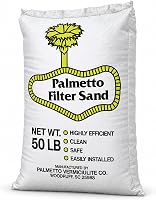
The Palmetto bag weighs 50 lb and uses natural silica sand screened to a 20 to 40 sieve grade. It suits above ground and inground pools and works with most pool filter pump brands.
Uniform grade matters because mixed sizes can pack too tightly or leave gaps that let debris pass. Each bag covers about 18 square inches at a 3-inch depth, but your manual decides how many bags to buy.
How do you reassemble and restart the filter?
Reassemble the head in reverse order. Seat the center pipe and tighten the clamp evenly per your manual.
Check the O-ring is clean, seated, and lubricated. A twisted O-ring can leak even with a tight clamp.
Connect hoses and return the valve to filter. Close the pump lid, union nuts, and drain plug before priming.
Prime the pump, run briefly, then stop and check for drips. Tighten only with the pump off and pressure released.
Start the pump and watch the gauge settle normally. If pressure shoots up, stop and check valve position, clogs, or uneven sand.
Let the pool circulate and check clarity the next day. Persistent cloudiness calls for a pressure check and a review of run time and chemical balance.
How do you backwash after a sand change?
Backwash only when pressure reaches the range in your manual. A fresh bed does not need an automatic backwash on day one unless pressure is high or debris is visible.
During backwashing, water flows upward and expands the bed to clean trapped particles. Stop when the sight glass runs clear, then return the valve to filter.
Too much backwashing disturbs the bed and wastes water. Too little lets debris build up, so the gauge should drive the decision.
Note the starting pressure as your baseline and backwash when it rises about 8 to 10 psi above it, or reaches your manual limit.
A cleaner helps with surface debris but cannot replace filtration. Read Why Does an Automatic Cleaner Not Replace the Pool Filter?.
For settled grit, a best pool filter sand vacuum can help after the system runs normally.
Can play sand or sensory sand replace pool filter sand?
No. Do not use play sand or sensory sand in a pool filter.
Pool filter sand is screened to a narrow grade so water flows evenly and debris stays trapped in the bed.
Play sand often has rounded grains, mixed sizes, and organic matter. Those traits can clog the bed, raise pressure, and reduce clarity.
Sensory sand is made to stick together for play, which is the opposite of what a filter bed needs.
Kinetic Sand is a 3.25 lb sensory play product made from natural sand that sticks together and never dries out. It is designed for creative play, sand art, and sensory bins.
Its grains and binders are for molding, not filtration, pressure flow, or chlorine exposure. Even a small amount of the wrong sand can require another full teardown and refill.
How do you choose the right replacement sand?
Choose screened pool filter sand in the grade your manual specifies. Look for a clean, uniform product made for sand filters, not generic sand.
A 50 lb bag is heavy but manageable with a helper. Smaller bags are easier to carry, yet total weight required matters more than bag size.
Keep unused sand dry and off the ground, away from chemicals and traffic. A torn bag can spill and mix with hard to remove grit.
If you want a different medium, compare options first. Our guide to pool filter sand alternative covers glass, zeolite, and other choices.
Learn how to use pool sand filter cleaner before running it over a newly leveled bed. For filtration differences, see How Does a Robotic Pool Cleaner Filter Water?.
What mistakes should you avoid when how to change sand in pool filter?
Never open the tank under pressure. Release pressure fully, confirm the gauge reads zero, then loosen the lid.
Do not use the wrong grade of sand. Rounded, fine, or mixed sand can pack too tightly and raise pressure, so avoid any bag without a stated pool filter grade.
Do not skip inspection. New sand cannot correct a cracked lateral, warped tank, or failed O-ring, and replacing parts now is cheaper than redoing the refill.
Avoid overfilling the tank. Extra sand can block the distributor, reduce headspace, and make the lid hard to seat, so use the depth or weight in your manual.
Confirm the valve is set to filter before starting the pump.
Most owners finish a sand change in one to two hours, plus circulation time. Wet sand makes the job take longer.
Draining and removing old sand take the most time. Refilling goes faster with the right amount ready and a helper for the bags.
Let the pool run at least one full circulation cycle before judging clarity, and note starting pressure as your backwashing baseline.
Frequently asked questions
How often should you change pool filter sand?
Most owners change pool filter sand every three to five years, or sooner if the water stays cloudy, the pressure rises faster than normal, or the grains feel rounded or contaminated. Check your filter manual for the schedule for your model, because use, debris load, and chemical balance can shorten the interval.
Can you reuse old pool filter sand?
You should not reuse old pool filter sand for filtration. Worn, dirty, or chemically coated grains trap debris less well and can return contaminants to the water.
Rinsing may clean the surface, but it does not restore sharp, uniform grains, so replacement is the safer choice for clear circulation.