Pool Pumps and Filters: The Complete Buying Guide
Pool pumps move water, and pool filters remove debris from it. Choose a compatible pump and filter by pool volume, required flow, filter capacity, plumbing, power, and the pool's above-ground or inground design.
On this page (11 sections)
- What do pool pumps and filters each do?
- Which pool pump types should you compare?
- Which pool filter types are available?
- How do you size a pool pump and filter?
- What equipment must work together?
- Should you buy a pump and filter combo?
- What should you check before replacing equipment?
- How do automatic cleaners fit into filtration?
- Which setup makes sense for your pool?
- Explore pool pumps and filters by topic
- Frequently asked questions
Pool pumps and filters work together to circulate pool water and remove debris. Choose a pump that can move water through your pool's plumbing and a filter that can handle the resulting flow.
Sizing is a system decision, not a horsepower contest. Pool volume, pipe layout, filter capacity, connection sizes, power, and pool type all matter.
This guide explains the main pump and filter types, the measurements to check, and how to avoid common compatibility mistakes. For a quick overview of each component's job, see pool pump vs pool filter.
What do pool pumps and filters each do?
A pool pump pulls water from the pool and pushes it through the filtration system. The filter catches suspended dirt and debris before water returns to the pool.
The pump does not clean water by itself, and a filter cannot circulate water without a pump. Plumbing, valves, baskets, and return fittings complete the loop.
A pump's flow depends on the full system, including pipe size, bends, elevation, and equipment resistance. A pump's horsepower alone doesn't tell you the flow your pool will get.
A filter has a flow rating and a capacity suited to its type and size. The pump and filter must be matched so water moves within the filter's limits.
Which pool pump types should you compare?
The right pump type depends on the pool's installation, required flow, and controls. Confirm the maker's approved use and electrical requirements for the exact model.
| Pump type | How it works | Check before choosing |
|---|---|---|
| Single-speed | Runs at one operating speed | Whether its flow suits the filter and plumbing |
| Variable-speed | Lets you select or program different speeds | Control features, power, and system compatibility |
| Above-ground system pump | Designed for an above-ground pool setup | Pool type, hoses or fittings, and pool volume |
| Booster pump | Adds flow for a compatible pressure-side cleaner or feature | Whether the cleaner or feature calls for a booster |
| Drain pump | Moves water for draining or transfer | Its intended use and safe discharge location |
Variable-speed pumps let you adjust circulation to match different needs, but they still need proper sizing and setup. One example, the Pentair EC-342001, is described as a variable-speed in-ground pump with three programmable speeds and a digital control keypad.
For a closer look at these controls and other options, see our best variable speed pool pumps.
Above-ground pool systems often combine a pump and filter in one package. The INTEX Krystal Clear is a sand filter pump intended for above-ground pools, with a six-function valve and built-in timer.
If you're shopping for an integrated setup, compare our best above ground pool pump and filter combos and best inground pool pump and filter systems.
Which pool filter types are available?
The three common pool filter types are cartridge, sand, and diatomaceous earth, or DE. They differ in how they capture debris and how you clean them.
| Filter type | How it captures debris | Routine care |
|---|---|---|
| Cartridge | Water passes through a pleated cartridge | Remove and rinse the cartridge; replace it when needed |
| Sand | Water passes through filter sand | Backwash and rinse the filter as directed |
| DE | Water passes through grids coated with DE media | Clean or backwash grids and replenish DE as directed |
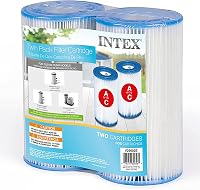
The INTEX 29002E Type A Pool Filter Cartridge is made with Dacron paper and is compatible with specified INTEX pump models 28603EG, 28637EG, and 28635EG.
A sand filter can suit owners who prefer cleaning by backwashing. INTEX describes its Krystal Clear pump as using sand that can last up to five years with regular backwashing, but follow the instructions for your exact model and media.
A DE filter uses filter grids and DE powder to capture fine material. It can involve more detailed maintenance and safe handling of the media.
Learn the basics in what is a DE pool filter.
The filter label matters when buying replacement parts. Compare model numbers, dimensions, connection type, and the specified media rather than choosing by appearance alone.
How do you size a pool pump and filter?
Start with your pool volume and the circulation target for your pool. Then check the pump's flow against the filter's rated flow and account for how your plumbing affects actual performance.
A pool's volume is a useful starting point, but it isn't a complete sizing formula. Pipe diameter, run length, fittings, valves, elevation, and other equipment add resistance that can reduce flow.
Use the manufacturer's sizing guidance or consult a qualified pool professional when the system layout is complex. Avoid selecting a pump only because it has a higher horsepower number.
The filter must be able to handle the pump's flow. If a pump can push more water than the filter is rated to process, the system may not operate as intended.
Before comparing options, gather:
- Pool type: above-ground or inground.
- Pool volume, in gallons.
- Existing pump and filter model numbers.
- Pipe diameter and connection style.
- Available voltage and wiring details.
- Any cleaner, heater, chlorinator, or automation connected to the system.
Then compare the pump's flow information and the filter's maximum flow rating. Check the equipment manual for any limits on flow, pressure, installation, or required accessories.
Horsepower is only one data point. The same horsepower can produce different system flow depending on pump design and plumbing resistance, so it isn't enough to compare pumps on its own.
What equipment must work together?
A pool pump and filter need compatible flow, fittings, power, and controls. Check each connection from the pool through the return line before buying a replacement or a complete system.
Start with the pump's inlet and outlet and the filter's ports. Measure or identify pipe and hose sizes, then confirm whether adapters are allowed and included.
Check voltage, phase, wiring, and the installation instructions for the exact pump. Don't assume a plug-in above-ground model and a hardwired inground model can be swapped.
Other equipment can affect the system's flow and pressure. A heater, salt system, cleaner, or automation panel may have its own operating limits or wiring needs.
The Hayward Xstream Above Ground 150 Cartridge Pool is described as an above-ground cartridge filter and pump system for flexible or rigid plumbing. Its Easy-Lok ring provides access to internal parts, so check its connections and installation space against your setup.
Check installation space too. Filters need room for service access, and pumps need the clearances and conditions specified in their manuals.
Should you buy a pump and filter combo?
A combo can simplify shopping when its pump, filter, and fittings are designed to work as a system. It can be a good starting point for a pool whose size and plumbing match the combo's stated use.
A separate pump and filter may give you more choice when replacing only one component or working with an existing installation. In either case, compare flow limits, connection sizes, and power requirements before ordering.
For pool-specific options, see our best pool pump and filter combo. If you already know the pump size you need, compare best 1 HP pool pump and filter combos and best 1.5 HP pool pump and filter combos.
Above-ground systems may use hoses and fittings that differ from inground plumbing. Check the exact pool type and connection sizes, even when a combo is marketed for a broad range of pools.
What should you check before replacing equipment?
Match the replacement to the existing system's requirements before removing or ordering parts. A similar-looking pump or filter may have different ports, electrical needs, or operating limits.
Record the old unit's model number and photograph its labels and connections. Check the manual for the approved replacement, then verify voltage, pipe size, flow, and mounting needs.
If replacing only the filter, confirm that its flow rating suits the pump. If replacing only the pump, check that its output will stay within the filter's limits.
A low-flow or stopped system can point to several causes, including a full basket, dirty filter, closed valve, air leak, or electrical fault. Use the troubleshooting steps in why your pool pump is not working before assuming the pump itself needs replacement.
For filter care, follow the model's cleaning instructions. Our guide to how to clean a pool filter covers the main steps by filter type.
How do automatic cleaners fit into filtration?
An automatic cleaner helps collect debris, but it doesn't replace the pool's main circulation and filtration system. The pool pump and filter still move and clean water throughout the system.
Robotic cleaners often collect debris in an onboard filter or basket. That can reduce debris on pool surfaces, but it doesn't mean water is being circulated through the pool's filter.
Read how a robotic pool cleaner filters water for the distinction.
Suction-side and pressure-side cleaners use the pool's plumbing in different ways. Some pressure-side cleaners need a compatible booster pump, so check the cleaner's requirements before adding equipment.
See why an automatic cleaner does not replace the pool filter if you're deciding whether a cleaner can stand in for a pump and filter.
Which setup makes sense for your pool?
Choose equipment by pool type and system requirements first, then compare features and maintenance. A compatible, correctly sized setup matters more than a larger horsepower number or a familiar brand.
For an above-ground pool, check whether the pump and filter are approved for that pool type, then match the stated pool volume, hoses, and power. The INTEX Krystal Clear is one sand filter pump example intended for above-ground pools.
For an inground pool, account for the existing plumbing, equipment resistance, electrical setup, and filter flow rating. A variable-speed option may offer adjustable controls, but confirm its model-specific requirements before choosing.
If you're replacing a cartridge, match the cartridge to the filter model. If you're choosing a full system, compare the pump and filter as a pair and verify every connection.
Your decision rule is simple: pick an integrated combo when its stated use and connections match your pool, or choose separate components when you need to match an existing setup. Compare the best pool filter system options next if the filter choice is still open.
Explore pool pumps and filters by topic
- Best Inground Pool Pumps
- Best Above Ground Pool Pumps
- Best Pool Booster Pumps
- Best Pumps for Draining Pools
- Best Replacement Pool Pump Motors
- Best 1 HP Replacement Motors for Hayward Pool Pumps
- How to Replace a Pentair SuperFlo Control Panel
- Best Pool Pump Seal and Gasket Repair Kits
- Best Replacement Pool Pump Baskets
- Best Pool Pump Timers
- How to Replace a Pool Pump
- Best Pool Equipment Covers for Pumps and Filters
- Best Pool Pump Accessories
- Best Sand Pool Filter and Pump Systems
- Which Pool Filter Media Should You Use?
- Best Replacement Pool Filter Cartridges
- How to Match a Replacement Pool Filter Housing
- Best Pool Filter Multiport Valves
- Best Pool Backwash Hoses
Frequently asked questions
Do pool pumps and filters have to be the same brand?
No, but the pump, filter, plumbing, and controls must work together. Check the filter's flow limit, the pump's flow at your system's resistance, connection sizes, and power requirements.
A matching brand may simplify model compatibility, but brand alone does not confirm that a system is correctly sized.
How do I size a pool pump and filter?
Start with the pool's water volume and the circulation target recommended for your pool and local conditions. Then account for pipe size, fittings, elevation, and equipment resistance, which affect actual flow.
Choose a filter rated to handle that flow, and confirm both units' connection and electrical requirements.
Which pool filter type is easiest to maintain?
Cartridge filters avoid routine backwashing, but their cartridges need periodic cleaning and replacement. Sand filters are cleaned by backwashing and rinsing, while DE filters require backwashing or cleaning plus fresh DE media.
Your water use, maintenance preference, and local rules can help decide.
Can I use an above-ground pool pump on an inground pool?
Don't assume the pump is suitable based on horsepower alone. Above-ground and inground systems can differ in plumbing, installation, and operating needs.
Check the manufacturer's approved pool type, flow requirements, electrical setup, and installation instructions before replacing equipment.
Does a robotic pool cleaner replace the pool filter?
No. A robotic cleaner can collect debris through its own basket or filter, but it doesn't take over the circulation system's job of moving water through the pool filter.
Keep the pump and filter maintained, and use the cleaner as a separate tool for surfaces and debris.