Pool pH Increaser vs Soda Ash: Is There a Difference? (November 2026)
Most pool pH increasers are soda ash, so the difference is mainly dose, package size and purity. In this ph increaser for pool vs soda ash guide, check the label for sodium carbonate and pick the size that matches your pool.
On this page (11 sections)
- Ph increaser for pool vs soda ash: the quick verdict
- The two side by side: ingredient and form
- Ingredient clarity decides more than branding
- Package size and pool size
- Dose, testing and pH bounce
- Pool increaser vs bulk soda ash: handling and storage
- Who should buy a pool pH increaser?
- Who should buy soda ash in bulk?
- Best pool pH up chemical: how the four compare
- Clarify product ingredients and labeling before selecting
- Final verdict on ph increaser for pool vs soda ash
Most pool pH increasers are soda ash, so the choice comes down to label, dose and package size. The ph increaser for pool vs soda ash question matters when you see one container labeled for pools and another sold as a bulk chemical.
Sodium carbonate is the chemical name for soda ash. When a pool product lists sodium carbonate as its ingredient, it is doing the same basic job as a soda ash product.
The difference may be in purity, granule form, directions and how much you get for your money.
Our score weighs specs, features and buyer feedback against what you are shopping for. We compared the four options below by ingredient, package size, form and the pool size they suit best.

Ph increaser for pool vs soda ash: the quick verdict
Buy the pool-labeled product if you want simple dosing, and buy soda ash if you want bulk value. Both can raise pH when the ingredient is sodium carbonate.
The label should decide, not the product name alone.
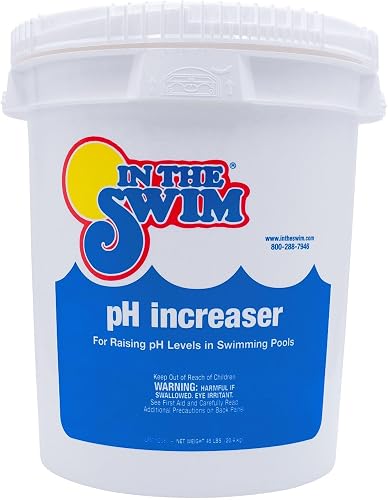
In The Swim lists its 25-pound and 45-pound options as granular 100% sodium carbonate. Essential Values lists a 2-pound soda ash powder for pools and spas.
Duda Energy lists a 50-pound pail of 99.8% or more soda ash in dense granular form.
That overlap is the key point. Soda ash is not a weaker substitute by default.
It is the active ingredient in many pool pH increasers. What changes is how the seller packages it and how clearly the directions match your pool volume.
If you are new to water care, a pool-specific container with clear directions is easier to use. If you already test water and dose by volume, a bulk soda ash option can be a practical choice.
Our guide to swimming pool chemicals helps place pH products in the wider set you may need.
The two side by side: ingredient and form
Check the ingredient panel first, because sodium carbonate is what does the work. A pool pH increaser and a soda ash product can look different on the shelf and still be the same chemical inside.
In The Swim says its product is composed of sodium carbonate or soda ash and raises total alkalinity and pH. Essential Values says its powder is made from sodium carbonate in granular form.
Duda Energy lists its product as sodium carbonate, Na2CO3, at 99.8% or more soda ash with 0.2% water.
Form also matters for handling. Granular material is generally easier to spread across the pool surface than a fine powder that can drift or cloud one area.
In The Swim options are granular, Essential Values is granular and powder, and Duda Energy is powder in dense granular form.
Purity statements differ too. In The Swim says 100% sodium carbonate.
Duda Energy says 99.8% or more soda ash. None of those statements alone proves a product will dose better in your pool.
The table below puts the shared facts in one place.
| Product | Package | Form | Ingredient |
|---|---|---|---|
| In The Swim 25 lb | 25 pounds | Granular | Sodium carbonate |
| In The Swim 45 lb | 45 pounds | Granular | Sodium carbonate |
| Essential Values 2 lb | 2 pounds | Granular, powder | Sodium carbonate |
| Duda Energy 50 lb | 50 lb pail | Powder | Sodium carbonate |
Ingredient clarity decides more than branding
Read the label for sodium carbonate, then ignore the marketing name. A pool brand name does not change the chemistry, and a bulk chemical name does not make it wrong for a pool.
Shoppers sometimes assume soda ash is a different chemical than a pool pH increaser. In these products, soda ash is the ingredient that raises pH.
Look for the chemical name, not just a trade name. If a label lists something else, or does not list an ingredient clearly, pause and check the directions for your pool type.
Pool-specific products may add helpful context. In The Swim ties its product to maintaining pH between 7.2 and 7.6 for comfort and safety.
That range is a useful target to test against. A bulk soda ash pail may give less pool-specific guidance, even if the chemical inside is suitable.
Dosing directions are the other label detail to compare. Essential Values gives one use per 10,000 gallons, with 2 uses per container for its 2-pound size.
That kind of direction helps a spa or small pool owner avoid guesswork.
Package size and pool size
Match the package to your water volume, not to the lowest price per pound. A large bag is only a bargain if you will use it before storage becomes a problem.
Essential Values at 2 pounds suits a hot tub, a small plunge pool or a first correction in a modest pool. A 25-pound container suits a standard backyard pool where pH adjustments repeat through the season.
The In The Swim 45-pound option and the Duda Energy 50-pound pail are for larger pools or owners who already know their dosing routine. Their package weight is about 49 to 53 pounds.
You will need a dry, safe place to store that quantity away from children and pets.
Think about how often your pH falls. If acidic water is a one-time issue after filling or heavy rain, a small container may be enough.
If your pool loses pH every week, a mid-size or bulk option reduces repeat orders.
Dose, testing and pH bounce
Add a partial dose, test, then add more if needed. Soda ash raises both pH and total alkalinity, so a full correction in one step can overshoot one or both readings.
Alkalinity stabilizes pH in pools and helps prevent sudden swings known as pH bounce. When alkalinity is low, pH can swing fast.
When you raise alkalinity with soda ash, pH often rises with it.
A safe routine is to test pH and total alkalinity first. Add a measured amount based on your pool volume and the label directions.
Run the pump to mix the water, wait for the product to dissolve, then test again.
Keep the target range in mind. In The Swim states a range of 7.2 to 7.6.
It also notes that pH above 8 risks skin rashes, while below 7 stings eyes. Those comfort points are a reason to test after each addition instead of treating pH as a set-and-forget reading.
How to lower ph in pool water if you overshoot
If you add too much soda ash, test first and use an acid product only by its own directions. Overshooting pH is easier to fix when you catch it early with a test, before swimmers use the pool.
Our guide on how to lower ph in pool water covers the opposite correction. Avoid mixing chemicals in the same spot.
Add one product, let it disperse, test, and only then decide on the next step.
Pool increaser vs bulk soda ash: handling and storage
Granular soda ash is easier to handle than fine powder, and bulk pails need more storage space. The physical form can matter as much as the chemistry when you use a product often.
Granular material spreads more evenly across the water surface. Powder can create a concentrated patch if you dump it in one place.
In The Swim calls its options granular. Duda Energy describes dense granular form, which should also spread better than a loose powder.
Storage is the trade-off with bulk. A 50-pound pail is heavy and takes floor space.
Keep it dry, closed and out of reach. Label any container you transfer it into, and never store it where children could mistake it for a household powder.
For a spa, the 2-pound Essential Values container is easier to store in a cabinet. For a standard pool, 25 pounds may be a reasonable season supply.
For a large pool, 45 or 50 pounds may be justified, but only if you have the space.
Who should buy a pool pH increaser?
Choose a pool-labeled increaser if you want directions written for your water volume. That simplicity is the main advantage, since the active ingredient is often the same soda ash.
The In The Swim 25-pound option suits most backyard pool owners who want a pool-specific product in a manageable quantity. The 45-pound version suits larger pools or owners who adjust pH often and want fewer reorders.
Essential Values suits hot tub and small pool owners. Its 2-pound size and per-use guidance make it a better fit for a spa than a 25-pound bag.
Essential Values also says the product is compatible with all sanitizing systems and helps prevent corrosion on equipment and surfaces.
Our page on the best soda ash for pools gives more detail on soda ash options for pool use. It can help you compare the same ingredient in different package sizes before you decide.
Who should buy soda ash in bulk?
Choose bulk soda ash if you already test water and want the most quantity for storage. Experience matters more than the product name when you move to a bulk pail.
The Duda Energy 50-pound pail suits experienced owners or buyers who use soda ash for more than one purpose. Duda Energy lists uses beyond pools, such as water softening and cleaning, and describes the grade as industrial or technical grade.
Bulk soda ash is not automatically better. If you need precise pool dosing and you do not want to calculate from a generic label, a pool-specific product is a safer first buy.
You can move to bulk later, once you know how much your pool actually needs per season.
Our comparison of pool alkalinity increaser vs baking soda is a useful companion read. Baking soda is a different product, and this guide does not treat it as the same as soda ash.
Best pool pH up chemical: how the four compare
The best choice depends on pool size, not on the word increaser or soda ash. The four products here share sodium carbonate, so size and guidance separate them.
In The Swim 25 pounds is the balanced pick for a standard pool. It is granular, pool-specific and large enough for repeat use without the storage load of a 50-pound pail.
In The Swim 45 pounds is the step up for a larger pool or a heavy-use season.
Essential Values 2 pounds is the small-water pick. Its per-use guidance for 10,000 gallons makes it easy to judge for a hot tub or a small pool.
Duda Energy 50 pounds is the bulk pick for buyers who want quantity and can handle the storage and weight.
Our roundup of the best pool ph up chemical options puts these types in a wider buying list. Use it if you want to see how other pool-specific increasers compare on form and package size.
Clarify product ingredients and labeling before selecting
The label is the tiebreaker in this comparison. Before you buy, confirm the ingredient, the form, the dose basis and the target range on the container you choose.
Check that the product lists sodium carbonate or soda ash as the active ingredient. Check whether the dose is given per gallon, per 10,000 gallons or by another measure you can match to your pool volume.
Check the target pH range and whether the directions mention total alkalinity.
Also check the form. Granular products are usually easier to spread.
Powder products need more care to avoid a concentrated patch. Package weight matters for storage, especially above 25 pounds.
Our guide to pool chemicals muriatic acid is a reminder that pH control has two directions. Soda ash raises pH.
Acid products lower it. Testing tells you which one you need.
Final verdict on ph increaser for pool vs soda ash
Pick In The Swim 25 pounds for a standard pool, Essential Values for a spa, and Duda Energy only for bulk use. That rule covers most buyers without overthinking the chemistry, since sodium carbonate is the shared ingredient.
If you want pool-specific directions and a sensible quantity, start with a pool pH increaser. If you already know your dose and want quantity, soda ash in bulk can be the practical pick.
Either way, test pH and alkalinity before and after each addition, and aim for the 7.2 to 7.6 range stated by In The Swim.
For broader water-care planning, our guide to swimming pool chemicals sits alongside this one. Two other guides in the plan cover different equipment questions: What Is the Difference Between a Pool Vacuum and a Robotic Cleaner? and What Is the Difference Between Random and Mapped Pool Coverage?.
They are not part of this pH comparison, but they show how the site groups chemical and equipment topics for readers.
The ph increaser for pool vs soda ash answer is therefore simple. The chemical is often the same.
The package, the directions and the amount you will actually use make the difference.
Frequently asked questions
Is pool pH increaser the same as soda ash?
Often yes. Many pool pH increasers list sodium carbonate, which is soda ash, as the main ingredient.
The practical differences are package size, purity statement, form and whether the label gives pool-specific dose directions.
Always check the ingredient panel before you buy.
Can I use soda ash instead of a pool pH increaser?
Yes, if the soda ash is sodium carbonate and you follow its dose directions for your water volume. Pool-branded products may make dosing simpler, while bulk soda ash can suit experienced owners.
Test pH and alkalinity after small additions instead of adding a full dose at once.
Does soda ash raise alkalinity as well as pH?
Yes. Sodium carbonate raises total alkalinity and pH together, and alkalinity helps stabilize pH against swings.
That is why a pH increaser can affect both readings.
Test both levels after dosing, since a large addition can move alkalinity more than you expect.


