Can You Use an Extension Cord with a Pool Pump?
You generally should not use a standard extension cord with a pool pump. Pool pumps need the correct voltage, grounding, GFCI protection, cord rating, and outlet location, so have a qualified electrician check the setup before connecting one.
On this page (9 sections)
- Is a pool pump extension cord safe?
- Why can an extension cord cause pump problems?
- What electrical requirements does a pool pump need?
- Can you use a pump with its built-in cord?
- Should a booster pump use an extension cord?
- Can a timer replace an extension cord?
- Can you bury or hide a pool pump extension cord?
- What should you check before connecting a pump?
- What is the safest choice for a pool pump?
You generally should not use a standard extension cord with a pool pump. A pool pump needs the right voltage, circuit capacity, grounding, bonding, GFCI protection, and outdoor-rated connections, so a qualified electrician should check the setup before you connect power.
An extension cord may look like a simple way to reach a distant outlet, but pool equipment has extra electrical risks. The cord can be too long, too small, damaged, exposed to water, or connected to an outlet that cannot safely handle the motor's starting load.
Is a pool pump extension cord safe?
A standard household extension cord is usually not a safe permanent solution for a pool pump. Motor-driven equipment can draw more current when starting, and a long cord can cause voltage drop or heat at the plug and connections.
Read the pump's manual and nameplate first. Check the voltage, amperage, plug type, recommended circuit, and whether the pump requires a dedicated circuit or a specific disconnect.
The outlet must also be suitable for the location. Pool equipment usually needs GFCI protection, proper grounding, and bonding that matches local electrical rules.
GFCI protection can shut off power when it detects an imbalance, but it does not make an incorrect cord or damaged connection safe.
The pool pumps and filters buying guide explains how pump type, flow needs, and installation details affect the rest of the system.
Why can an extension cord cause pump problems?
An undersized or overly long cord can reduce voltage at the pump and increase heat. The motor may struggle to start, trip the circuit, run noisily, or suffer damage if the cord and circuit cannot support its electrical load.
Do not judge a cord by how thick it feels. Wire gauge, cord length, outdoor rating, plug design, and the pump's electrical requirements all matter together.
Keep every connection away from puddles, splash zones, wet soil, and areas where people walk. Never join cords together to gain more reach, run a cord under a rug, or use a damaged plug.
A cord is also a trip hazard around the pool. Even a cord that works electrically may create an unsafe path across a deck, walkway, or equipment area.
What electrical requirements does a pool pump need?
The pump, outlet, circuit, and protection must all match. A correct installation normally considers voltage, circuit capacity, GFCI protection, grounding, bonding, weather exposure, and the required shutoff location.
Voltage is especially important. A 120-volt pump cannot be treated like a 230-volt pump, and an outlet that physically accepts a plug may still be electrically wrong for the equipment.
Grounding and bonding are related but different. Grounding helps provide a path for fault current, while bonding connects conductive parts so dangerous voltage differences are reduced.
Read how to ground a pool pump before changing any wiring, and have an electrician complete work that requires opening a panel or installing a circuit.
The pool pump outlet guide covers outlet placement and the questions to ask before choosing a connection point. Do not assume the nearest outdoor outlet is suitable.
Can you use a pump with its built-in cord?
A pump with a factory-installed cord still needs a suitable outlet and protection. The built-in cord length does not prove that the pump can safely use an additional extension cord.
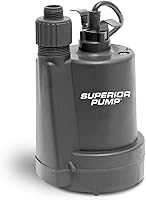
The Superior Pump 91250 1800GPH Thermoplastic Submersible Utility Pump with 10-Foot Cord, 1/4 HP has a 10-foot cord, moves up to 1,800 gallons per hour, and lifts water up to 25 feet. Its thermoplastic body has a 1-1/4 in NPT discharge, a 3/4 in garden hose adapter, a removable suction screen, and handling for solids up to 1/8 in.
This pump is designed for water treatment, lawn irrigation, emergency situations, construction, and long-term use. Its built-in cord can help place the pump closer to a suitable outlet, but it does not remove the need to keep electrical connections dry and protected.
Use the pump only for a setup that matches its instructions and local rules. A submersible utility pump is not automatically a substitute for a permanently installed circulation pump.
Should a booster pump use an extension cord?
A booster pump should have a properly planned electrical connection rather than a casual extension cord. Its motor, voltage, circuit, and connection method must match the pressure cleaner and pool equipment system.
The Polaris PB4-60 Booster Pump with 60-Hertz Motor is a 3/4-horsepower booster pump for Zodiac Polaris pressure cleaners. It has a 60-hertz motor, uses 230 volts, weighs 24 pounds, and measures 15.08 in L x 8.82 in W x 8.82 in H.
The pump can work with above-ground and in-ground pools, and its maximum lifting height is 6 feet. Those details help identify the equipment, but they do not determine whether your existing outlet or extension cord is safe.
A booster pump installation may also involve the pressure cleaner, filter system, timer, disconnect, bonding, and equipment-pad layout. If you need a new unit rather than a temporary connection, review how to replace a pool pump before removing the old equipment.
Can a timer replace an extension cord?
A timer can control pump operation, but it cannot correct an unsafe power connection. Install the timer only in an enclosure and circuit that match its voltage, load, terminals, and local electrical requirements.
The Intermatic T101M 24-Hour Mechanical Timer (Mechanism Only) - 120V SPST, Heavy-Duty, Manual Override, 40 Amp - Ideal for Lights, Pumps, Fans, and HVAC Systems is a 120-volt SPST mechanical timer mechanism. It includes one ON tripper, one OFF tripper, and a user manual, and it supports 12 ON/OFF operations per day.
This is the mechanism only, so it is not a complete outdoor enclosure or a replacement for proper wiring. It fits most Intermatic enclosures and uses teeter-type terminals for multiple load connections, but the circuit still needs correct grounding, protection, and installation.
A timer can reduce unnecessary run time when correctly installed. It should not be used to hide a cord connection that is too short, too light, exposed to weather, or connected to the wrong outlet.
Can you bury or hide a pool pump extension cord?
Do not bury, cover, or hide an extension cord as a substitute for permanent wiring. A cord underground or under a deck can be damaged by moisture, digging, movement, heat, or pressure, and the damage may be hard to see.
A permanent underground electrical route needs the correct cable, conduit, depth, protection, disconnect, and inspection for your location. Read can you install a pool pump underground? before planning any below-grade equipment arrangement.
Keep the pump and electrical components accessible for inspection and service. Do not place the pump where flooding can reach the motor, connections, or control equipment.
What should you check before connecting a pump?
Stop and verify the entire power path before switching on the pump. Use this checklist:
- Read the pump's voltage, amperage, and cord requirements.
- Confirm the circuit and outlet match the pump.
- Verify GFCI protection and the correct grounding and bonding.
- Check that the cord and plug have no cuts, crushed sections, or loose parts.
- Keep connections away from water, splash, puddles, and foot traffic.
- Make sure the pump has ventilation and remains accessible.
- Ask a qualified electrician to inspect any uncertain installation.
Do not reset a tripping GFCI repeatedly. A trip can indicate moisture, a damaged cord, a fault in the pump, or a wiring problem that needs attention.
For equipment protection, compare the best DE powder for pool filters when your filtration system uses diatomaceous earth. A clean filter can support normal circulation, but it cannot fix an electrical issue.
What is the safest choice for a pool pump?
The safest choice is a correctly installed outlet or hardwired circuit that reaches the pump without an extension cord. Use a qualified electrician when the setup involves a new circuit, 230-volt equipment, grounding, bonding, GFCI protection, or permanent outdoor wiring.
Choose the Superior Pump 91250 when its built-in 10-foot cord suits a compatible temporary water-moving task. Choose the Polaris PB4-60 when you need its 230-volt, 3/4-horsepower booster-pump design for Zodiac Polaris pressure cleaners.
Choose the Intermatic T101M when you need a compatible 120-volt timer mechanism in an appropriate Intermatic enclosure. A timer controls a suitable circuit, while it does not make an extension cord installation safe.
Once the electrical setup is correct, protect the equipment from weather without blocking ventilation. These pool equipment covers for pumps and filters and above-ground pool pump cover ideas can help you plan protection around the equipment pad.
Frequently asked questions
Can you run a pool pump with an extension cord?
You generally should not run a pool pump from a standard extension cord. A pump may need a dedicated circuit, correct voltage, grounding, and GFCI protection, while a long or undersized cord can create voltage drop, heat, and trip hazards.
Ask a qualified electrician to confirm any temporary setup.
What size extension cord do I need for a pool pump?
There is no safe universal cord size for every pool pump. The correct choice depends on the pump's voltage, amperage, motor requirements, cord length, outdoor rating, and the circuit's protection.
Follow the pump manual and local electrical rules, and never replace a required permanent circuit with a guess.
Does a pool pump need a GFCI outlet?
Pool pump equipment generally needs GFCI protection because water and electricity create a serious shock risk. The exact outlet, disconnect, bonding, grounding, and installation rules depend on the pump and local code.
Have a qualified electrician inspect the equipment location before use.
Can I leave a pool pump extension cord outside?
Do not leave a regular indoor extension cord outside near pool water. Outdoor cords still need the correct rating, length, plug connection, protection from damage, and GFCI-protected power.
Keep connections away from standing water, and use a permanent installation when the pump will remain in service.