How to Clean a Pool Filter
To clean a pool filter, turn off the pump, relieve system pressure, and follow the steps for your filter type: rinse cartridges, backwash sand filters, and clean DE grids as directed by the manual. Restart only after the filter is assembled and the pressure-release steps are complete.
On this page (7 sections)
To clean a pool filter, shut off the pump, relieve pressure, and use the method made for your filter: rinse a cartridge, backwash sand, or service DE grids according to the manual. Put the filter back together before restarting, then check for leaks and normal pressure.
Cleaning method matters because cartridges, sand, and diatomaceous earth (DE) trap debris in different ways. If you aren't sure which system you have, check its label or manual before opening it.
How do you clean a pool filter safely?
Turn off the pump and release trapped pressure before opening any filter. Follow the equipment manual for the air relief valve, drain, and valve positions.
Keep the pump off while opening the filter tank or changing a multiport valve setting. A closed valve or a running pump can leave pressure trapped in the system.
Wear eye protection and gloves if the manual or cleaner label calls for them. Keep children and pets away from the work area, and don't mix filter cleaners with other chemicals.
Before starting, note the clean pressure shown on the gauge. After cleaning, you can compare the reading at the same pump speed and valve setting to spot changes in flow or filter loading.
How do you clean a cartridge pool filter?
Remove the cartridge and rinse between the pleats with a gentle hose stream. Work from top to bottom, turning the cartridge so water reaches each pleat.
- Turn off the pump and relieve pressure as directed.
- Open the tank and lift out the cartridge.
- Rinse loose leaves, hair, and dirt from the pleats.
- Inspect the cartridge for tears, crushed pleats, or damaged end caps.
- Soak it in a cartridge cleaner if oily residue remains, following the cleaner label.
- Rinse thoroughly, reinstall it, and close the tank as directed.
Avoid pressure washers and narrow, forceful jets, which can harm filter fabric. A cartridge with tears or separated parts may need replacement rather than more cleaning.
For the full cartridge procedure, see how to clean a cartridge pool filter. A pool filter cleaning stand can hold a cartridge upright while you rinse it, if that makes the pleats easier to reach.
What tools and cleaners help with cartridge cleaning?
A hose nozzle helps rinse loose debris, while a soak cleaner can address greasy residue. Use either only as directed for your cartridge and pool system.
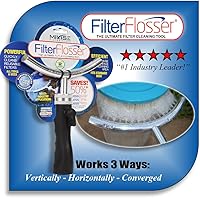
The Filter Flosser has an aluminum nozzle and attaches to a regular garden hose. Its maker describes a curved spray pattern intended to reach between cartridge pleats.
Skip a nozzle if your current hose spray already rinses the pleats without damaging them. The key is controlled water flow, not a sharper jet.
For oily film that remains after rinsing, a soak cleaner may be useful. Spa Depot Power Soak is a granular cleaner for pleated spa and pool cartridges; its product directions call for dissolving 1/2 cup in 5 gallons of water and rinsing the cartridge thoroughly after soaking.
MAV AquaDoc's soak cleaner is described for cartridge, sand, and DE filters, with a 60-minute soak time. Check the container instructions and confirm the cleaner suits your filter before using it.
Compare options in our guide to the best pool filter cartridge cleaner, or see steps for homemade pool filter cartridge cleaner. Don't use household degreasers unless your filter maker approves them.
How do you clean a sand pool filter?
Clean a sand filter by backwashing when its pressure or flow indicates it needs service. Set the multiport valve to the correct positions in the order given by the filter manual.
With the pump off, move the valve to Backwash. Turn the pump on and run it until the sight glass or waste line shows the water has cleared, if your model has that feature.
Turn the pump off before moving the valve to Rinse. Run the rinse cycle for the time specified by the manual, then turn the pump off again and return the valve to Filter.
Backwashing sends water and debris to waste, so check that the discharge hose is secure and the water has a safe place to go. Don't backwash longer than needed, since it uses pool water and may lower the water level.
Sand doesn't need to be removed for routine backwashing. If pressure remains high or water quality stays poor after the manual's cleaning steps, check for valve, media, or plumbing issues rather than repeatedly backwashing.
How do you clean a DE pool filter?
Backwash a DE filter as directed, then inspect and clean the grids when the manual or filter condition calls for it. DE filters have internal grids that can hold debris and need the right amount of DE after service.
Turn off the pump, relieve pressure, and follow the manual to open the tank. Remove the grids carefully and rinse them with a gentle hose stream, including the spaces between the fabric folds.
Look for torn fabric, broken supports, or damaged connections. Replace damaged parts as directed, since a damaged grid may let DE pass into the pool.
After reassembly, add the correct DE amount through the skimmer or other point specified by the manufacturer. Use the product and quantity approved for your model; don't guess based on another filter's size.
How can you tell when a pool filter needs cleaning?
Clean when pressure rises above the clean baseline or pool circulation drops, using the threshold in your filter manual. A dirty basket, clogged cleaner, or closed valve can also reduce flow, so check those before opening the filter.
Record the gauge pressure after cleaning with the pump running in its normal configuration. Compare future readings under similar conditions rather than relying on a universal pressure number.
If your gauge is broken or stuck, replace it before using pressure as a cleaning signal. Also check pump and skimmer baskets for leaves, since clearing them may restore flow without servicing the filter.
An automatic cleaner doesn't remove the filter's job of treating circulated water. Learn how a robotic pool cleaner filters water and why an automatic cleaner doesn't replace the pool filter.
What should you check after cleaning?
Confirm the tank is closed, the valve is in the correct setting, and the pressure is released before restarting. Watch the filter and nearby plumbing for leaks as the system comes up to operating pressure.
For a cartridge, check that it sits correctly and the tank seal is clean and seated. For sand or DE, confirm the multiport valve is back on Filter and any required rinse or DE steps are complete.
If the system leaks, makes unusual noises, or shows a pressure reading outside its normal range, switch it off and check the manual. Don't tighten a pressurized filter or open the tank while the pump is running.
Use a pool filter wrench only if the tank design calls for one, and follow the tool and filter instructions. A wrench should help loosen or secure a lid, not force a misaligned or pressurized assembly.
Which pool filter cleaning method should you use?
Use a hose rinse for cartridges, backwashing for sand, and the manual's backwash and grid-care steps for DE. Choose a soak cleaner when a cartridge has oily residue that water alone doesn't remove.
A hose nozzle suits routine cartridge rinsing, while a soak product can help with buildup between pleats. The three cleaners above are options to compare, not substitutes for checking the label and filter instructions.
If you're comparing equipment rather than cleaning it, start with pool pumps and filters. The right maintenance routine depends on the filter you own, its manual, and the pressure and flow changes you observe.
Frequently asked questions
How often should you clean a pool filter?
Clean a pool filter when its pressure rises above the clean starting pressure by the amount your manufacturer recommends, or when flow drops. The interval depends on debris, pool use, and filter type, so record the clean pressure after service and check the gauge regularly.
Can I clean a pool filter with a garden hose?
A garden hose can rinse loose debris from cartridge pleats and DE grids when the manual allows it. Use a gentle, angled stream and work from top to bottom; high pressure can damage filter material.
Sand filters are cleaned by backwashing, not by spraying the media.
Should I turn off the pool pump before cleaning the filter?
Yes. Turn off the pump before moving a multiport valve, opening the filter, or removing a cartridge, and relieve trapped pressure using the filter's air relief valve as directed.
Never open a pressurized filter, and confirm the system is assembled before restarting.
Do sand and DE filters get cleaned the same way?
No. Sand filters are usually cleaned by backwashing and rinsing through the valve setting specified by the manufacturer.
DE filters are backwashed when needed, then their grids may need inspection and fresh DE added according to the manual; cartridge filters are removed and rinsed.