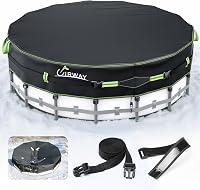
Can a Solar Pool Cover Serve as a Safety Cover?
No, a solar pool cover is not a safety cover. A solar blanket floats on the water to trap heat, while a safety cover anchors across the pool to support weight and block entry. Do not rely on a solar blanket to keep kids or pets out of the water.
On this page (10 sections)
- Is a solar safety pool cover the same as a safety cover?
- What does a solar pool cover actually do?
- Why can't a solar blanket hold a person's weight?
- What makes a cover a true safety cover?
- How do winter covers compare to solar and safety covers?
- When does a mesh cover help instead of a solid cover?
- Which mesh winter cover suits pools that need drainage?
- How do you choose the right cover for your pool?
- How do you install and remove a safety cover safely?
- What should you avoid when shopping for a solar safety pool cover?
No, a solar safety pool cover is not a real safety cover. A solar blanket floats loose on the water to trap heat, while a safety cover spans the pool and anchors to the frame or deck to hold weight and block entry.
This guide explains the difference in plain terms. You will see what each cover does, why solar blankets fail as barriers, and what to choose instead.
Is a solar safety pool cover the same as a safety cover?
No, they are different products with different jobs. A solar cover traps heat, and a safety cover acts as a barrier.
A solar blanket is a thin polyethylene sheet that floats on the water and warms the top layer. It has no anchors and no load rating.
A safety cover is heavier mesh or solid fabric that stretches across the opening. It attaches with straps, springs, or a cable and winch, and resists weight.
Think of a solar blanket as a blanket on a bed. Think of a safety cover as a locked gate.
What does a solar pool cover actually do?
A solar pool cover traps heat from the sun and slows heat loss at night. It also reduces evaporation and keeps some debris off while the pool is open.
Most solar blankets float loose on the water with no attachment. Wind can push them aside, and they can bunch or fold over.
They are light by design, so they are easy to roll up and store each day. That lightness also means the sheet cannot support a person or seal the pool, so a child or pet could slip under the edge.
Use a solar blanket for warmth and a safety cover for protection. Our guide to swimming pool covers breaks down each type and where it fits.
Why can't a solar blanket hold a person's weight?
A solar blanket cannot span the pool or resist weight because it has no anchors and no strength. It floats, so water supports it from below and weight pushes it under.
A safety cover works in the opposite way. It bridges the opening and transfers weight to anchors on the frame or deck, with taut fabric spreading the load.
A child or pet stepping on a solar sheet can push it under the water and panic. If you want a cover that holds weight, look for one sold as a safety cover.
Our list of best inground pool safety covers shows the anchored designs made for that task.
What makes a cover a true safety cover?
A true safety cover anchors across the pool and uses load-rated materials. Anchors, straps, springs, or a cable keep the fabric taut and resist sagging.
Look for four traits. It spans the full opening, uses purpose made hardware, uses fabric heavier than a solar sheet, and is sold by the maker as a safety cover.
Fit matters as much as material. Too large will sag, and too small will pull at its anchors.
Measure the opening and follow the size chart for your pool type. For above ground pools, covers often use a cable through grommets, tightened with a winch over the top rail.
Start with our guide to a safety cover for above ground pool for that type.
How do winter covers compare to solar and safety covers?
Winter covers protect the pool during the off season, but most are not safety covers. They block snow, ice, and debris, but may still sink or fail under weight unless made as safety covers.
Many covers look similar in photos. A solid winter cover, a mesh winter cover, and a safety cover can all sit over the pool.
Their strength and anchors set them apart. A solid winter cover keeps water off the surface and may need pumping.
A mesh cover lets water drain through while blocking debris.
Both help with closing the pool, but neither is automatically a safety barrier. The products below are winter and mesh covers for 24 ft round above ground pools, and they show why they still differ from a solar blanket.
The Robelle 24 ft Heavy Duty Super Winter is a solid winter cover for 24 ft round above ground pools. It has a 4 ft overlap, so the full cover measures 28 ft.
It uses heavy duty polyethylene at 2.36 ounces per square yard, woven with an 8 x 8 scrim. Robelle says it is 18 percent heavier than industry standard and backs it with a 10-year warranty.
A winch and cable run through grommets around the edge. It should float loosely on the water, and it protects against snow and ice, not as a solar blanket or safety barrier.
When does a mesh cover help instead of a solid cover?
A mesh cover lets water drain through while blocking leaves and debris. That trait makes it useful in fall and winter, and it is not a heat trapper like a solar blanket.
Mesh covers are lighter and easier to move than solid covers. Rain and snowmelt pass through the fabric instead of pooling on top, which reduces the need to pump water off in freezing weather.
The trade-off is protection. Mesh does not seal the pool as fully as a solid cover, and fine dirt can pass through.
For fall cleanup, a leaf net version can sit over a winter cover and catch leaves before they stain it. You lift the net off with the debris in one motion, which saves scrubbing at spring opening.
The Blue Wave Arctic Armor 24-ft Round Leaf is a mesh leaf net for 24 ft round above ground pools. It has a 3 ft overlap and grommets spaced every 2 ft around the edge.
The kit includes a vinyl-coated cable, a metal winch, and reinforced grommets.
Blue Wave says the treated polyethylene mesh drains rain while leaves collect on top. The net can layer over a winter cover or sit directly over the pool for light seasonal coverage.
It is backed by a 4-year limited warranty.
Blue Wave also states plainly that this net is not a certified pool barrier or drowning prevention device. Use this type of net for leaf season, not for safety.
Which mesh winter cover suits pools that need drainage?
The Blue Wave Arctic Armor 24-ft Round Rugged is a fine mesh winter cover for 24 ft round above ground pools. It blocks debris while water drains through, which suits late fall through winter use.
It has a 4 ft overlap that extends down the pool wall. Hardware includes heavy-duty metal grommets, a rust-resistant vinyl-coated cable, and a metal locking winch.
Blue Wave backs it with an 8-year limited warranty.
The cover folds compactly for storage. It is made of woven polyethylene and does not need a pump for drainage in freezing weather.
Blue Wave says it is not intended as a safety cover.
Place this type of cover on in late fall and remove it in early spring. That timing keeps debris off the pool through the cold months.
At opening, you will have less debris to clear from the water.
Compare it with the leaf net above. The leaf net is for fall debris on top of a winter cover.
This rugged mesh cover is a full winter cover that sits over the pool itself. Both drain water, and neither heats the pool like a solar blanket.
How do you choose the right cover for your pool?
Choose by job first, then by pool type and size. Decide if you need heat, debris protection, winter protection, or barrier safety.
If you swim daily and want warmer water, a solar blanket fits. If you close the pool for winter, a solid or mesh winter cover fits.
If kids or pets can reach the pool when closed, a safety cover fits.
Above ground pools use cable and winch systems around the top rail. Inground pools use straps and springs anchored to the deck, so measure shape, diameter or length, and top rail width.
Our comparison of pool winter covers vs safety covers walks through these choices side by side.
How do you install and remove a safety cover safely?
Install a safety cover tight and anchored, with no loose edges. A loose cover can sag, collect water, and fail under weight.
For above ground pools, thread the cable through the grommets and tighten it with the winch. For inground pools, hook straps or springs to deck anchors and check each one.
Walk around the pool and confirm the cover sits taut on all sides.
Removal needs care too. A cover loaded with water or debris can be heavy, so work with a helper and fold it as you go.
Our guide on how to remove pool safety cover covers each step.
Store any cover clean and fully dry in a cool, dry place.
What should you avoid when shopping for a solar safety pool cover?
Avoid any cover marketed with both words but no safety rating. If a seller calls a thin floating sheet a safety cover, do not trust that label.
Avoid covers with no anchors. A safety cover must attach to something solid, and a floating sheet with free edges cannot resist weight or block entry.
Avoid guessing on size. Measure the opening and check the overlap, since too small will strain its hardware and too large will sag and hold water.
Avoid using a winter or mesh cover as a safety barrier unless the maker sells it for that use. Use a solar blanket for heat during swim season and a real safety cover when closed.
For a wider view of cover types, return to our guide to swimming pool covers.
Frequently asked questions
Can a solar pool cover serve as a safety cover?
No. A solar blanket is a thin floating sheet meant to trap heat, not to support weight or block entry.
A true safety cover uses anchored straps, springs, and a load-rated material.
Use a solar blanket only for heating, and a certified safety cover for barrier protection.
What makes a pool cover a safety cover?
A safety cover is designed to span the pool, anchor to the deck or frame, and hold weight without pulling you in. Look for anchored attachment points, a tight fit, and a design meant for barrier use.
A floating solar blanket has none of those features.
Can kids walk on a solar pool cover?
No. A solar blanket will sink, tear, or slide under a child.
It offers no meaningful support and can create a false sense of safety.
Keep children off the cover and use a real safety cover when the pool is closed.
What should I buy instead of a solar safety pool cover?
Buy a cover made and sold as a safety cover for your pool type and size. For above ground pools, choose a cover with a cable and winch system made for that frame.
For inground pools, choose an anchored cover that fits the deck.