How to Choose a Winter Pool Cover with a Drain
A winter pool cover with drain works best when the cover sheds water to a low point and a pump or siphon removes it before it freezes. Choose the drainage method first, then match cover size, material and strap strength to your pool and local debris.
On this page (12 sections)
- How does a winter pool cover with drain actually work?
- Which drainage design fits your pool and weather?
- How do flow rate and lift height change real drainage?
- How does debris change your drain choice?
- What cover size and shape and drain path fit together?
- How do straps, cables and seams hold a cover in winter?
- When should you run a winter pool cover pump?
- How do you set up and care for a drain pump or siphon?
- Which drain tool suits above ground and inground pools?
- How do you pick between the three drain tools here?
- What mistakes shorten the life of a winter cover?
- How should you close the season with a drain-ready cover?
A winter pool cover with drain support keeps water from pooling on top of the cover all winter. You choose the drain method first, then the cover that can hold tension without stretching or tearing.
Standing water adds weight, pulls the cover into a bowl shape, and can freeze into a sheet that cracks the material. A drain plan solves that before spring.
Our score weighs specs, features and buyer feedback against what you are shopping for. We compared the three drainage tools below by flow rate, power needs, hose fit and freeze protection.
Our guide to swimming pool covers covers sizes and materials first. Read that, then use this post to pick the drain design.
How does a winter pool cover with drain actually work?
A winter pool cover with drain works by moving water off the top surface faster than it collects. Water runs to a low spot, then leaves through a pump, siphon or hose.
Most covers do not have a built-in drain hole. The drain is a separate tool you set on the cover.
That point matters when you shop, because cover and drain must work as a pair.
Check the low point on your cover. A cover that sags in the middle will hold water even with a good pump.
A cover that stays taut lets water run to one edge where a pump can sit.
Think of the system in three parts. The cover sheds and seals, the drain moves water, and the hose carries it away from the pool.
Weakness in any part slows the whole setup.
Local debris changes the plan. Leaves block pump intakes, pine needles slip through screens, and grit can stall a siphon.
Match the drain design to what falls on your pool.
Rule: pick the drain method before you pick the cover, because drainage speed decides how much water your cover can handle.
Which drainage design fits your pool and weather?
Choose between three drainage designs: electric pump, manual siphon, or gravity drain. Each suits different water loads, power access and debris.
An electric pump removes water fast and runs on its own. It suits heavy rain, large covers and flat surfaces where water sits deep.
You need a safe outlet within cord reach and a place to run the hose.
A manual siphon removes water without power. It suits small puddles, quiet yards and pools with no outdoor outlet.
It needs a height drop to start and it moves water more slowly than a pump.
A gravity drain uses slope and a hose laid downhill. It has the fewest moving parts and no power need.
It fails when your yard is flat or when water sits in a sag with no path out.
Compare your typical storm first. Light rain may need only a siphon.
A winter of heavy rain and melt needs a pump with a high flow rate.
Rule: use a pump for heavy water, a siphon for light water with no power, and gravity only when your yard slopes away from the pool.
How do flow rate and lift height change real drainage?
Flow rate and lift height decide how fast water leaves and how high it can be pushed. Flow rate is gallons per hour, and lift height is the vertical distance the pump can push water.
The AgiiMan pump is rated at 850 gallons per hour. That rate clears a large puddle in minutes rather than hours.
Its maximum lifting height is 16 feet, so it can push water up a bank or over a fence line within that limit.
The Acquaer pump is rated at 2250 gallons per hour. That higher rate suits big covers and fast storms.
Its maximum lifting height is 21.5 feet, which gives more room for hoses that climb and then run flat.
The SWIMLINE siphon has no flow rating in gallons per hour. Gravity decides its speed, and a long flat hose can slow it.
Start the siphon on a slope and keep the hose run as short as you can.
Flow rate drops as lift height rises. A hose that climbs high and runs long will move less water than the headline rate suggests.
Keep the discharge run short and downhill where you can.
What lift height do you need for a winter cover?
Measure the height from the water on the cover to the discharge point. Add room for the hose to rise over the pool edge or a fence.
Test the full hose run before winter sets in, not after the first freeze.
Rule: match flow rate to storm size and lift height to your tallest discharge point, with margin for hose length.
How does debris change your drain choice?
Debris decides whether your drain keeps working or clogs in the first storm. Leaves, needles, grit and ice each block a different design.
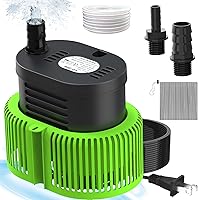
A mesh screen intake helps with leaves. The AgiiMan pump has mesh screens on four sides that let water enter in a large area.
That design spreads intake and reduces single-point blockage.
A strainer base helps with grit and cover protection. The Acquaer pump has a strainer base that filters debris and keeps the pump stable on the cover.
It also protects the cover fabric from direct contact with the pump base.
A siphon has no screen at all. Leaves or grit at the intake can stop the siphon start.
Clear the intake by hand and restart it, or raise the intake slightly above the grit layer.
Ice is a different problem. A pump cannot break a frozen sheet, and a siphon cannot start through ice.
Drain water before it freezes, then remove ice by hand in safe conditions.
Rule: if leaves and needles are heavy in your yard, choose a pump with a mesh intake or strainer base over an open siphon.
What cover size and shape and drain path fit together?
Cover size and drain path must match. Overlap gives straps room to anchor and lets water run off the edge instead of pooling at the rim.
Measure pool length, width and shape before you order. An undersized cover pulls tight and opens gaps, while an oversized cover sags and holds water.
A best winter inground pool cover guide helps inground owners match size and strap strength. A best intex pool winter cover guide helps above ground owners do the same.
Shape changes where water sits. A round cover sags at the center and a rectangular cover can sag along the long middle line, so place the pump at that low point, not at the edge.
Clean the deck or rim before you set the cover. Dirt and grit under the edge can break the seal and weaken tension.
Rule: measure the pool, add overlap for straps, and place the drain at the lowest point of the cover, not at the nearest edge.
How do straps, cables and seams hold a cover in winter?
Straps and seams decide whether wind and water weight tear the cover or the cover holds. A drain only helps if the cover stays in place.
Cable and strap systems spread load around the rim. A cover that relies on a few loose straps in one corner will shift when water enters a sag.
Seams matter more than they look. A cover with weak seams can split along a line when a puddle adds weight.
Check seam construction before you buy, and look for reinforced edges.
Snow adds a second load. A pump removes liquid water, not snow.
Brush light snow off the cover when it builds, and drain meltwater as it forms.
Freezing does the most damage to a sagging cover. Ice expands in a fold or seam and can crack the fabric.
Keep the surface dry and the cover taut through cold snaps.
Our best winter pool covers inground 16x32 guide covers one common rectangular size. Use it to check strap and seam needs for that footprint.
Rule: buy a cover with strap or cable anchoring on all sides, and recheck tension after every storm and every drain cycle.
When should you run a winter pool cover pump?
Run the pump as soon as water starts to pool, and always before freezing temperatures. Early drainage keeps the cover light and taut.
Rain fills a cover fast. A shallow sheet of water across a large cover can weigh hundreds of pounds.
That weight stretches straps and can pull a drain intake out of position.
Meltwater is slower but steady. Sun on a cold cover creates a puddle that refreezes at night.
Drain it during the day when you can supervise the hose.
An automatic pump helps when you cannot watch the cover. The Acquaer pump turns on when water reaches about 2 inches and runs about 60 seconds after water drops low.
That cycle saves you repeat trips.
Never let a pump run dry for long. Both electric pumps here have a built-in temperature control core that helps prevent dry burning.
That protection helps, but it does not replace a check.
Our winter pool cover pump guide explains pump types in more detail. Read it before you set your winter schedule.
Rule: drain every puddle the same day it forms, and never let standing water stay through a night below freezing.
How do you set up and care for a drain pump or siphon?
Set up the drain on dry cover fabric, at the lowest point, with the hose laid downhill. Good setup prevents most winter failures.
Start with a clean cover surface. Brush off leaves and grit so the intake sits flat.
A pump on grit will wobble and may lose suction.
Place the pump or siphon intake at the low point. Keep the power cord away from the discharge hose so water does not run back to the outlet.
Lay the discharge hose downhill from the pump. Avoid sharp bends, which slow flow and can hold water that then freezes in the hose.
For a siphon, prime it per the maker instructions and keep the outlet lower than the intake. A siphon stops if air enters the line, so keep the line full and the outlet below the water level.
After each use, drain the hose and store the pump dry. The AgiiMan pump has an ABS shell and IPX8 waterproof rating for outdoor use.
The Acquaer pump has a thermoplastic body and strainer base that rinses clean without tools.
Rule: set the drain at the low point, lay the hose downhill, and store both pump and hose dry after each use.
Which drain tool suits above ground and inground pools?
Above ground and inground pools need different drain tools because cover height and hose run differ. Match the tool to the height of the cover rim.
Above ground pools have a high rim and a short hose run to the yard. A compact pump such as the AgiiMan, at 2 pounds and 16 by 4 by 4 inches, is easy to move on and off a high rim, and its 16 ft hose reaches the ground easily.
Inground pools have a low rim and a longer hose run across the deck. A higher flow pump such as the Acquaer suits long deck runs and large covers, and its 1-1/4 inch discharge and 3/4 inch garden hose adapter give more hose options.
A siphon suits above ground covers with a gentle slope to the yard. The SWIMLINE siphon is sized at 12 feet round, is made for above ground pools, and needs no outlet when the pool sits far from the house.
Our best winter pool cover pump for inground pool guide compares pumps for low rim pools. Our best pool cover pumps roundup compares more pumps by flow and lift.
How does hose storage affect winter use?
Drain each hose fully after use so water does not freeze inside and crack it. Coil the hose loosely and store it off the ground.
Rule: above ground pools favor a compact pump or siphon, while inground pools favor higher flow and longer hose options.
How do you pick between the three drain tools here?
Pick by power, flow and debris. The AgiiMan suits fast drainage with a compact body, the SWIMLINE suits no-power use, and the Acquaer suits high flow with automatic start.
The AgiiMan 850GPH pump suits above ground covers and moderate storms. It has a 75 watt motor, 0.1 hp rating, 3.2 m maximum head and 95 degree Fahrenheit maximum water temperature.
Its 16 ft anti-twist hose fits 1/2 inch and 3/4 inch nozzles, and its 25 ft cord keeps the outlet at a safe distance.
The SWIMLINE Cover Saver siphon suits small puddles and yards with no outlet. It is a manual, plastic siphon with UV resistant, waterproof and weather proof features, backed by a 1 year manufacturing defect warranty, and it moves water by gravity.
The Acquaer 1/4 HP pump suits large covers and heavy rain. It moves up to 2250 gallons per hour, starts automatically at about 2 inches of water, and can remove water down to about 3/4 inch.
It includes a 3/4 inch check valve adapter and a 25 ft three-prong cord for a standard 115 volt outlet, and Acquaer backs it with a 3 year warranty.
Our best pool cover drain kit guide covers kits that pair a pump with fittings. A kit helps when you need adapters and check valves in one box.
Rule: choose the AgiiMan for compact above ground use, the SWIMLINE for no-power siphon use, and the Acquaer for high flow automatic drainage.
What mistakes shorten the life of a winter cover?
Most cover damage comes from standing water, loose straps and a blocked intake. Avoid those three and winter goes easier.
Mistake one is leaving water on the cover. Water weight stretches fabric and straps, and ice can crack seams.
Drain the same day, every time.
Mistake two is a loose cover. A cover with slack sags faster and holds more water.
Tighten straps and cables after setup and after each storm.
Mistake three is a clogged intake. Leaves and needles can stop a pump or siphon mid cycle.
Clear the intake after each use and check it after storms.
Mistake four is a hose that holds water. A frozen hose can crack or burst a fitting.
Drain the hose fully and store it dry.
Mistake five is running a pump on ice. A pump cannot break a frozen sheet and may sit dry while water stays locked.
Remove ice by hand in safe conditions, then restart drainage.
Rule: drain water the same day, keep straps tight, and clear the intake after every storm.
How should you close the season with a drain-ready cover?
Close the season by draining the cover dry, cleaning it, and storing it with the drain tools. A dry cover stores without mildew or crease damage.
Run the pump or siphon until the low point is dry. Lift the intake by hand to clear the last shallow water.
Wipe the cover surface where the pump sat.
Clean the cover per the maker instructions for your material. Let it dry fully before you fold it.
Folding a damp cover invites mildew that weakens fabric.
Clean the pump intake, drain the hose and check the cord. The Acquaer strainer base rinses clean without tools, which speeds spring setup.
The AgiiMan mesh screens rinse with a garden hose.
Store straps and cables with the cover so spring setup starts complete. Label the hose adapters with the pump so you do not hunt for fittings.
Rule: end winter with a dry cover, clean intake and stored hose, so spring setup starts ready to drain.
Frequently asked questions
What is a winter pool cover with drain?
It is a winter cover paired with a pump, siphon or built-in drain path that removes rain and meltwater from the top surface. The drain prevents weight, sagging and freeze damage while keeping the cover taut.
Is a cover pump or a siphon better for winter?
A pump moves more water and works when the surface is flat, while a siphon needs no power and suits small, shallow puddles. Choose a pump for heavy rain, a siphon for light water and no outlet, or both for backup.
How often should you drain water off a winter pool cover?
Drain water as soon as a puddle forms and before night temperatures drop below freezing. Standing water adds weight fast, and ice can crack a cover or pull straps loose.
Can a winter cover drain work without electricity?
Yes, a manual siphon such as a Cover Saver siphon moves water by gravity and needs no electricity or batteries. It works best on a gentle slope and clears shallow pools of water.