How to Choose a Pool Cover Pump for Winter
A winter pool cover pump needs automatic shutoff, steady drainage and freeze protection for cold nights. Choose a pump that stops before dry running, moves water fast enough after rain or melt, and fits your hose and outlet.
On this page (12 sections)
- What does a winter pool cover pump actually do?
- How does freeze protection work on a pool cover pump?
- Which pump type fits cold weather cover care?
- How fast should a winter pool cover pump be?
- How does automatic shutoff protect a cover in winter?
- What base and intake design works best on a cover?
- How do hose, cord and outlet fit affect winter use?
- When should you run a pump, and when should you store it?
- What are seasonal limits for winter pump use?
- How do you choose between the three pumps here?
- What set up and care steps keep a winter pump working?
- Final choice for a winter pool cover pump
A winter pool cover pump needs automatic shutoff, steady drainage and freeze protection for cold nights. Pick a pump that turns off before it runs dry, moves water fast enough after rain or melt, and fits your hose and outlet.
Water left on a cover adds weight, stretches seams and freezes into a hard sheet. A pump that starts on its own and stops on time keeps the cover light and helps it last through the season.
We compared specs and features for three types of pumps. Each type fits a different winter routine.
Read this guide to match the pump to your cover, climate and outlet.
What does a winter pool cover pump actually do?
A winter pool cover pump removes rain, melt and splash water from the top of a closed pool. It keeps the cover light so it does not sag, tear or freeze with a heavy load.
On swimming pool covers, standing water can pool in the middle and press down on pillows, straps and seams.
You place the pump on the cover where water collects. A hose carries water away to a drain, lawn or driveway.
An automatic switch starts the pump when water reaches a set depth. A shutoff stops it when the cover is nearly dry.
This cycle matters in winter. Rain may fall as cold water, then freeze overnight.
Snow melts in the sun, then refreezes at night. A pump that runs on its own helps you avoid a thick ice layer.
Not every pump suits winter. Some sump pumps lack a cover safe base.
Some manual siphons need you to prime them each time. Cold weather choice comes down to shutoff, base design, hose fit and freeze care.
Rule: Buy a pump with automatic on and off for winter use, unless you plan to check the cover daily and prime a siphon by hand.
How does freeze protection work on a pool cover pump?
Freeze protection on a pump means built in safeguards that limit damage in cold or dry running conditions. It does not mean the pump can sit in ice and keep working.
AgiiMan says its pump has a built in temperature control core that prevents dry burning when pumping dry. Acquaer says its pump has the same type of core to protect the motor when water runs low.
That core helps when the pump runs after most water is gone. It can stop heat build up and reduce motor damage.
It also helps during short cold snaps, when a thin film of water may remain on the cover.
Freeze protection has clear limits. Water in a hose can freeze and block flow.
A pump in a puddle can freeze in place. Ice on the cover can seal the intake.
None of those risks are solved by a temperature control core alone.
You still need seasonal care. Drain the hose after each run.
Store the pump dry when the cover is dry. Bring it inside during hard freezes.
Keep the intake clear of leaves and ice.
Rule: Treat freeze protection as motor protection, not permission to leave the pump in ice all winter.
Which pump type fits cold weather cover care?
Three pump types cover most winter needs. Choose automatic electric for hands off care, a siphon for low power needs, or a higher speed pump for large covers.
Each type has a clear trade off in cold weather.
Automatic electric pumps start and stop on their own. They suit owners who cannot check the cover each day.
They need an outlet within cord reach and a hose route that stays clear.
A siphon pump, like the SWIMLINE Cover Saver, moves water without power. SWIMLINE describes it as a manual siphon for above ground pool covers.
It suits small covers where you can set it up and watch it run.
Higher speed pumps clear deep water faster. That helps after heavy rain or rapid melt.
They may cost more power and need a stronger hose connection. Speed helps most on large or low sagging covers.
The three models in this guide show those three paths. The AgiiMan 850GPH is a compact automatic pump.
The SWIMLINE is a manual siphon. The Acquaer 1/4 HP is a higher speed automatic pump.
Rule: Pick automatic electric if you want the pump to run while you are away, and pick a siphon only if you can tend it by hand.
AgiiMan 850GPH Pool Cover Pump: compact automatic choice
This pump suits small to mid size covers where a light unit is easy to place and store. It moves up to 850 gallons per hour, which is plenty for rain and melt on most home covers.
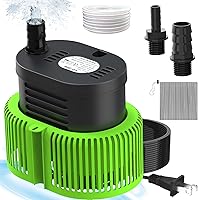
It has an ABS shell, mesh screens on four sides and a built in temperature control core. Those details help with debris, weather and dry running.
It ships with a 16 ft anti twist drainage hose and adapters for 1/2 in and 3/4 in nozzles.
SWIMLINE Cover Saver: manual siphon choice
This model suits owners who want no power, no batteries and a simple set up. It is listed as a Cover Saver Automatic Water Siphon Pump and a manual installation type.
The brand says it removes water to help prevent freezing damage.
It is made of plastic, weighs 3.2 pounds and is listed as UV resistant, waterproof and weather proof. It fits above ground pool covers.
A siphon needs you to prime it and watch the flow.
Acquaer 1/4 HP Automatic: higher speed choice
This pump suits larger covers, heavy rain areas or owners who want water gone fast. It moves up to 2250 gallons per hour and has a 1/4 HP motor.
That speed is more than double the AgiiMan rate.
It turns on at about 2 inches of water and runs about 60 seconds after water drops to about 2/5 inch. It has bottom suction that can remove water down to 3/4 inch.
It includes a 25 ft cord and a 3/4 in check valve adapter.
Rule: Match pump type to how often you can check the cover, not just to price.
How fast should a winter pool cover pump be?
Speed is measured in gallons per hour, or GPH. For most home covers, 850 to 2250 GPH is enough to handle rain and melt.
The right speed depends on cover size, rain amount and hose length.
An 850 GPH pump moves about 14 gallons per minute. That clears a typical rain load in a few minutes on a small cover.
A 2250 GPH pump moves about 38 gallons per minute. That helps after heavy storms, all day snow melt, or long hose runs.
Faster is not always better. A very fast pump may splash and pull at the cover, while a slower pump may run more often but use less power.
Cold water flows slower near freezing. Extra speed gives margin in late fall and early spring when flow drops.
Rule: Choose 850 GPH for small covers and up to 2250 GPH for large covers, heavy rain or long hose runs.
How does automatic shutoff protect a cover in winter?
Automatic shutoff stops the pump shortly after the cover is nearly dry. That stop prevents dry running, heat build up and needless wear.
Acquaer says its pump turns on at 2 inches of water, then runs about 60 seconds after the level drops to about 2/5 inch.
That short run clears the last shallow water, then stops. That last layer is often the first to freeze, so removing it lowers the chance of a thin ice sheet.
A pump without shutoff forces you to watch it. If you miss the stop, the motor runs dry and seals can wear faster, especially when you do not check daily.
Manual siphons stop when the siphon breaks or the hose drains. But you must prime them and confirm flow, which is the trade off for no power.
Buyers often cite automatic shutoff as the top reason they choose an electric pump. It fits a winter routine where the cover may go days between checks.
Rule: Buy automatic shutoff for winter, and never leave a non automatic pump running unattended on a cover.
What base and intake design works best on a cover?
A cover safe base spreads weight and keeps debris out of the intake. Look for a flat strainer base, mesh screens or bottom suction that can clear shallow water.
The AgiiMan has mesh screens on four sides. That lets water enter from all sides and blocks larger debris in a low sag.
The Acquaer has a strainer base that protects the cover, filters debris and keeps the pump stable. It also has bottom suction that can remove water down to 3/4 inch.
Weight matters too. The AgiiMan weighs 2 pounds, the SWIMLINE weighs 3.2 pounds, and the Acquaer weighs 12.2 pounds.
A lighter pump is easier to place, while a heavier pump may press harder on a thin cover.
Rule: Choose a strainer base or mesh intake for winter covers, and check that shallow water can reach the pump.
How do hose, cord and outlet fit affect winter use?
Hose and cord fit decide whether the pump can reach water and drain it safely. Measure from the outlet to the pump, and from the pump to the drain, before you buy.
The AgiiMan includes a 16 ft drainage hose and a 25 ft power cord. It fits 1/2 in and 3/4 in nozzles, plus a 3/4 in curved nozzle for garden hoses.
The Acquaer includes a 25 ft three prong cord for a standard 115 volt outlet. It has a 1-1/4 in NPT discharge and a 3/4 in garden hose adapter with a check valve.
The SWIMLINE connects to a garden hose coupling. You need a hose route that slopes down to a drain, since a siphon will not push water uphill like an electric pump.
Keep cords away from puddles where you can. Use an outdoor outlet with ground fault protection, and lift and drain the hose after each use so water does not freeze inside.
Rule: Buy a pump only if the included cord reaches a safe outlet and the hose reaches a drain without uphill runs.
When should you run a pump, and when should you store it?
Timing matters as much as pump choice. Run the pump after rain, melt or splash, and store it dry during hard freezes.
In early fall, rain is common and nights are mild. An automatic pump can run as needed, so check the hose and intake each week and remove leaves that block the mesh.
In deep winter, water may freeze on contact. If the cover is dry, remove the pump and store it inside, since a dry pump will start faster in spring than one left in ice.
In late winter and early spring, sun melt can add water fast. Run the pump during the day and drain the hose before nightfall to lower the chance of a frozen hose.
If you plan to close late, read about the best time to close pool before you set the cover routine.
Rule: Run the pump only when water is present, drain the hose after each run, and store the pump dry in hard cold.
What are seasonal limits for winter pump use?
A winter pool cover pump has clear limits. It cannot break ice, melt snow or pump through a frozen hose.
It only moves liquid water that can reach the intake.
Ice is the top limit. If water freezes on the cover, the pump cannot clear it.
You must wait for melt or remove ice by hand with care. Do not force a pump under an ice sheet.
Snow is the next limit. A pump does not remove snow.
Snow adds weight and then adds water as it melts. Clear snow from the cover when you can do so safely, then pump the melt water.
Cold nights can freeze water in the hose. That block stops flow and can stress the pump.
Drain the hose after each run. Store the hose where it can drain.
Do not leave a full hose on a cold cover.
Power limits also apply. A pump needs power for the whole run.
If the outlet is far, the cord may not reach. If the outlet trips, the pump stops.
Check the outlet after storms.
Rule: Stop use when ice, snow or a frozen hose blocks flow, and wait for liquid water to return.
How do you choose between the three pumps here?
Each pump here fits a different owner. Pick the AgiiMan for compact automatic care, the SWIMLINE for manual siphon care, or the Acquaer for higher speed automatic care.
The AgiiMan 850GPH suits small to mid size above ground covers. It is light at 2 pounds, includes a 16 ft hose and a 25 ft cord, and has mesh screens and a temperature control core.
The SWIMLINE suits owners who want no power and a simple garden hose set up. It is a siphon, so you must prime it and watch flow, and it fits where the hose can run down to a drain.
The Acquaer 1/4 HP suits larger covers and heavy rain. It moves up to 2250 GPH, starts at 2 inches of water and can suction down to 3/4 inch, but it is heavier at 12.2 pounds.
For a wider shortlist, see best pool cover pumps and our pick for the best automatic pool cover pump. For inground pools, see the best winter pool cover pump for inground pool.
Rule: Buy the pump whose speed, shutoff and hose fit match your cover, and skip extra speed if your cover is small.
What set up and care steps keep a winter pump working?
A safe set up takes a few minutes and prevents most winter problems. Place the pump on the lowest point of the cover, run the hose downhill to a drain, and confirm that the switch works.
Start by spreading the cover and checking pillows and straps. A winter pool cover with drain can help water flow to a set point, and our guide to best pool pillows for winter can help with fit and air pressure.
Place the pump where water gathers and keep the intake clear of leaves. Connect the hose downhill, plug into a safe outdoor outlet, and add a little water to confirm start and stop.
After each storm, clear debris from the mesh or strainer and drain the hose. Inspect the cord for cuts and store the pump dry when the cover stays dry.
For above ground pools, also check our best intex pool winter cover guide, since a cover that fits well will sag less.
Rule: Test start and stop before winter, drain the hose after each run, and store the pump dry when the cover is dry.
Final choice for a winter pool cover pump
Pick the pump that matches your routine. Choose automatic electric for hands off winter care, a siphon for manual care, and higher speed for large covers.
That rule keeps the cover light and lowers freeze risk.
If you want a compact automatic pump, the AgiiMan 850GPH is a strong fit for small to mid size covers. If you want no power, the SWIMLINE siphon fits manual routines.
If you want fast drainage, the Acquaer 1/4 HP fits large covers and heavy rain.
Before you buy, measure cord reach, hose reach and drain slope. Confirm freeze care steps and storage space.
Then set the pump where water gathers and test it once.
For your next step, compare best automatic pool cover pump picks or read our guide to the best winter pool cover pump for inground pool if your pool is inground. A winter pool cover pump works best when it starts on its own, stops on time and stays dry between runs.
Frequently asked questions
How does pool cover pump freeze protection work?
A pump with freeze protection usually has a built in temperature control core that stops dry running and reduces damage when water runs low. It does not heat the pump.
You still need to drain hoses, store the pump dry and keep it out of deep cold.
Can a winter pool cover pump run all winter?
An automatic pump can run through winter if you check it often and keep the hose clear. Cold, ice and snow can block drainage.
Remove the pump during hard freezes and store it dry when the cover is dry.
What speed should a winter pool cover pump have?
For most covers, 850 to 2250 gallons per hour is plenty. Higher speed clears rain and melt faster, which lowers sag and ice load.
Match speed to cover size, local rain and how far water must travel.