How to Drain an Inground Pool
Drain an inground pool only when necessary, using a submersible pump and a planned discharge route. Lower the water slowly, watch the pool structure, and stop if the shell shifts, cracks appear, or groundwater pushes upward.
On this page (9 sections)
- Why can draining an inground pool damage it?
- Should you fully drain or only lower the water?
- What should you check before draining an inground pool?
- Which pump is useful for draining an inground pool?
- How do you set up the pump?
- How should you lower the water?
- What should you do when the pool is nearly empty?
- What should you inspect before refilling?
- What is the safest way to drain an inground pool?
Drain an inground pool only when the work is necessary and the pool structure can safely handle an empty or partly empty shell. Use a submersible pump, direct the water to an approved discharge area, and lower the water while checking for movement, cracks, or rising groundwater.
A full drain may be needed for major resurfacing, structural repairs, or serious contamination. Routine cleaning usually needs only partial lowering, so confirm the reason before removing thousands of gallons.
Why can draining an inground pool damage it?
Hydrostatic pressure can lift, crack, or shift an inground pool when the water inside no longer balances groundwater outside. The risk depends on soil, drainage, recent rain, the water table, and the pool's construction.
A concrete pool can develop cracks or movement when groundwater pushes against an empty shell. A fiberglass shell may float or shift, while a vinyl liner can shrink, wrinkle, or move away from the wall.
Don't start a full drain after heavy rain or during a period of high groundwater. If you see damp soil, bubbling, bulging, new cracks, or shell movement, stop and call a qualified pool professional.
Before choosing equipment, review pool pumps and filters to understand how circulation equipment differs from a temporary drainage pump.
Should you fully drain or only lower the water?
Lower the water only as far as the job requires. Partial lowering reduces the time the shell is exposed to outside pressure and may be enough for tile work, repairs near the waterline, or certain cleaning tasks.
A full drain is a higher-risk project. It can expose plaster, paint, fiberglass, or a liner to conditions they were not designed to handle, especially if the pool remains empty.
Write down the water level before pumping. Lower it in stages and pause to inspect the walls, floor, fittings, and surrounding ground.
What should you check before draining an inground pool?
Check the pool construction, recent weather, groundwater risk, chemical condition, and discharge route first. Read the pool builder's instructions if you have them.
Prepare a submersible pump, discharge hose, a safe electrical connection, gloves, and a way to secure the hose. Keep electrical connections away from standing water and use the pump only as directed.
Test the water before discharge. Chlorine, salt, acid, algaecide, and other treatments can affect where the water may legally go.
Confirm local rules before sending water to a street drain, storm system, yard, or sewer. A permitted route may depend on chemical levels, flow volume, and your location.
Which pump is useful for draining an inground pool?
A submersible utility pump is the usual choice because it sits in the pool and sends water through a discharge hose. Choose based on flow, lift height, outlet size, hose connection, solids handling, and how quickly you need to lower the water.
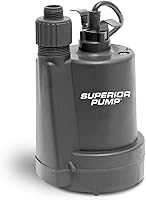
For a slower, general-purpose setup, the Superior Pump 91250 uses a 1/4 HP motor and moves up to 1,800 gallons per hour. Its thermoplastic body, 10 ft cord, 1-1/4 in NPT discharge, 3/4 in garden hose adapter, removable suction screen, and handling for solids up to 1/8 in suit controlled water removal.
The 25 ft maximum lifting height matters when the hose must rise before reaching its outlet. Measure the route rather than assuming the pump's maximum lift equals its working flow.
The Green Expert 1/4HP Submersible Sump Pump also moves 1,800 gallons per hour, with a 28 ft maximum lift height. It includes a 1-1/4 in hose barb adapter, a 3/4 in garden hose adapter, and a lifting rope, and its stated uses include pool draining and water transfer.
Use a standard hose for this pump because expandable or retractable hoses may reduce water flow efficiency. Secure the lifting rope without using the power cord as a handle.
For faster removal, the AQUASTRONG 1 HP Sump Pump 4500 GPH has a stated flow of 4,500 gallons per hour at a 5 ft lift and a maximum lifting height of 30 ft. Its thermoplastic casing, 10 ft power cord, 1-1/4 in NPT discharge, 1-1/2 in elbow adapter, and 3/4 in, 1 in, or 1-1/4 in snap coupling adapters support larger drainage jobs.
Its bottom-suction design can remove water down to 1/5 in from the surface and handles solids up to 1/5 in. That does not remove the need to clear leaves, stones, or other debris before pumping.
For a narrower use case, compare the best pumps to drain a pool and check the discharge route before selecting a flow rate.
How do you set up the pump?
Place the pump on a stable, clear area at the lowest practical point, then route the hose to an approved discharge location. Keep the intake away from leaves, loose plaster, pebbles, and other debris.
Lay the hose out before connecting power. Avoid sharp bends, crushed sections, and uphill runs that exceed the pump's lifting ability.
Use the correct adapter for the hose. A loose connection can spray water near electrical equipment or reduce flow.
Tie or weigh the discharge end so it cannot whip around. Keep the outlet away from foundations, retaining walls, neighboring yards, and areas where erosion could undermine the pool.
Never pull, lower, or reposition a running pump by its power cord. Unplug it before moving it, clearing the intake, or changing the hose connection.
How should you lower the water?
Start the pump and lower the water in stages while watching the pool and surrounding ground. Stay nearby instead of leaving the pump unattended.
Check the water level, walls, floor, fittings, coping, deck, and nearby soil at regular intervals. Look for new cracks, shifting tile, wrinkles, bulges, seepage, or water rising from below.
Stop immediately if the shell moves, the liner changes position, the floor lifts, or groundwater enters the pool. Do not restart until a qualified professional has assessed the problem.
A faster pump is not always the better choice. High flow can empty the pool sooner, but it also gives you less time to notice structural changes or discharge problems.
What should you do when the pool is nearly empty?
Turn off the pump before it runs dry unless its instructions specifically allow that operation. The last shallow layer may need a wet vacuum, towels, or a professional drainage method.
Don't scrape or walk on exposed surfaces unless the pool manufacturer or contractor says it is safe. Plaster, fiberglass, paint, and vinyl can be damaged when dry or unsupported.
If the pool will remain empty, cover it against debris and rain only as the builder recommends. A cover does not solve groundwater pressure or structural movement.
Read can you leave a pool empty before deciding to delay refilling. An empty pool can be exposed to risks that are not visible from the waterline.
What should you inspect before refilling?
Inspect the shell, liner, fittings, drains, lights, steps, and surrounding soil before adding water. Look for cracks, movement, detached liner sections, leaks, or water entering from below.
Remove debris without damaging the finish. Confirm that plugs, drains, valves, and equipment connections are ready for the refill procedure.
Refill according to the pool builder's instructions. Do not assume a normal garden hose or a familiar water level is correct for every pool type.
After refilling, test and balance the water before swimming. Restart the circulation system according to its instructions, and watch for leaks around the pump, filter, heater, returns, and drains.
A dirty or damaged filter can affect the restart. If you see dark material, use the guide to why pool filter sand is black.
For replacement media and filter choices, compare the best pool filter sand, the best Hayward pool filter cartridge, and the right Intex Krystal Clear sand filter pump.
What is the safest way to drain an inground pool?
Use the smallest pump and lowest water level that solve the job, and monitor the pool until the work is complete. The Superior Pump suits controlled drainage, the Green Expert suits a portable 1/4 HP setup with a higher stated lift, and the AQUASTRONG suits faster removal when its larger flow and discharge fittings fit your route.
Stop for structural changes, rising groundwater, unsafe discharge, or electrical problems. If you are unsure whether the pool can be emptied, get a pool professional to inspect it before pumping.
Frequently asked questions
Is it safe to drain an inground pool?
It can be safe only when the pool, soil, groundwater, and manufacturer guidance support draining. Hydrostatic pressure can lift or damage an empty shell, especially after rain.
Ask a pool professional before a full drain if you don't know the water table, have a vinyl liner, or see cracks, bulging, or movement.
What pump should I use to drain an inground pool?
Use a submersible utility or sump pump sized for the pool and the discharge route. A 1/4 HP pump suits slower water removal, while a 1 HP pump moves more water.
Match the discharge connection, hose length, lift height, and local discharge rules before starting.
Where should inground pool water be discharged?
Discharge water where it won't flow into a neighbor's property, a foundation, a septic system, a storm drain that forbids it, or a natural waterway. Local rules may limit chlorinated or chemically treated water.
Test and balance the water first, then use the approved route.
Can you leave an inground pool empty?
Leaving an inground pool empty can damage the shell, liner, plaster, or surrounding structure because groundwater pressure may push from below. If the pool must stay empty, follow the builder's instructions and arrange the work with a qualified pool professional.