How to Choose a Hard Cover for an Inground Pool
The right hard inground pool cover must match your pool opening, deck structure, safety needs, and removal routine. Measure the finished pool area first, then choose between a rigid panel system, an automatic cover, or another structural design.
On this page (10 sections)
- What makes a hard inground pool cover different?
- How should you measure for a hard cover for an inground pool?
- What structural requirements should you check?
- Which hard pool cover suits your pool shape?
- Should you choose rigid panels or an automatic system?
- What should you know about safety?
- Can a solar cover replace a hard inground pool cover?
- What hard cover features matter most?
- How should you install and care for a hard cover?
- What is the best way to choose?
The right hard cover for an inground pool depends on fit, structural support, safety rating, and how often you need pool access. Measure the finished pool opening and surrounding deck before comparing rigid panels, automatic systems, or other hard-cover designs.
That early measurement matters because a hard cover is not a simple sheet you can place over the water. It has to sit correctly on the coping or deck, attach in the right places, and move or lift in a way that suits your space.
A hard pool cover for an inground pool is a major installation choice. It can change how you close the pool, remove the cover, clear debris, and protect the water between swims.
It can also change your daily routine around the pool. If you swim often, opening and closing the cover needs to be manageable.
If the pool stays covered for long stretches, storage and drainage may matter more.
Think about who will use the pool and how often. A household with children, pets, or frequent visitors may need a different approach from an owner who swims alone on a set schedule.
Also consider what you need the cover to do most. Some owners want a firm surface and controlled closure.
Others mainly want to limit debris, reduce evaporation, or keep the water more consistent between uses.
Those goals are not always the same. A structural cover is built around support and attachment, while a floating solar blanket is built around heat retention and light coverage on the water.
If you are comparing the wider category first, read our guide to swimming pool covers. It explains how solar, safety, winter, automatic, and other cover types serve different jobs.
Use that overview to separate the jobs before you narrow the choice. It is easier to compare hard-cover designs once you know whether you need structure, heat retention, seasonal closure, or a mix of those needs.
Measure first, confirm the deck can support the system, and then compare designs that match your access routine. That order helps you avoid buying a cover that fits the pool on paper but does not suit the way you use it.
What makes a hard inground pool cover different?
A hard inground pool cover uses rigid sections or a structural rolling system instead of a flexible sheet. Its main advantage is a firm surface and more controlled installation, but it also needs accurate measurements and suitable support.
Hard covers are not one single product type. Common options include:
- Rigid panels that rest on the pool edge or deck.
- Automatic covers that roll into a recessed or surface-mounted housing.
- Structural safety covers designed to span the pool opening.
- Modular systems made from several connected sections.
The words “hard cover” do not automatically describe a safety rating. Ask what the cover is designed to support, how it attaches, and whether the manufacturer approves it for people, pets, debris protection, winter closure, or only routine coverage.
A flexible solar blanket has a different purpose. It floats on the water, helps limit evaporation, and can retain warmth, but it should not be used as a substitute for a structural safety cover.
How should you measure for a hard cover for an inground pool?
Measure the finished opening and every feature that interrupts its shape. A basic length and width measurement is not enough if the pool has steps, benches, rounded corners, raised walls, or an attached spa.
Take measurements at several points along the length and width. Note the smallest and largest readings instead of assuming the pool is perfectly square.
Record these details before requesting a quote:
- Overall length and width.
- Inside and outside corner shapes.
- Roman ends, rounded ends, and angled walls.
- Entry steps, tanning ledges, benches, and swim-outs.
- Attached spas, spillways, raised sections, and waterfalls.
- Coping width and deck material.
- Drains, ladders, rails, slides, and other fixtures.
Use a simple sketch with labeled measurements. Take clear photos from each side of the pool, especially where the waterline meets the coping or deck.
A custom inground pool cover can make more sense than a standard rectangle when the pool has several built-in features. Custom work costs more planning, but an accurate shape reduces gaps and installation problems.
What structural requirements should you check?
A hard cover needs a stable place to transfer its load, such as suitable coping, deck anchors, tracks, or a reinforced housing. The exact requirement depends on the cover design.
Check whether the pool deck is concrete, pavers, wood, composite, or another material. Ask how the attachment points are installed and whether the existing surface can hold them without cracking, shifting, or pulling loose.
For automatic systems, inspect the proposed track path and the space needed for the reel, motor, housing, or cover box. A recessed system may require construction work, while a surface-mounted system can change the appearance and usable space around the pool.
Do not assume a hard top pool cover for an inground pool can sit on any deck. The cover may need a flat bearing surface, specific anchor spacing, reinforced edges, or a clear path for the panels to move.
If you are replacing an older cover, photograph the current anchors and hardware. The new cover may use a different layout even when the pool dimensions look similar.
Which hard pool cover suits your pool shape?
Choose the cover style that matches both the pool shape and your installation limits. A simple rectangle gives you more standard options, while an irregular pool usually needs a custom or modular design.
Rectangular pools
A rectangle is usually the easiest shape to measure and cover. You still need to account for steps, rails, ladders, raised walls, and the exact coping line.
A rigid panel system can suit a pool with a clean perimeter and enough deck support. An automatic cover can also work well when you want routine opening and closing without lifting separate sections.
Freeform pools
Freeform pools need more detailed measurements because the cover must follow curves and changing widths. A custom system may use a tailored membrane, connected sections, or another design made for the exact outline.
Do not estimate a freeform pool from its longest length and widest width. That approach can leave unsupported edges, interfere with steps, or create gaps around curved sections.
Pools with attached spas
An attached spa changes the cover boundary and may require a separate section or special transition. Confirm whether the spa remains covered with the pool, operates independently, or needs its own cover.
Spillovers and raised walls also affect water flow and clearance. Include them in the first measurement package rather than treating them as installation details to solve later.
For a broader comparison of materials and designs, see our guide to types of inground pool covers.
Should you choose rigid panels or an automatic system?
Choose rigid panels when you want a firm, removable surface and can manage section-by-section handling. Choose an automatic cover when frequent opening and closing matters more than a simple installation.
Rigid panels can be practical for seasonal closure or pools that remain covered for long periods. Their trade-off is storage and handling, because you may need room to lift, stack, or move each section.
Automatic covers can make daily access easier. For control components, see pool cover key and switch options.
Their trade-offs include installation planning, tracks, a reel or housing, and a mechanism that needs to stay clear and maintained.
Ask these questions before choosing:
- How often will you open the pool?
- Can one person move the cover safely?
- Where will rigid sections be stored?
- Does the deck have room for anchors or tracks?
- Will the system cover steps and attached features?
- What happens if power or the mechanism fails?
- Can you reach the motor, reel, and drainage areas for care?
A hard cover for an inground pool should fit your routine, not only the pool shape. A system that is difficult to open may lead to uncovered water, even if the cover is structurally suitable.
What should you know about safety?
A safety cover must be specifically designed and rated for the safety use you need. A rigid appearance alone does not prove that the cover can support a person, child, or pet.
Read the manufacturer's installation and load instructions. Check the required anchors, spacing, tension, edge clearance, and maintenance schedule.
Keep the pool area clear of furniture and objects that could be used to climb onto the cover. Do not allow anyone to walk on a cover unless its instructions clearly permit that use.
A safety cover is also not a substitute for supervision, locked access, alarms, or local pool-safety requirements. Check the rules that apply where you live.
An above-ground pool needs a different design and attachment approach. If you also care for one, compare the requirements in our guide to a safety cover for above ground pool.
Can a solar cover replace a hard inground pool cover?
A solar cover cannot replace a structural hard cover when you need a firm safety barrier. Solar blankets float on the water and are meant mainly for heat retention, evaporation control, and light debris reduction.
They can still help as a second layer for a pool that already has a suitable hard cover. Use the solar blanket when the pool is open but not being used, and remove it before swimming.
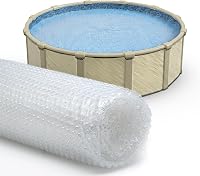
Blue Wave 16x32-ft Rectangle Solar Pool Cover
The Blue Wave cover is a clear 14-mil floating blanket for rectangular 16 x 32-ft pools. Its thermal bubbles face down toward the water, and the material can be trimmed with household scissors around ladders or other pool accessories.
It suits an owner who wants a lightweight cover for daily placement and removal rather than rigid structural protection. The cover is designed for both inground and above-ground pools, so it can also suit a household that may change pool types later.
The care instructions call for mild soap and water, a thorough rinse, drying, and cool, dry storage. Roll it instead of folding it for storage, and keep it shaded when it is not in use.
Sun2Solar Clear 24 ft Round Pool Solar
The Sun2Solar cover is a 12-mil clear round blanket sized for a 24-ft pool. Its bubble side goes down into the water, and the material can be trimmed for a closer fit on round, oval, rectangular, or unusual pool shapes.
The brand says the cover can raise water temperature by up to 15 degrees Fahrenheit and reduce evaporation by up to 95 percent. Treat those as stated performance claims, because weather, water temperature, sunlight, and pool conditions affect results.
This cover can fit most solar reel systems, although a reel is not required. A reel can make positioning and removal easier when the cover is large or used often.
BigXwell Heavy-Duty Solar Pool Cover 16x32ft
The BigXwell cover is a 16-mil blue polyethylene blanket for a 16 x 32-ft rectangular pool. Its thermal bubbles are designed to capture sunlight, retain warmth, and reduce evaporation.
The material can be cut with scissors for a closer fit around pool features. It is lightweight for installation and removal, but it still needs enough dry storage space when the pool is uncovered.
Care instructions call for hand washing with mild detergent and air drying. This is a floating solar cover, not a hard safety cover, so it should not be treated as a load-bearing barrier.
What hard cover features matter most?
Focus on fit, support, access, drainage, and maintenance before choosing appearance or extra features. The best design is the one you can install correctly and use consistently.
Check these points:
- Exact pool dimensions and shape.
- Compatibility with coping and deck construction.
- Required anchor or track layout.
- Weight and section size if panels must be moved.
- Storage space for removable sections.
- Clearance around ladders, rails, and steps.
- Drainage so water does not pool excessively.
- Access to motors, tracks, anchors, and fasteners.
- Replacement parts and service options.
- Instructions for winter, storms, and long closures.
A cover that leaves large gaps may allow debris into the pool and reduce the value of the installation. A cover that is too large can interfere with the deck, rails, or nearby structures.
Clear solar blankets are a separate category worth considering when your main goal is water warmth. Our guide to the best clear pool covers for inground pools compares that use case.
How should you install and care for a hard cover?
Follow the cover manufacturer's installation plan and use the correct anchors, tracks, hardware, and tension. Do not improvise attachment points or rely on the deck surface without confirming its suitability.
Before installation, clear the perimeter and inspect the coping. Repair loose pavers, cracked concrete, damaged anchors, or unstable sections before mounting the cover system.
After installation, check that the cover moves without rubbing against fixtures. Look for uneven tension, lifting edges, damaged hardware, or water collecting where it should drain.
Keep the cover clean according to its instructions. Remove leaves and standing water with the approved method, and inspect the cover before every long closure.
For automatic systems, keep the track path clear. Do not force the mechanism if a panel, object, or pool feature blocks movement.
A floating solar blanket needs different care. Rinse it when needed, let it dry before long storage, and protect it from unnecessary sun exposure when it is off the pool.
What is the best way to choose?
Start with the pool measurement, then verify the deck and coping can support the system. After that, choose based on access frequency, safety needs, storage space, and the shape of the pool.
Measurement should cover more than length and width. Note steps, benches, rounded corners, attached spas, ladders, rails, and any raised or angled sections that affect the cover boundary.
Next, check the surface where the cover will sit or attach. The deck material, coping condition, anchor points, and track path all affect whether a design will install cleanly and stay stable in daily use.
Then match the system to your routine. Frequent swimmers may prefer easier opening and closing, while seasonal users may put more weight on secure closure and simple storage.
A simple rectangular pool may suit rigid panels or an automatic cover with standard dimensions. A freeform pool, attached spa, or complex step layout usually deserves a custom measurement plan.
Storage also matters with removable panels. Make sure you have a clear, dry place to stack or move sections without crowding the deck or creating a trip hazard.
Read the manufacturer instructions for load, attachment, and maintenance before you decide. A cover should only be treated as a safety option when it is specifically designed and rated for that use.
Pick a hard inground pool cover when you need a structural system with defined support and safety requirements. Pick a solar blanket when you mainly want heat retention and evaporation control, and keep the two purposes separate when planning your pool-care setup.
Frequently asked questions
What is the best hard cover for an inground pool?
The best hard cover for an inground pool is one that fits the finished opening, attaches to a suitable deck or coping system, and supports your required safety load. Rigid panels and automatic structural covers offer different installation and access trade-offs, so measure first and confirm the cover's rated use.
How do I measure for a hard inground pool cover?
Measure the pool opening from finished edge to finished edge at several points, including the length, width, corners, steps, tanning ledges and attached spas. Record the deck and coping details too, because the attachment system and cover dimensions depend on the actual installation area.
Can a hard pool cover replace a winter cover?
A hard pool cover can replace a winter cover only when it is designed and rated for that purpose. A solar blanket helps reduce evaporation and retain heat, but it is not the same as a structural safety cover and should not be treated as a barrier for people or pets.
Do hard covers work with irregular pool shapes?
Hard covers can work with irregular pool shapes when the manufacturer offers custom measurements or a suitable modular design. Record every inside corner, step, bench, spillover and attached feature before ordering, then confirm how the system handles those areas.
Are solar covers hard covers?
Solar covers are usually flexible bubble blankets, not hard covers. They float on the water and help retain heat and reduce evaporation, while a hard pool cover uses rigid panels or a structural mechanism for a different job.