How to Make Homemade Pool Filter Cartridge Cleaner
A homemade pool filter cartridge cleaner is usually a mild detergent solution for oily residue, followed by a thorough rinse; use plain water for loose dirt and follow the filter maker's instructions.
On this page (7 sections)
- How do you make homemade pool filter cartridge cleaner?
- When is a plain water rinse enough?
- Which mixtures should you avoid on cartridge material?
- How do you soak a cartridge without leaving residue?
- What should you do about oily buildup or mineral scale?
- How do you know the cartridge is clean enough?
- How do you choose between homemade and cartridge-specific cleaner?
A homemade pool filter cartridge cleaner is usually a mild detergent solution for oily residue, followed by a thorough rinse; use plain water for loose dirt and follow the filter maker's instructions. Avoid strong household cleaners, bleach mixtures, and anything that leaves foam or a slippery film on the pleats.
The safest routine depends on what is trapped in the cartridge. A hose rinse can clear leaves and loose grit, while oils and sunscreen may need a soak approved for the cartridge material.
How do you make homemade pool filter cartridge cleaner?
For oily residue, use only a mild, non-foaming detergent if your filter instructions allow it. Follow the detergent label for dilution, soak time, and handling, then rinse the cartridge until no cleaner remains.
There isn't one homemade mixture that suits every cartridge. Filter media, end caps, adhesives, and seals can differ, so check the filter manual before soaking or applying a household product.
Don't guess a strong recipe by adding extra detergent, vinegar, bleach, or degreaser. Concentrated cleaner can leave residue or damage parts, and mixing products can create hazardous fumes.
When is a plain water rinse enough?
A hose rinse is usually enough for loose leaves, insects, and surface dirt. Spray between pleats at an angle, working from top to bottom without driving debris deeper into the fabric.
Use a steady, moderate stream. A narrow, high-pressure jet can separate pleats or damage the filter fabric.
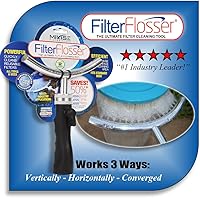
A hose tool can make rinsing easier. The Filter Flosser has an aluminum nozzle, attaches to a regular garden hose, and has an on/off handle switch.
Rinse until visible debris is gone, then inspect for tears, crushed pleats, or loose end caps. If the filter stays clogged or pressure quickly rises again, review how to clean a cartridge pool filter for a fuller routine.
Which mixtures should you avoid on cartridge material?
Avoid bleach, strong acids, caustic cleaners, and foaming household degreasers unless the filter manufacturer specifically approves them. They can affect fabric, adhesives, plastic end caps, or seals, and leftover foam may return to the pool.
Don't combine cleaning products. In particular, never mix acids such as vinegar with chlorine products, and don't pour different cleaners into the same bucket.
Vinegar is not a general-purpose cartridge cleaner. It may not remove oily film, and any scale treatment should follow the cartridge maker's directions.
How do you soak a cartridge without leaving residue?
First rinse off grit and large debris, then use an approved soak at the stated dilution and duration. Keep the cartridge fully submerged only if the product and filter instructions allow it.
After soaking, rinse each pleat thoroughly from both sides. Continue until the water runs clear and you can't feel a slick or soapy film; leftover cleaner can foam or affect pool water.
A product made for pleated cartridges avoids guessing at a homemade degreaser. Spa Depot Power Soak is a granular cartridge cleaner with enzymes and is intended for pool and hot tub filters.
Follow the container directions for the amount, water, soak time, and rinse. Don't rely on a generic online recipe when the filter manual calls for a specific cleaner.
A pool filter cleaning stand can hold a cartridge upright while you spray between pleats. It can also help keep dirty rinse water away from your feet and work area.
What should you do about oily buildup or mineral scale?
Oily residue from sunscreen, body oils, and lotions may need a filter-safe degreasing soak, while mineral scale needs a different treatment. Identify the buildup before choosing a cleaner, and check the filter manual for approved options.
If the cartridge feels greasy after rinsing, use a pool or spa cartridge soak according to its directions. MAV AquaDoc's filter cleaner is described for cartridge, sand, and DE filters, with a 60-minute soak instruction.
Don't use an acidic scale treatment just because water rinsing did not clear oily residue. If scale is present, use only a method the cartridge maker allows and rinse fully before reinstalling.
How do you know the cartridge is clean enough?
A clean cartridge has open pleat channels, no visible debris, and no cleaner residue. It should also be intact, with no torn fabric, collapsed pleats, or damaged end caps.
Let excess water drain before putting the cartridge back. Reinstall it as directed, restart the pump, and check the pressure gauge against the clean-filter baseline for your system.
If pressure remains high after cleaning, the cartridge may be worn, the filter may need another check, or there may be a flow problem elsewhere. Our pool pumps and filters guide explains how the parts work together.
How do you choose between homemade and cartridge-specific cleaner?
Choose a water rinse for loose debris and an approved mild detergent soak only when your manual permits it. For oily buildup, a cartridge-specific cleaner gives you clear dilution and rinse instructions.
Compare options in our guide to the best pool filter cartridge cleaner. If the fabric is torn or the end caps are damaged, look at best replacement pool filter cartridges instead of trying a stronger mixture.
A robotic cleaner can collect debris from pool surfaces, but it doesn't replace cartridge filtration. See how a robotic pool cleaner filters water and why an automatic cleaner doesn't replace the pool filter.
For the full system routine, start with how to clean a pool filter. Use a homemade pool filter cartridge cleaner only when it matches the cartridge maker's instructions, and choose a cartridge-safe soak when greasy buildup needs more than rinsing.
Frequently asked questions
What is a safe homemade pool filter cartridge cleaner?
For loose debris, use clean water from a garden hose. For oily buildup, some pool-care instructions allow a mild, non-foaming detergent soak, but cartridge materials and manufacturer guidance vary.
Avoid mixing cleaners, rinse thoroughly, and use a cartridge-specific cleaner when the filter manual requires one.
Can I use dish soap to clean a pool filter cartridge?
Dish soap may leave foam or residue, so don't use it unless your filter maker allows it. If you use an approved mild detergent, use only the stated dilution, soak for the directed time, and rinse until the pleats no longer feel slippery and the water runs clear.
Can vinegar clean a cartridge pool filter?
Vinegar is not a substitute for a cartridge cleaner or a scale-removal procedure. It may not remove oils, and acidic solutions can affect materials or fittings.
Follow the filter maker's instructions for mineral scale, and never combine vinegar with chlorine products or other cleaners.
How often should I soak a pool filter cartridge?
Rinse when debris or pressure calls for it, and soak only when the cartridge has oily or stubborn buildup or its manual recommends soaking. The right interval depends on pool use, debris, water balance, and filter pressure.
Inspect the pleats regularly and replace a damaged cartridge.