How to Cover an Inground Pool with a Tarp
To cover an inground pool with a tarp, measure the pool, allow overlap, spread the tarp flat, and secure it around the deck without letting it sag into the water. A tarp can limit leaves and sunlight, but it is not a safety cover and needs regular drainage checks.
On this page (8 sections)
- What size tarp fits an inground pool?
- How do you place a tarp over an inground pool?
- How can you secure an inground pool tarp?
- How do you manage rainwater on a pool tarp?
- Are solar pool covers useful for an inground pool?
- What are the limits of a tarp over an inground pool?
- How do you remove and store the tarp?
- Should you use a tarp, solar cover, or hard cover?
To cover an inground pool with a tarp, measure the pool, choose a tarp with enough overlap, secure it around the deck, and keep rainwater from collecting in the middle. A tarp can reduce leaves and sunlight, but it is not a safety cover and should never be treated as a platform.
A tarp works best as a temporary or low-cost cover when you can inspect it often. It suits short periods when a pool is not in daily use, or when you need a simple barrier while a better cover is on order.
It is less suited to long seasons unattended, because wind and rain can loosen it over time.
Think of the tarp as a loose sheet held by its edges rather than a fitted lid. Its shape comes from the anchors around the deck, not from the pool walls.
That makes placement flexible, but it also means the center depends on tension and support from every side.
This approach suits owners who can check the pool after storms and between uses. A quick look costs little and catches lifted corners, pooled water, and dirt that has blown under the edge.
Without those checks, a small problem can grow and put strain on the material.
For a wider look at swimming pool covers, compare the material, support, drainage, and safety limits before choosing one. A tarp gives coverage without the structure of a rated cover.
Knowing that limit early helps you keep people and pets clear of the surface and plan for drainage from the start.
Set up the tarp with the next spell of weather in mind. Leave room for securement on the deck and keep the middle as flat as you can.
A calm start makes later inspection easier and keeps the cover doing the simple job it was chosen for.
What size tarp fits an inground pool?
The tarp should extend beyond the pool edge on every side. Measure the pool's longest length and widest width, then add extra material for the deck, tie-downs, and any uneven edges.
For a rectangular pool, measure from the inside edge across the water and repeat in the other direction. Add overlap based on where you can place anchors or weights.
A tarp that exactly matches the water surface will not leave enough material to secure.
Freeform, oval, and kidney-shaped pools need measurements at several points. Record the longest length, widest width, and any narrow sections so you can decide whether one large tarp or several overlapping pieces will fit better.
Avoid relying on the pool's advertised size alone. Ladders, rails, steps, raised coping, and deck furniture can change the space that the cover must cross.
How do you place a tarp over an inground pool?
Remove sharp objects, clear the deck, and spread the tarp evenly across the pool. The tarp should cover the water without sharp folds that create weak points or channels for water to collect.
Use at least 2 people for a large tarp. Pull it across the pool slowly, keeping the edges from dragging over sharp coping or rough concrete.
Leave the drain area accessible if your setup includes one. Keep the tarp away from open flames, heaters, electrical cords, and anything that could melt or puncture it.
Do not stretch the tarp so tightly that the edge hardware tears the material. Firm coverage is useful, but a little flexibility helps reduce stress from wind and movement.
How can you secure an inground pool tarp?
Secure the tarp around the deck with evenly spaced anchor points, not with a few loose objects at the corners. Suitable methods depend on the deck surface and the tarp's reinforced edges.
Possible methods include:
- Water bags made for pool covers
- Sandbags placed outside the pool edge
- Ground anchors where the deck and local conditions allow them
- Straps or rope attached to reinforced tarp points
- Cover clips designed for the tarp material
Keep weights outside the pool whenever possible. Heavy objects on the tarp can stretch it, create low spots, or damage the material if they shift.
Avoid bricks, sharp blocks, and metal pieces with exposed edges. They can puncture the tarp or damage the deck, especially during wind.
Check the tarp after the first windy period. Tighten or reposition securement if an edge lifts, but do not pull so hard that the tarp begins to tear.
How do you manage rainwater on a pool tarp?
Remove standing water as soon as possible because pooled rain adds weight and pulls the tarp toward the pool. A small dip can become a larger low spot after several storms.
Use a cover pump suited to the amount of water you expect. Our guide to the best automatic pool cover pump can help you compare automatic drainage options.
Inspect the cover after heavy rain, snow, or storms. Keep hands and feet off the tarp while checking it, and never climb onto the cover to reach a pump.
If water has already collected in the center, drain it from the deck edge when safe or use a pump from stable ground. Do not allow contaminated runoff from the deck to flow back into the pool if you can direct it elsewhere.
A tarp does not replace a pool's normal filtration and water-care routine. Test the water after long periods of coverage and clean the pool before swimming.
Are solar pool covers useful for an inground pool?
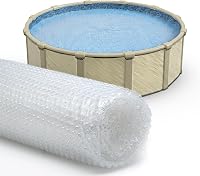
Solar covers are useful when your goal is heat retention and lower evaporation, but they are not the same as tarps and are not safety covers. They float directly on the water and usually need to be removed before swimming.
The Blue Wave 16x32-ft Rectangle Solar Pool Cover suits a rectangular inground pool measuring 16 ft by 32 ft. Its clear thermal bubble design is intended to capture solar heat, retain warmth, and reduce evaporation, while its floating installation allows placement and removal as needed.
The Sun2Solar Clear 24 ft Round Pool Solar Cover suits a round pool with a 24 ft diameter. Its clear thermal bubble design is made to retain warmth, reduce evaporation, and limit leaves and debris, and it can be trimmed for a closer fit around pool features.
The BigXwell Heavy-Duty Solar Pool Cover 16x32ft suits a rectangular 16 ft by 32 ft pool when you want a thicker blue polyethylene solar blanket. Its floating thermal design can be trimmed with scissors for different pool shapes and is intended to reduce evaporation.
These solar covers should not be used as substitutes for a secured tarp, hard cover, or safety cover. For more options, see best covers for inground pools and best clear pool covers for inground pools.
What are the limits of a tarp over an inground pool?
A tarp can block debris, but it does not automatically provide fall protection, drainage, or a precise fit. Its safety depends on the material, anchors, installation, and inspection routine.
Never allow children, pets, or adults to walk on or play near a loose tarp. A wet tarp can hide deep water, sharp debris, or a damaged surface.
A tarp can also shift during storms. Wind may lift the edges, pull out anchors, or push dirt and leaves beneath the cover.
Inspect the deck and securement points before and after bad weather.
If safety is the main concern, compare a hard inground pool cover instead. A rigid cover designed for the pool is a different solution from a flexible tarp.
How do you remove and store the tarp?
Clear standing water first, remove the anchors gradually, and keep the tarp from dragging across rough surfaces. Fold or roll it only after it is clean and dry.
Remove leaves with a soft broom or pool brush while supporting the material from the deck. Do not pull a heavy, waterlogged tarp across the coping.
Rinse off dirt and allow the tarp to dry fully before storage. Keep it in a cool, dry place away from sharp tools, direct heat, and rodents.
Solar covers need different care. Follow the product's care directions, keep the material clean, and store it out of direct sun when it is not floating on the pool.
If you want to build a lower-cost cover system, review diy pool covers for inground pools before cutting material. A DIY setup still needs safe edge support, drainage planning, and regular inspection.
Should you use a tarp, solar cover, or hard cover?
Choose a tarp for temporary debris control, a solar cover for floating heat and evaporation control, and a hard cover when rigid support is central to your plan. Match the cover to the job instead of expecting one material to do everything.
For a rectangular 16 x 32 ft pool, the Blue Wave and BigXwell solar covers match the stated pool size. For a round 24 ft pool, the Sun2Solar cover is the closest fit among these products.
An oval pool needs careful measuring before you buy. Use our guide to the best oval pool cover if the pool shape makes a rectangle or circle a poor match.
The right tarp setup is measured, secured, drained, and checked after weather. If you need protection for heat, select a floating solar cover.
If you need a more structured barrier, compare a hard cover designed for inground pools.
Frequently asked questions
Can you use a tarp as an inground pool cover?
Yes, a tarp can cover an inground pool when it is large enough to overlap the pool edge and is secured around the deck. It can block leaves and light, but a basic tarp is not a certified safety cover, does not automatically manage rainwater, and should not support people, pets, or heavy debris.
How much bigger should a tarp be than an inground pool?
Make the tarp larger than the water surface so it reaches past the pool edge on every side. Measure the pool at its widest points, then add enough extra material for overlap and securement.
The exact allowance depends on the deck, anchor points, shape, and how the tarp will be held down.
How do you keep a tarp from sinking into an inground pool?
Keep the tarp taut and support it with secure points around the deck rather than letting it rest loosely on the water. Check the center after rain, remove standing water promptly, and use a cover pump when appropriate.
Never walk on the tarp or rely on it to hold a person.
Is a solar pool cover the same as a tarp?
No. A solar pool cover is a floating blanket designed to sit on the water with its bubble side down, while a tarp is usually secured over the pool and deck.
Solar covers can reduce evaporation and debris, but they are not substitutes for safety covers or a properly secured winter tarp.