Liquid Chlorine vs Tablets for Pools: Which Should You Use? (November 2026)
Liquid chlorine suits owners who want fast control with no added stabilizer, while tablets suit owners who want slow, steady sanitizing with less daily dosing. In liquid chlorine vs tablets for pools, your stabilizer level, feeder setup and how often you test decide the winner.
On this page (11 sections)
- Liquid chlorine vs tablets for pools: the quick verdict
- Side by side: liquid chlorine vs tablets
- Stabilizer levels decide the long term winner
- Dosing effort: daily pouring vs weekly refills
- Speed of action after parties, rain and heat
- Clarity, algae control and cloudy water
- Shock, start up and seasonal opening
- Who should buy liquid chlorine
- Who should buy tablets
- Can you mix liquid and tablets in the same pool
- Final verdict on liquid chlorine vs tablets for pools
Liquid chlorine gives fast, unstabilized chlorine; tablets give slow, stabilized chlorine. For liquid chlorine vs tablets for pools, pick liquid when you need quick control and tablets when you want a set it and check it routine.
We compared the specs, strengths, sizes and intended use of 4 chlorine products. We checked how each form fits floaters, feeders, shock dosing and stabilizer control.
Our score weighs specs, features and buyer feedback against what you are shopping for. No product here wins on every point, so the choice depends on your pool, your feeder and your schedule.
If you are still building a chemical shelf, our guide to swimming pool chemicals lays out the basics before you choose a form.

 Best for weekly tablet routine
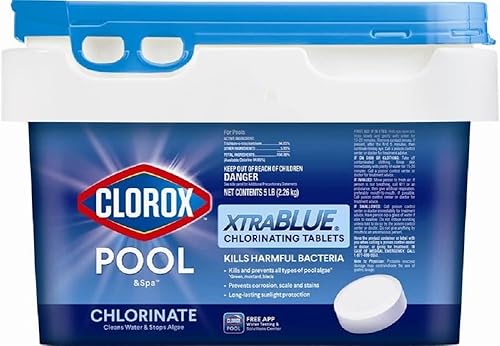
Clorox Pool&Spa XTRABLUE 3” Chlorinating Tablets
Liquid chlorine vs tablets for pools: the quick verdict
Tablets win for hands off daily sanitizing; liquid wins for fast correction and shock. Most pools with a floater or feeder do best with tablets day to day, plus liquid for quick fixes.
Liquid chlorine is ready to use as soon as you pour it. It raises free chlorine within minutes, so you can test, adjust and swim once levels return to range.
Tablets dissolve slowly in a floater, skimmer or automatic feeder. That slow release keeps chlorine steadier between checks, but it also means a fresh tablet takes time to build chlorine after a party or storm.
| Product | Best for | Form | Strength | Size | Our score |
|---|---|---|---|---|---|
| CPDI Champion Pool Shock | fast shock dosing | Liquid | 12.5% | 1 gallon | 9.7 |
| Clorox Pool&Spa XTRABLUE 3” Chlorinating Tablets | weekly tablet routine | Tablet | 5 lb | 9.6 | |
| EZ POOLS BioGuard Chlorinating Liquid | liquid shock treatment | Liquid | 2 gallons | 9.5 | |
| XtremepowerUS Xtremeclear 3" Swimming Pool Chlorine Tablets | floaters and feeders | Tablet | 5 pound | 9.3 |
Side by side: liquid chlorine vs tablets
Liquid adds chlorine only; tablets add chlorine plus stabilizer. That single difference shapes dosing, clarity, cost of effort and long term balance.
| Point | Liquid chlorine | 3 inch tablets |
|---|---|---|
| Speed | Acts in minutes | Dissolves over hours to days |
| Stabilizer | Adds none | Adds cyanuric acid with each tablet |
| Dosing | Measure and pour each time | Refill floater or feeder less often |
| Best use | Shock, start up, correction | Daily background sanitizing |
| Storage | Gallon jugs, keep cool and dark | Bucket or pack, keep dry |
The CPDI Champion Pool Shock is a 1 gallon liquid at 12.5% strength. That strength lets you superchlorinate a 10,000 gallon pool with 52 to 104 ounces to reach 5 to 10 ppm available chlorine.
The BioGuard Chlorinating Liquid comes as a 2 pack with 2 gallons total. That size suits owners who shock often or open a pool in spring and want a second gallon ready.
The Clorox Pool&Spa XTRABLUE tablets are 5 lb of individually wrapped 3 inch tablets. The maker says 2 tablets weekly treat 10,000 gallons, with more added as needed to maintain sanitation.
The Xtremeclear tablets are a 5 pound bucket of 3 inch tablets for floaters, skimmers and automatic feeders. The maker says 1 tab treats about 5,000 gallons and tabs dissolve slowly, lasting up to one week.
Stabilizer levels decide the long term winner
If your stabilizer is already high, liquid is the better choice. Tablets keep adding stabilizer, and too much of it can make chlorine lazy even when test numbers look fine.
Stabilizer protects chlorine from sun burn off. In modest amounts it helps chlorine last longer outdoors.
In excess it binds chlorine so the water sanitizes slowly and algae can gain ground.
Liquid chlorine adds no cyanuric acid. That makes it the tool for lowering stabilizer by dilution over time while you keep sanitizing with unstabilized doses.
Tablets are trichlor based and pre-stabilized. The Xtremeclear maker says its tabs are designed to resist depletion from UV rays.
The Clorox maker says its tablets contain chlorine stabilizer to extend the life of your clean.
Test stabilizer at least monthly in summer. If it climbs toward the high end of your range, pause tablets and use liquid for a few weeks.
Then test again before you return to tablets.
Our best liquid chlorine for pool guide helps you match strength and size to that correction phase. It also explains why strength on the label matters when you calculate a dose.
Dosing effort: daily pouring vs weekly refills
Liquid needs a few minutes every day or two; tablets need a refill every week or so. Your schedule matters more than the chemistry here.
With liquid, you test, measure, pour slowly around the pool while the pump runs, then test again. Learn the safe method in how to add liquid chlorine to pool before your first dose.
With tablets, you drop tabs into a floater or feeder, adjust the vents, and let water flow over them. You still test, but you dose less often.
The Clorox tablets are individually wrapped, which helps you keep unopened tabs dry and clean. The Xtremeclear bucket gives a larger supply for a floater routine, with 45 items listed for the 5 pound pack.
Tablets still need attention. A floater with closed vents can starve the pool of chlorine.
A feeder with too many tabs can over-chlorinate. Check free chlorine weekly and adjust vents in small steps.
Liquid needs storage care. Keep jugs upright, in shade, away from heat.
Do not use using bleach in a pool as a casual swap without reading can you use bleach in a pool first, since strength and additives differ.
Speed of action after parties, rain and heat
Liquid wins when you need chlorine up now. Tablets win when you want chlorine steady while you are away for a few days.
A pool party adds sunscreen, sweat and swimmers. Heavy rain dilutes chlorine.
Hot sun burns it off. Liquid brings free chlorine back up in minutes, which helps you respond the same evening.
Tablets respond slowly. A floater can keep chlorine in range during normal use, but it may not catch up fast after a storm or a big swim party.
You may still pour liquid for that recovery.
The CPDI liquid gives exact numbers for superchlorination by pool size. It also reminds you to hold pH between 7.2 and 7.6 and alkalinity between 50 and 100 ppm for best action.
The BioGuard 2 pack is billed as a liquid shock treatment that raises chlorine. That framing fits start up, storm recovery and algae treatment better than daily spoon dosing.
Timing matters with either form. Our guide on when to add chlorine to pool covers evening dosing, pump run time and retesting intervals.
Clarity, algae control and cloudy water
Neither form fixes cloudy water on its own if filtration or balance is off. Chlorine kills what feeds haze, but it cannot replace a clean filter or a balanced pH.
The Clorox maker says its tablets kill harmful bacteria and prevent equipment corrosion, scale and stains, plus kill and prevent green, mustard and black algae. That is a maker claim for the tablet formula, not a promise for every pool.
The Xtremeclear maker says its tablets effectively prevent unsightly pool algae and keep water clean and clear. Again, results depend on circulation, filtration and consistent chlorine levels.
Liquid can help when algae already has a foothold. A shock dose raises free chlorine fast, then brushing and filtration remove dead material.
Repeat only as test results direct you.
If haze persists after chlorine is in range, look beyond sanitizer. Our best pool clarifier for cloudy water guide covers flocculants and clarifiers for particles that chlorine cannot settle.
Also check back pressure, pump run time and skimmer flow. A weak pump can leave dead zones where algae starts, even with perfect chemistry.
Shock, start up and seasonal opening
Liquid is the clearer choice for shock and spring start up. You can dose to a target ppm, test, and adjust in one session.
The CPDI directions for a new pool or spring start up call for 52 to 104 ounces per 10,000 gallons for 12.5% shock. That range shows why label strength matters; a weaker liquid needs more volume for the same result.
The BioGuard 2 gallon pack suits a seasonal opener who wants liquid on hand for the first shock and a spare gallon for later. The included Pool and Spa Tips E-Book may help a new owner plan the first weeks.
Tablets can open a pool too, but they build chlorine slowly. You may wait hours to reach a safe level, and stabilizer starts building from day one.
For a heavy algae cleanup, pair liquid shock with a chlorine shock product suited to your stabilizer level. Our comparison of non chlorine shock vs chlorine shock explains when each type helps.
Store shock liquid separately from acids and other chemicals. Never mix products in the jug.
Pour into pool water, not the other way around.
Who should buy liquid chlorine
Buy liquid if you test often, want no added stabilizer, or shock on a regular schedule. It also suits pools without a floater or feeder.
Liquid fits above ground pools, small in ground pools and renters who cannot install a feeder. It fits owners who like exact control and do not mind a short daily task in summer.
The CPDI 1 gallon is a compact pick for a single pool. At 128 fluid ounces, it covers several shock doses for a 10,000 gallon pool within the range the maker gives.
The BioGuard 2 pack fits a larger pool or a household that shocks after parties and storms. Two gallons means you are less likely to run out mid cleanup.
Buy liquid if you prefer to see a dose work fast. Buy it if your stabilizer test runs high.
Buy it if you want one chemical to handle routine dosing and shock, with no feeder to clean.
Skip liquid as your only plan if you travel often or forget daily tasks. A missed dose in July heat can drop chlorine fast, and algae can start in days.
Who should buy tablets
Buy tablets if you want a floater or feeder routine with fewer dosing sessions. They suit busy owners and larger pools with steady circulation.
The Clorox 5 lb pack suits an owner who wants individually wrapped tabs and a simple weekly rhythm. The maker says 2 tablets weekly treat 10,000 gallons, which gives you a starting point to adjust by test results.
The Xtremeclear 5 pound bucket suits a feeder setup. The maker says tabs fit floaters, skimmers and automatic chlorinators over 3 inch, and dissolve slowly for long lasting chlorine.
Tablets also suit owners who use a bromine vs chlorine pool setup and want to compare sanitizer forms. Our bromine vs chlorine pool guide covers that wider choice.
Buy tablets if you can test weekly and adjust floater vents. Buy them if your stabilizer starts low and you have sun exposure to protect against.
Skip tablets if stabilizer is already high. Skip them if you have no dispenser and do not want to buy one.
Skip them if you want same day shock control with no liquid on hand.
Can you mix liquid and tablets in the same pool
Yes, many owners mix both forms for the best of each. Tablets handle daily background chlorine; liquid handles shock and corrections.
A common routine is tablets in a floater for steady sanitizing, plus liquid after heavy use, rain or algae sightings. Test before the liquid dose and again after the pump has run.
Do not pour liquid directly into a floater or feeder. Do not add dry chemical to liquid.
Keep each product in its original container and follow label directions.
Watch pH when you use liquid often. Liquid chlorine tends to raise pH slightly, so test and adjust with your normal balancing products.
Watch stabilizer when you use tablets often. Test monthly and take a liquid break if stabilizer climbs.
That break protects chlorine action through peak summer.
This mix is not a reason to double dose blindly. Free chlorine, total chlorine and pH tell you what the water needs next.
Final verdict on liquid chlorine vs tablets for pools
Pick tablets for steady daily care and liquid for fast control; many pools need both. Your stabilizer level is the tie breaker most owners overlook.
Choose liquid if stabilizer is high, you shock often, or you want exact dosing with no feeder. Choose tablets if you want fewer dosing sessions and you can test weekly.
The CPDI Champion Pool Shock leads for fast, measured liquid dosing in a 1 gallon size. The Clorox XTRABLUE tablets lead for a simple, individually wrapped weekly routine.
The BioGuard 2 pack is the backup liquid supply for shock and start up. The Xtremeclear bucket is the feeder ready tablet supply for slow, steady release.
Start by testing free chlorine, pH, alkalinity and stabilizer today. Then match the form to the numbers, not to habit alone.
That step will make liquid chlorine vs tablets for pools a clear choice for your pool.
Frequently asked questions
Is liquid chlorine better than tablets for pools?
Liquid chlorine is better when you need fast correction or want to avoid adding stabilizer, while tablets are better for steady daily sanitizing with less frequent dosing. Many owners use tablets for routine care and liquid for shock, start up or algae cleanup.
Do chlorine tablets raise stabilizer levels?
Yes. Most 3 inch tablets are stabilized trichlor, so each tablet adds chlorine and cyanuric acid stabilizer.
Over weeks that stabilizer can build up and slow chlorine action.
Test stabilizer monthly and switch to liquid for a while if levels climb too high.
Can I use liquid chlorine and tablets together?
Yes, and many owners do. Use tablets in a floater or feeder for steady background chlorine, then add liquid for shock, parties, heavy rain or algae.
Test before and after the liquid dose so you do not overshoot free chlorine or pH.
How often do you add liquid chlorine to a pool?
Liquid loses strength in sun and use, so small pools often need it every day or two in summer. Test free chlorine, pH and alkalinity, then dose to your target.
Our guide to when to add chlorine to pool explains timing by weather, use and test results.
Which is easier for a beginner pool owner?
Tablets are often easier because a floater releases chlorine slowly and you refill it less often. Liquid is simpler to understand for a one time dose, but it needs measuring each time.
Beginners often start with tablets for routine use and keep liquid on hand for corrections.