Can You Use Bleach in a Pool?
Yes, you can use bleach in a pool in a pinch, because bleach is sodium hypochlorite, the same active ingredient in liquid pool chlorine. Don't use it as your regular sanitizer, since household bleach has no stabilizer, varies in strength, and can damage surfaces and swimmer comfort when misused.
On this page (10 sections)
- Why does bleach work in a pool at all?
- What are the risks of using bleach in a pool?
- How much bleach should you add to a pool?
- When is bleach a reasonable short term option?
- Why is pool liquid chlorine a better everyday choice?
- How do tablets compare with bleach and liquid chlorine?
- What should you test after adding bleach to a pool?
- How do you store bleach and pool chlorine safely?
- What is the best long term plan if you have been using bleach?
- How to use phosphate remover in pool
Yes, you can use bleach in a pool in a pinch, because bleach is sodium hypochlorite, the same active ingredient in liquid pool chlorine. Don't use it as your regular sanitizer, since household bleach has no stabilizer, varies in strength, and can damage surfaces and swimmer comfort when misused.
If your chlorine runs out on a hot weekend, unscented bleach can keep algae from taking over for a day. For day to day care, a product made for pools is easier to dose and safer for your water, liner, and swimmers.
Why does bleach work in a pool at all?
Bleach works because sodium hypochlorite forms hypochlorous acid in water. That acid kills bacteria and algae and oxidizes oils and waste swimmers bring in.
Pool liquid chlorine uses the same chemistry at a known strength. Household bleach is usually 5 to 8 percent sodium hypochlorite, while pool shock liquid is often 10 to 12.5 percent.
Bleach also has no cyanuric acid stabilizer, so sunlight breaks chlorine down fast. It may also have fragrances or thickeners that pools do not need, so check the label for plain sodium hypochlorite and water only.
Our guide to swimming pool chemicals explains how stabilizer, chlorine, and pH work together.
What are the risks of using bleach in a pool?
The main risks are weak sanitizing, eye and skin irritation, and surface damage. Bleach burns off in sun within hours, so algae can start the same day.
If you add too much, free chlorine can spike and sting eyes, dry skin, and fade a vinyl liner.
Bleach also raises pH as it adds chlorine. Repeated doses can push pH up, which makes chlorine less effective and can cloud water.
That is one reason a pool using too much chlorine may still look dull, as our post on pool using too much chlorine explains.
Never mix bleach with acids, ammonia, or other cleaners. That mix can create harmful gases.
Add it diluted across the deep end with the pump running, away from direct contact with return jets and vinyl.
Metal stains are a separate concern. If bleach use coincides with low pH or high chlorine, stains can show faster.
Our guide to the best pool metal stain remover helps when you need to clean up after a chemical mistake.
How much bleach should you add to a pool?
There is no single safe ratio for every pool, because volume, strength, and current chlorine all change the dose. Start by testing free chlorine, pH, and total alkalinity.
Then add a small amount, mix, retest, and repeat.
A rough starting point owners use is about 1 cup of regular unscented bleach per 1,000 gallons for a light boost. That is only a starting point, not a rule.
Test after 30 to 60 minutes of circulation before you add more. Aim for free chlorine in the normal sanitizing range for your test kit, not a guess.
If you overshoot, let the best chlorine neutralizer for pools guide explain when a neutralizer helps and when waiting is safer.
When is bleach a reasonable short term option?
Bleach is reasonable when you need sanitizer today and pool chlorine is not available. It also works as a one time shock after a party, a storm, or a week of neglect.
In those cases, its fast action is useful and its short life is less of a problem.
Keep the dose modest and the timing smart. Add it in the evening so less is lost to sun overnight.
Run the pump all night, then test in the morning before anyone swims. Brush walls if algae has started, since chlorine alone cannot fix a heavy algae load.
Do not use scented, splashless, or color safe bleach. Do not use bleach that contains added cleaners.
If the label lists anything beyond sodium hypochlorite and water, skip it for the pool.
How to use bleach safely in a pinch
- Test free chlorine and pH first.
- Dilute bleach in a clean bucket of pool water.
- Pour it slowly across the deep end with the pump running.
- Wait, retest, and only add more if needed.
- Keep swimmers out until chlorine is back in range.
Why is pool liquid chlorine a better everyday choice?
Pool liquid chlorine is better because its strength is labeled and consistent. A 12.5 percent sodium hypochlorite product lets you calculate a dose for your volume and hit a target more reliably than household bleach that changes from bottle to bottle.
It also has no fragrances or thickeners. That means less residue on surfaces and less chance of clouding.
Brands like CPDI say their liquid shock will not cloud water or leave residue that can stain surfaces.
Liquid chlorine still needs stabilizer in outdoor pools. The stabilizer is added separately to keep sun from destroying chlorine.
Household bleach cannot do that job, which is why it fades so fast on a sunny day.
That 4 pack suits owners who shock often or run a larger pool. Each jug is ready to pour directly or feed through a peristaltic metering pump, as CPDI describes.
NSF/ANSI 60 certification is another plus for residential and commercial use.
Who should choose the 2 pack instead?
Choose the 2 pack if you want the same 12.5 percent strength in a smaller quantity. It comes in 1 gallon jugs, packed as a set of 2, with no mixing required.
CPDI says you can pour it directly or feed it through a peristaltic metering pump.
CPDI calls this a cost effective option with rapid sanitation and no cloudiness or stains. Pick this size if a 4 pack would sit too long in your shed.
How do tablets compare with bleach and liquid chlorine?
Tablets are better for steady daily chlorination, while liquid is better for quick shocks. Chlorinating tablets dissolve slowly in a feeder or skimmer, so they keep free chlorine steadier between tests.
That steadiness is hard to get with bleach, which spikes then fades.
Tablets also contain stabilizer in many formulas, which helps in sun. The trade off is slower action.
A tablet will not clear a green pool overnight the way a liquid shock can. Many owners use tablets daily and liquid for shocks.
Timing still matters. Our guide on when to add chlorine to pool covers evening dosing and test timing for both forms.
Follow that timing whether you use liquid or tablets.
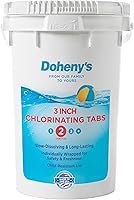
CLOROX Pool&Spa says these tablets kill bacteria and prevent algae, scale, and stains, and they contain chlorine stabilizer for sunlight protection. The maker suggests 2 tablets weekly for 10,000 gallons, adding more as needed.
That is a starting dose, so test and adjust.
What should you test after adding bleach to a pool?
Test free chlorine, pH, and total alkalinity after circulation. Bleach raises pH, so a dose that fixes chlorine can push pH out of range.
Low alkalinity makes pH swing, which makes chlorine less effective.
Use a liquid test kit or quality strips you trust. Test at elbow depth, away from return jets, after the pump has run for at least 30 minutes.
Record the results so you can see how your pool responds to each dose.
If free chlorine is high, keep swimmers out and let sun and use lower it. If pH is high, adjust it in small steps with a pool pH product, not with more bleach.
If water turns cloudy, check filtration before adding more shock.
A best digital pool thermometer can also help, since warm water burns chlorine faster.
How do you store bleach and pool chlorine safely?
Store both upright, cool, and out of direct sun, away from kids and pets. Sodium hypochlorite loses strength over time, and heat speeds that loss.
Keep caps tight and jugs on a stable surface so they cannot tip.
Label any bleach you decant for pool use, and never store it in a drink container. Keep pool chlorine separate from acids and other pool chemicals.
A spill of bleach on a deck should be rinsed right away, since it can bleach fabric and plants.
Check dates and clarity before use. A jug that has sat open or in a hot shed may be weaker than its label.
When in doubt, test the water after dosing and adjust instead of assuming full strength.
What is the best long term plan if you have been using bleach?
The best long term plan is to switch to a labeled pool chlorine and test on a schedule. Use liquid for shocks and algae cleanups, and tablets or another feeder system for daily chlorine if you prefer steady levels.
Add stabilizer separately if your pool needs it.
Keep a simple log with date, dose, and test results. That log shows whether your pool needs more chlorine because of sun, use, or a filter issue.
It also stops the cycle of guessing with bleach and overshooting.
For daily dosing, our pick for the best liquid chlorine for pool gives you labeled strength options to compare. For tablets, the CLOROX set above fits owners who want slower, steadier release.
How to use phosphate remover in pool
Phosphate remover helps when algae keeps coming back even with good chlorine. Phosphates feed algae, so removing them can reduce chlorine demand.
That matters if you have been relying on bleach and still see algae after each dose.
Our guide on how to use phosphate remover in pool explains when to dose it and how it interacts with other treatments. Use it as a supplement, not as a replacement for chlorine.
Test for phosphates before you buy. If levels are low, extra remover adds cost without benefit.
If levels are high, lowering them can make your regular chlorine last longer and reduce the need for frequent shocks.
Frequently asked questions
Can you use bleach in a pool instead of chlorine?
You can use bleach in a pool for a short term fix, because unscented household bleach is sodium hypochlorite. It lacks stabilizer and consistent strength, so it burns off fast in sun and is hard to dose.
For regular care, use a pool made liquid chlorine or tablets designed for swim water.
How much bleach do you put in a pool?
The amount depends on pool volume, current free chlorine, and the bleach strength, so test first and add in small steps. Do not guess a fixed ratio for every pool.
A safer path is to use a pool liquid chlorine that states its sodium hypochlorite strength on the label.
Is bleach safe in a pool for swimming?
Bleach is safe in a pool only after it is diluted, mixed, and tested to a safe free chlorine level, and the pump has run. Never swim while you are adding bleach or before testing.
If chlorine is too high, wait and let sunlight and use bring it down before swimming.
Can bleach damage a pool?
Bleach can damage a pool when it is too strong, added in one spot, or used often without stabilizer. It can irritate eyes and skin, fade vinyl, and stress plaster and equipment.
Pool made liquid chlorine gives more predictable strength and no added fragrances or thickeners.