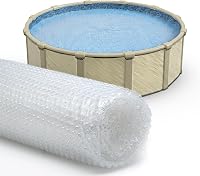
How to Choose a Cover for a Freeform Pool
The best cover for a freeform pool is measured for its widest points and chosen around the pool's shape, anchors and handling plan. Solar covers can be trimmed for heat retention, while safety and hard covers need a more exact fit.
On this page (9 sections)
- What type of cover works best for a freeform pool?
- How do you measure a freeform pool for a cover?
- Should you buy a round, rectangle or custom cover?
- Which solar covers suit an irregular pool?
- How should you handle a solar cover on a freeform pool?
- What accessories help keep a freeform cover in place?
- Should a freeform pool use one cover or more than one?
- What should you check before buying pool covers for freeform pools?
- What is the simplest decision rule for a freeform pool cover?
The best cover for a freeform pool is chosen from the pool's widest points, irregular edges and fixed features. Solar blankets offer the most forgiving fit because they can be trimmed, while safety and hard covers usually need a measured or custom outline.
Start by deciding what the cover must do. Heat retention, reduced evaporation, debris control and safety are different jobs, so one cover type may not meet every need.
A freeform pool rarely follows a single standard shape. Curves, shallow shelves, narrow coves and wide ends can all sit in the same layout.
That mix changes what a good fit looks like. A cover may need to cover the main swimming area well while leaving careful room around steps and equipment.
For a broad overview of swimming pool covers, compare the main cover materials and use cases before narrowing the choice to your pool's shape.
Think about the season ahead as well. A cover for spring and fall heat retention has different priorities from a cover meant for full-time safety.
Daily handling matters just as much as the first fitting. A cover that is awkward to move is less likely to be used, even if its shape looks right on paper.
Solar covers suit owners who mainly want warmer water and less evaporation. They float on the surface and can be cut to suit many irregular outlines.
Safety and hard covers suit owners who need stronger support or a tighter perimeter. Their shape must line up with the deck, hardware and pool edges.
Measure the waterline before you compare products. Note the longest length, the widest width and every place where the outline changes direction.
Mark fixed features in the same pass. Steps, benches, ladders, rails, skimmers and attached spas all affect how a sheet can lie flat.
Plan storage while you are still choosing. A trimmed solar sheet needs space to roll, and a custom cover needs a place to sit when it is off the pool.
This guide helps you weigh those trade-offs in a clear order. Start with the job, then the shape, then the handling plan.
What type of cover works best for a freeform pool?
A solar cover is usually the easiest option for an irregular pool because it floats on the water and can be trimmed around the outline. Choose a custom safety or hard cover when load support, security or a tight perimeter fit matters more than simple installation.
Freeform pools may include curves, narrow coves, wide ends, steps, benches and attached spas. These details make a standard rectangle or circle difficult to fit without gaps or excess material.
A solar blanket does not need to match every outside edge perfectly to provide useful coverage. It should sit across the water, with openings cut around permanent features and enough material removed to prevent bunching.
A safety cover has a different requirement. Its straps, springs or anchors need to line up with the deck around the pool, so the cover shape and anchor layout must be planned together.
Hard covers also need firm support around the perimeter. If you are considering a hard inground pool cover, check how the cover handles the pool's curves, deck shape and access points.
How do you measure a freeform pool for a cover?
Measure the pool at its longest and widest points, then map the outline in sections. For an irregular pool, two numbers alone are not enough for a close-fitting cover.
Use a tape measure to record:
- Longest waterline length
- Widest waterline width
- Narrow sections and deep curves
- Steps, benches and tanning ledges
- Attached spas or raised sections
- Ladders, rails and water features
- Skimmers, returns and other fittings that affect the cover
- The deck edge where anchors or hardware may sit
For a solar cover, begin with the largest rectangle that contains the water surface. Lay the material flat, mark the pool outline and trim gradually.
It is easier to remove more material than to replace material cut away too early.
Measure at the waterline rather than copying the outside deck shape. Coping, raised edges and broad paving can make the deck appear larger than the area the cover needs to float over.
For a safety or hard cover, use the cover maker's template method. A detailed paper, plastic or digital template can capture curves that a simple length-and-width measurement misses.
Should you buy a round, rectangle or custom cover?
Choose a shape that covers the largest simple section, then plan around the parts that make the pool irregular. A rectangle can be a useful starting point for many freeform pools, but a custom outline gives the closest fit.
A round cover may suit a pool with a mostly circular swimming area and gentle additions. It can leave extra material along narrow sections, so check whether the excess can be trimmed safely.
A rectangular cover suits pools with long straight sides or a large central swimming area. It may need careful cuts around curved ends, steps and attached features.
A custom cover is the better match when the pool has several curves, a large shallow shelf or a connected spa. Custom sizing can reduce loose areas, but it usually requires more measurements and a higher level of fitting precision.
Review the main types of inground pool covers before choosing based only on shape. The cover's purpose matters as much as its outline.
Which solar covers suit an irregular pool?
The best solar cover for a freeform pool is an oversized floating sheet that can be trimmed to the waterline. Thickness, material, color and handling all affect how practical the cover will be between swims.
A clear solar blanket uses thermal bubbles to capture solar heat and help retain warmth. The bubble side should face down toward the water for the cover to work as intended.
A thicker cover may feel more substantial, but it can also be harder to move across a wide or irregular pool. A reel can make removal easier when the pool's layout leaves enough room for the reel and the rolled cover.
Blue Wave 16x32-ft Rectangle Solar Pool Cover
The Blue Wave cover suits a freeform pool with a large rectangular swimming area and extra material that can be trimmed around accessories. Its clear, 14-mil solar blanket uses thermal bubbles for heat retention and reduced evaporation, and it is designed for floating use on above-ground or inground pools.
The 32 x 16 ft rectangular size gives you a broad starting sheet for a pool with a similar maximum footprint. Its lightweight construction can make regular placement and removal more manageable than a heavier cover, although a freeform outline may still need a reel or two-person handling.
For care, clean it with mild soap and water, rinse thoroughly and let it dry before storing it in a cool, dry place. Roll the blanket instead of folding it for storage.
Sun2Solar Clear 24 ft Round Pool Solar
The Sun2Solar cover suits a freeform pool with a rounded main basin or a large circular section. Its clear, 12-mil floating solar cover is 24 ft round, and the material can be trimmed for round, oval, rectangular or unique pool shapes.
The round shape can reduce waste when the pool's main body is curved. If your pool has a long straight extension, compare the circle's coverage with the pool's longest section before cutting.
Sun2Solar says the cover can raise water temperature by up to 15 degrees Fahrenheit and reduce evaporation by up to 95 percent. These are brand claims, so treat them as expected performance rather than a guarantee for every pool, climate or season.
The cover fits most solar reel systems, although a reel is not required. Keep the bubble side down and hand wash the cover when it needs cleaning.
BigXwell Heavy-Duty Solar Pool Cover 16x32ft
The BigXwell cover suits a freeform pool with a broad rectangular footprint where a thicker solar blanket is useful. It is a blue, 16-mil polyethylene cover sized 32 x 16 ft and designed for floating use on inground or above-ground pools.
The heavier thickness may be useful when you want a more substantial sheet, but it can also make handling more demanding after trimming. Plan where the rolled cover will rest, especially if a curved pool has limited deck space.
BigXwell says the cover can reduce evaporation by 95 percent and can be cut with scissors for different pool shapes. Keep those claims tied to the brand's stated performance, since sunlight, wind, water temperature and pool use affect results.
For care, hand wash it with mild detergent and air dry it. Store it out of the water when the pool is in use, and avoid leaving a loose cover where wind can catch it.
How should you handle a solar cover on a freeform pool?
Use a reel, cover roller or a planned two-person lift so the trimmed sheet does not drag across sharp edges. Handling is often the biggest daily challenge with a freeform pool because the cover cannot be folded into a simple shape.
Trim only after checking the cover's position several times. Mark the waterline with the blanket floating, remove it for cutting, then return it to the pool and check the edges again.
Leave clearance around ladders, rails, skimmers and raised fittings. The cover should not bunch tightly against equipment or extend into a place where it can catch on hardware.
A reel works best when the pool has a reasonably straight edge for mounting. For a pool with several curves, a reel may need to sit at the widest or most accessible side rather than at the visual center of the pool.
Compare best solar pool cover reels for handling ideas, then check the reel's width and mounting space against your deck.
What accessories help keep a freeform cover in place?
A freeform cover needs handling and storage accessories that match the pool's edges and wind exposure. Anchors, reels and pumps solve different problems, so choose them according to the type of cover you use.
A floating solar blanket does not use deck anchors in the same way as a safety cover. It needs a way to remove, roll and store the material without dragging it across the coping.
A safety cover uses anchors and tension around the perimeter. The anchor positions must match the cover's measured shape, so do not assume a standard spacing plan will work for an irregular pool.
Read about best pool cover anchors if you are planning a cover that attaches to the surrounding deck. Confirm the anchor type and installation method with the cover manufacturer.
Rainwater is a separate concern. A solid cover can collect water that needs removal, while a floating solar cover is not a substitute for a safety cover or a cover pump.
If your cover system needs water removal, compare best pool cover pumps and keep the pump's placement away from areas where it could damage the cover.
Should a freeform pool use one cover or more than one?
Use one properly planned cover when it can cover the main pool and remain manageable. A divided cover system may be easier when the pool has separate basins, an attached spa or a shape that makes one sheet too hard to move.
One large solar blanket gives continuous coverage across the water, but it can become awkward when the pool has several narrow sections. A single custom safety cover may provide better security, but the fit must account for every curve and obstruction.
Two or more sections can make removal easier and may let you uncover only the area you plan to use. The trade-off is more seams, more storage pieces and more decisions about how the sections overlap.
Do not create gaps that leave important water areas uncovered. Divide the cover only after checking how each section will be removed, stored and replaced.
What should you check before buying pool covers for freeform pools?
Check the pool's maximum length, maximum width and unusual features before comparing materials or colors. The right pool covers for freeform pools are the ones you can fit, remove and store safely throughout the season.
Use this final checklist:
- Measure the waterline, not just the deck.
- Mark the longest and widest points.
- Identify steps, benches, ledges and attached spas.
- Decide whether the main goal is heat, evaporation control, debris reduction or safety.
- Choose a trim-to-fit solar sheet or a custom measured cover.
- Plan reel space or a two-person handling method.
- Leave clearance around ladders, rails and fittings.
- Confirm how the cover will be cleaned and stored.
- Add anchors only when the cover system is designed for them.
- Use a pump only when the cover type is intended to hold or collect rainwater.
For more options before making the final choice, see our guide to the best inground pool covers. If heat retention and visibility matter most, compare the best clear pool covers for inground pools.
What is the simplest decision rule for a freeform pool cover?
Choose a trim-to-fit solar blanket when your main goals are warmer water, lower evaporation and less debris across a freeform pool. Choose a measured safety or hard cover when perimeter fit, security and support matter more than flexible trimming.
That first choice works best when the pool is used often and the cover will go on and off regularly. A floating sheet can be trimmed to the waterline and adjusted as the layout becomes clearer.
It also suits pools where a standard rectangle or circle would leave large gaps. Excess material can be removed in stages, which gives more room for error than a made-to-measure cover.
Pick the Blue Wave for a clear 14-mil rectangle that fits a broad 32 x 16 ft starting area. Its rectangular sheet suits a freeform pool with a large central section and straight sides.
The clear material allows sunlight through while the bubbles face down to trap heat. That setup can help retain warmth overnight and reduce the need for electric heating on sunny days.
At 30 pounds, the sheet is light enough for planned handling, but a wide trimmed cover may still need two people. Rolling it for storage helps protect the surface and keeps folds from forming.
Pick the Sun2Solar when a 24 ft round sheet matches the pool's main curved section. The round shape gives a generous starting point for a basin with soft curves and few sharp corners.
Its 12-mil clear construction is lighter at about 20 pounds, which can make regular placement easier. The material can also be trimmed for oval, rectangular or unique shapes when the main basin is not a true circle.
Hand washing is the stated care method, so plan for gentle cleaning rather than harsh scrubbing. The bubble side should stay down in the water for the cover to work as intended.
Pick the BigXwell when you prefer a blue, 16-mil polyethylene rectangle for a large trim-to-fit area. The thicker sheet feels more substantial and is aimed at owners who want durability in daily use.
That extra thickness can also make moving the cover more demanding, especially across a wide freeform pool. Check deck space for rolling and storage before you commit to a large sheet.
Its polyethylene material can be cut with scissors to follow curves and fittings. Trim slowly, keep the outline smooth and leave clearance around equipment that could snag the edge.
Measure twice, cut gradually and plan the handling method before the cover arrives. A cover that fits the water is useful, but one you can safely remove and store is the one you are most likely to use.
Frequently asked questions
What is the best cover for a freeform pool?
The best cover depends on your goal. A trim-to-fit solar blanket can work for heat retention and evaporation control, while a safety or hard cover needs measurements made for the pool's exact outline.
Freeform pools often need a custom cover or a carefully trimmed oversized cover.
Can you use a solar cover on a freeform pool?
Yes, a solar cover can suit a freeform pool if you choose an oversized sheet and trim it to the waterline. Keep the bubble side down, leave room around steps and fittings, and use a reel or another handling method that matches the pool's shape.
Do freeform pools need custom covers?
Freeform pools often need custom covers when the goal is safety, a tight fit or full surface coverage. A solar blanket is more flexible because it can be trimmed, but the finished shape still needs to avoid ladders, waterfalls, benches and other fixed features.
How do you measure a freeform pool for a cover?
Measure the longest length and widest width, then record changes in the outline, steps, tanning ledges, attached spas and raised features. For a custom safety or hard cover, make a detailed template or have the cover company measure the pool before ordering.