Sand vs Cartridge Pool Filter: Which Is Better? (November 2026)
Choose a sand filter for simpler routine care, or a cartridge filter to avoid backwashing and conserve water. Your pool size, debris load, filter compatibility, and willingness to clean or replace media shape the better choice.
On this page (10 sections)
- Sand vs cartridge pool filter: which should you choose?
- Which filter type needs less cleaning?
- Which type filters finer debris?
- Which filter costs less to run?
- How do you choose the right filter size?
- What else affects pool water clarity?
- Is sand or cartridge better for an above-ground pool?
- What are the main trade-offs?
- Sand or cartridge pool filter: which is the better choice?
- Sources
Choose a sand filter for simpler routine care, or a cartridge filter to avoid backwashing and conserve water. In a sand vs cartridge pool filter comparison, weigh how you want to clean the filter, how fine a level of filtration you need, and the ongoing cost of media or replacement cartridges.
Sand systems clean by reversing water flow through the filter and sending it to waste. Cartridge systems trap debris in a pleated element that you remove and rinse, then replace when needed.
Neither type is right for every pool. Your filter must match the pump and pool, and the best choice depends on the upkeep you can keep doing.
 Best for compatible Intex pumps
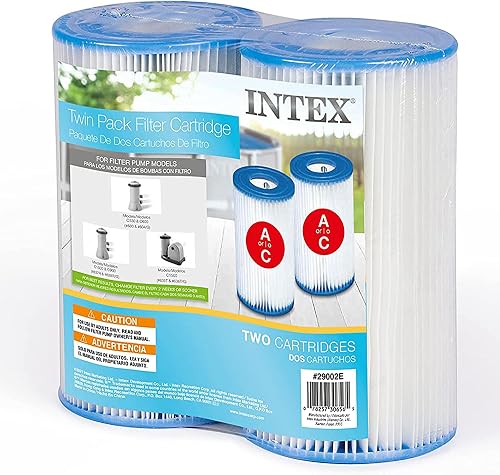
INTEX 29002E Type A Pool Filter Cartridge

Sand vs cartridge pool filter: which should you choose?
Choose sand if you want to backwash instead of opening a filter housing; choose a cartridge if you want to clean without a backwash cycle. The difference affects maintenance, water use, and the kind of replacement supplies you keep on hand.
A sand filter holds filter media inside a tank. To clean it, you set the valve to backwash and flush trapped debris out of the system, then rinse before returning to filter mode.
A cartridge filter routes water through a pleated element. When pressure or flow indicates that cleaning is due, you remove the cartridge and rinse it according to the manual.
When should you choose a sand filter?
A sand filter may suit you if you want a familiar backwash routine and don't mind sending water to waste during cleaning. It can be a practical choice where a suitable drain point is available.
The [INTEX Krystal Clear] is an example of a sand filter pump with a 6-function valve. Its functions include filter, backwash, rinse, re-circulate, drain, and close, and it's stated for Intex above-ground pools up to 12,800 gallons.
Sand needs periodic replacement based on the system instructions and its condition. The Intex pump's product information says sand can last up to 5 years with regular backwashing, but your pool and maintenance routine may affect timing.
When should you choose a cartridge filter?
A cartridge filter may suit you if you want to avoid routine backwashing or conserve water during filter cleaning. You'll need a way to access the housing and rinse the element, and a place to let it dry if your care routine calls for that.
A pool filter cleaning stand can hold a cartridge during rinsing.
The [INTEX 29002E Type A Pool Filter Cartridge] fits specified Intex filter pump models: 28603EG, 28637EG, and 28635EG. Intex describes its Dacron paper as easy to clean and recommends replacing cartridges every 2 weeks for above-ground pool use.
For larger cartridge systems, the POOLPURE C1200 replacement is compatible with Hayward Star Clear Plus C1200 and other named models. Confirm the model number and cartridge dimensions against your current filter before ordering.
Which filter type needs less cleaning?
Sand filters need backwashing, while cartridge filters need periodic removal and rinsing. Neither system is maintenance-free, and skipping the routine can reduce water circulation or filtration.
Backwash frequency varies with debris, pool use, and pressure changes. Follow the filter manual for the correct pressure range and valve steps, and don't switch valve settings while the pump is running unless the manual allows it.
Cartridge cleaning also depends on conditions. A pool with heavy pollen, leaves, or frequent swimmers may load a cartridge sooner than a pool with less debris.
A cartridge's replacement schedule depends on the model and use. Intex recommends a two-week replacement interval for its Type A cartridge in above-ground pools; other cartridge systems may use different cleaning and replacement guidance.
Sand media lasts longer between replacements, but it's not permanent. Follow the filter maker's directions when changing sand, including the correct media type and amount.
For either system, check pressure and flow rather than relying on a calendar alone. A rising pressure reading, weak returns, or visible debris can signal a need to inspect the filter and other parts of the circulation system.
Which type filters finer debris?
Cartridge filters generally capture finer particles than standard sand filters. Check the specific system's filtration guidance, since media, cartridge condition, and water flow affect the result.
A cartridge's pleated surface gives water a broad area to pass through. The POOLPURE C1200 is described as having trilobal filtration fabric and a 120 sq ft material area, but those details apply to that replacement cartridge, not every cartridge filter.
Sand filtration depends on the filter design and media. Aqua Joe's 50 lb pool filter sand is pre-washed, kiln-dried natural silica sand intended for residential and commercial sand filters.
A finer filtration claim alone shouldn't decide the purchase. The filter still needs to be sized for your pool and pump, and the system needs enough circulation time to move pool water through it.
Which filter costs less to run?
There isn't one cost winner for every pool; compare replacement media, cartridge expenses, water use, and upkeep over time. The right calculation depends on how often you clean and replace parts and what water costs where you live.
Sand systems need replacement sand eventually, and backwashing uses pool water. Cartridge systems avoid that backwash waste but need cleaning and eventual replacement cartridges.
Use a simple yearly estimate. Add the cost of sand or cartridges you expect to replace, then include the value of water used for backwashing and the time or supplies needed for cleaning.
Don't compare the price of a bag of sand with one cartridge in isolation. Sand is bought by the quantity your filter requires, while cartridge schedules and costs vary by model and pool conditions.
The pool pumps and filters buying guide covers sizing and system fit, which should come before a cost comparison. A filter that doesn't suit your pool can create poor circulation and extra maintenance regardless of media type.
How do you choose the right filter size?
Match the filter to your pool volume, pump flow, and plumbing. A larger filter isn't automatically a good fit if the pump or connections don't work with it.
Check the manufacturer's sizing chart and manual for your pool size and required turnover. Confirm pipe or hose diameter, valve arrangement, and the space available around the equipment pad.
If you're comparing complete systems, the best pool filter system options can help you narrow the search by pool setup. For an in-ground pool, also compare the best pool filters for inground pools with your pump and plumbing requirements.
For a cartridge replacement, use the exact filter model and dimensions. The pool filter replacement sizing guide explains what to measure before choosing an element.
What else affects pool water clarity?
The filter is one part of water care; circulation, cleaning, and balanced water also affect clarity. Choose a filter system that can run as directed and keep up with the debris your pool collects.
A robotic cleaner can collect debris from pool surfaces, but its basket doesn't take the place of the circulation filter. See how a robotic pool cleaner filters water and why an automatic cleaner doesn't replace the pool filter.
The pump also needs to move water through the filter at a suitable rate. If you're evaluating a pump alongside a filter, read these Hayward Super Pump reviews and compare the pump's flow needs with the filter maker's guidance.
Is sand or cartridge better for an above-ground pool?
Either type can work for an above-ground pool when the filter is rated for that pool and matched to its pump. Some above-ground pool packages use compact cartridge pumps, while other setups use sand filter pumps.
The Intex Krystal Clear sand filter pump is stated for Intex above-ground pools from 2,800 to 12,800 gallons. The Intex Type A cartridge is compatible with specified Intex pump models, so check your pump's model number before buying.
A smaller pool doesn't automatically make cartridge filtration the right choice. Consider how often you want to rinse cartridges, whether backwashing is practical, and what replacement media your system requires.
For a new setup, compare complete systems before choosing replacement supplies. Replacement media only works when it matches the filter housing.
What are the main trade-offs?
Sand favors a backwash routine and longer media intervals; cartridge favors cleaning without backwashing and finer particle capture in many systems. Use your pool's constraints to decide which trade-off matters most.
| Factor | Sand filter | Cartridge filter |
|---|---|---|
| Routine cleaning | Backwash and rinse through the valve | Remove cartridge and rinse |
| Water used for cleaning | Backwashing sends water to waste | No routine backwash cycle |
| Media replacement | Replace sand according to the manual | Replace cartridge when needed |
| Fine debris | Depends on filter and media | Often captures finer particles |
| Space and access | Needs room for tank and valve access | Needs room to open the housing and remove cartridge |
| Best fit | Owners comfortable with backwashing | Owners who want to avoid backwash water |
These are general differences, not guarantees for every model. Check the maker's instructions for the exact maintenance interval, filtration claims, and system compatibility.
Sand or cartridge pool filter: which is the better choice?
Pick sand if backwashing is practical and you want less frequent media changes; pick cartridge if conserving water and avoiding backwash matter more. Then confirm the filter fits your pool, pump, and plumbing before buying.
A compatible cartridge pump may be easier to live with if you can access and rinse its element. A sand system may fit better when you have a safe place to send backwash water and prefer a valve-based cleaning routine.
For more options, compare the pool filter types and check each system's sizing and care instructions. That gives you a practical answer to the sand vs cartridge pool filter choice for your own pool.
Sources
- Intex Type A cartridge product details
- Intex Krystal Clear sand filter pump details
- Aqua Joe Premium Filter Sand details
- POOLPURE C1200 replacement cartridge details
Frequently asked questions
Is a sand or cartridge pool filter easier to maintain?
A sand filter often has a simpler routine because you backwash it instead of removing and rinsing a cartridge. A cartridge avoids backwashing, but you need to open the housing, clean the element, and replace it when worn or no longer effective.
Your water use and preferred type of upkeep matter.
Does a cartridge filter use less water than a sand filter?
A cartridge filter avoids the backwash cycle, so it can use less water for routine filter cleaning. A sand filter sends water to waste during backwashing.
Actual water use depends on how often you clean the filter, pool conditions, and the system's instructions.
Which pool filter catches finer particles?
Cartridge filters generally capture finer particles than standard sand filters, though the exact result depends on the filter model and condition. Check the manufacturer's particle-size guidance for the specific system.
A properly sized filter and balanced circulation also matter for clear water.
How often do you replace pool filter sand?
Replacement timing depends on the filter maker's guidance, pool use, and the condition of the media. The Intex sand filter pump described here says sand can last up to 5 years with regular backwashing.
Check your own manual before replacing or changing media.
Can you replace a sand filter with a cartridge filter?
You can change filter types if the new system is compatible with your pool, pump, plumbing, and available space. Compare flow requirements, connections, and the manufacturer's sizing guidance before buying.
A replacement cartridge by itself won't convert a sand filter housing into a cartridge system.