9 Best Pool Shock for Black Algae (November 2026)
The best pool shock for black algae include the HTH for most black algae cleanups, the CPDI Champion 4 Pack Pool Shock Liquid (best liquid option), and the HTH 52036R for weekly maintenance.
On this page (8 sections)
- How we compared pool shock for black algae
- The best pool shock options for black algae treatment
- How to use pool shock on black algae, step by step
- Liquid shock or granular shock for black algae?
- How strong should pool shock be for stubborn black algae?
- Which pool shock suits your pool type and size?
- What else do you need with pool shock for black algae?
- Our verdict on the best pool shock for black algae
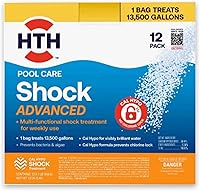
The best pool shock for black algae is HTH 52046 Pool Care Shock Advanced, 15 Pack, because it gives you 15 pre measured 1 lb bags that each treat 13,500 gallons. That count matters with black algae, since you will likely shock more than once.
Black algae needs more than a single dose. Our score weighs specs, features and buyer feedback against what you're shopping for.
We compared strength, form, pack size, coverage and surface safety, and we checked how each option fits a repeat treatment plan.
Start with swimming pool chemicals if your whole chemical shelf needs a reset. For the full clean up sequence, our guide to black algae in pool walks through brushing, vacuuming and testing in order.
Our picks at a glance
-
1

-
2

-
3

- 4
 Check it
Clorox® Pool&Spa™ Shock XTRABLUE® Plus
Best for fast swim ready return - 5
 Best bulk cal hypo valueCheck it
- 6
 Best for cloudy water after algaeCheck it
- 7
 Check it
Poolife Turbo Shock to Eliminate Algae
Best for strongest cal hypo - 8
 Check it
Poolife Rapid Shock for Pool’s Algae
Best pre measured bags - 9
 Check it
Clorox Pool&Spa Shock XtraBlue 1 lb
Best specifically for black algae
How we compared pool shock for black algae
We compared nine shocks by available chlorine type, stated strength, pack count, gallons treated per bag and whether the formula adds CYA. Black algae treatment usually needs repeat doses, so pack size and cost per treatment matter as much as strength.
We also checked surface claims, because steps, benches and liners take the brunt of a heavy dose. Granular cal hypo and liquid sodium hypochlorite both oxidize algae, but they handle storage, mixing and residue in different ways.
Our best pool shock for algae roundup covers green and mustard algae too. This post narrows the field to black algae, which is tougher, slower to die and more likely to need brushing plus a second shock.
What shock can and cannot do
Shock raises free chlorine fast to kill bacteria and oxidize algae. It does not scrub a mat of black algae off plaster, and it does not fix low chlorine, high pH or a weak filter on its own.
Brushing breaks the film so chlorine can reach the cells under it.
Why black algae needs a different plan
Black algae roots into plaster, grout and porous surfaces. It can survive under a light weekly dose that clears green algae easily.
That is why severe cases often need a double dose first, hard brushing, then daily testing until free chlorine holds.
The best pool shock options for black algae treatment
Order follows our scores. Read the trade offs, not just the rank, because a liquid jug and a cal hypo bag suit different pools, storage spaces and work styles.
HTH: Best for most black algae cleanups
- 15 1-lb bags
- 1 bag treats 13,500 gallons
- Cal Hypo formula
- Won't fade vinyl liners
- 15 test strips included
A large pack of pre measured 1 lb bags for repeated shocking during a black algae treatment.
Pros
- 15 bags for extended treatment
- Test strips included
- Safe for liners and Gunite per HTH
Cons
- Granular form needs dissolving and spreading
HTH suits owners who want one pack to cover a full black algae treatment and the weeks after it. Fifteen 1 lb bags, each treating 13,500 gallons, give you room for an initial heavy dose, a second dose after brushing and weekly maintenance without reordering midway.
The cal hypo powder increases chlorine to kill bacteria and algae, and HTH says visible results come in 24 hours. Each bag also comes with a test strip, which helps you check free chlorine between doses instead of guessing.
HTH says it works for liners, Gunite pools and saltwater systems, and that it will not fade vinyl liners. That breadth covers most backyard pools, including pools covered in our guide to do salt water pools get algae.
The trade off is form. Powder must be dissolved or spread well so it does not sit on a liner.
In a large pool, 15 bags is still a lot of handling, so store them dry and away from other chemicals.
CPDI Champion 4 Pack Pool Shock Liquid: Best liquid option
- Liquid chlorine
- 12.5 percent sodium hypochlorite
- Four 1-gallon jugs
- No mixing required
- NSF/ANSI 60 certified
Four gallons of ready to pour liquid shock for owners who want fast sanitation without granular residue.
Pros
- Pour or pump, no mixing
- No cloud or residue per CPDI
- Four gallons for repeat use
Cons
- Stored liquid loses strength over time
- Gallon jugs are heavy to lift
Champion suits owners who dislike mixing and want liquid convenience. Four 1 gallon jugs of liquid chlorine at 12.5 percent sodium hypochlorite pour straight into the pool or feed through a peristaltic metering pump.
CPDI calls it commercial grade and NSF/ANSI 60 certified, which tells you it is made for residential and commercial pools. The liquid formula does not cloud water or leave granular residue that can stain surfaces, a real plus when your water is already dull from algae.
Rapid sanitation is the main draw. Liquid distributes fast, so free chlorine rises quickly after a brush down.
That can cut the wait between treatment and a swim ready test result.
The trade off is storage and shelf life. Four gallons are heavy, and liquid chlorine loses strength over time, so buy a pack you will use within the season.
Keep jugs upright, shaded and away from acids and other pool products.
HTH 52036R: Best for weekly maintenance
- 6 x 1 lb
- Cal Hypo based
- No CYA added
- Fast dissolving 4-in-1 formula
- For vinyl and saltwater systems
A six pack of fast dissolving cal hypo shock for weekly use when algae keeps returning.
Pros
- No CYA, avoids chlorine lock per HTH
- Fast dissolving
- Suits vinyl and saltwater pools
Cons
- Only six bags for large pools
HTH 52036R suits weekly maintenance for pools where black algae keeps coming back at the edges. Six 1 lb bags of fast dissolving cal hypo shock give you a simple repeat dose, and HTH positions it as a 4 in 1 formula for weekly use.
The key detail for algae work is that the cal hypo formula sanitizes without adding cyanuric acid. HTH says that avoids overstabilization and chlorine lock, where too much CYA makes chlorine weak even when test numbers look high.
HTH says it kills bacteria and algae, reduces chlorine odor and irritation and restores clarity, with results in 24 hours for many common pool problems. It suits vinyl lined pools and saltwater systems, so it fits pools where liner safety is a concern.
The trade off is pack size. Six bags cover fewer treatments than the 15 pack HTH pick.
If your pool is over about 20,000 gallons, you may need two bags per dose, which burns through a six pack fast.
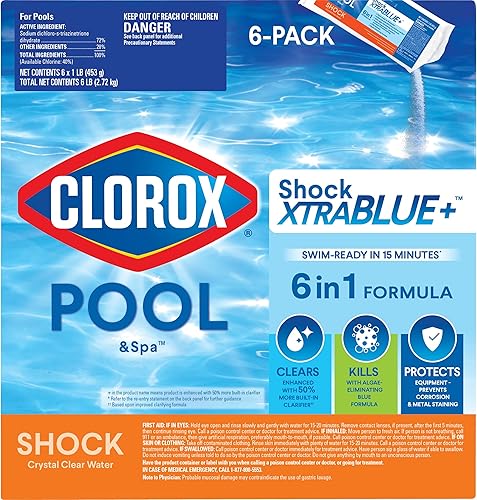
Clorox® Pool&Spa™ Shock XTRABLUE® Plus: Best for fast swim ready return
- 6-Pack
- 1 lb per 12,000 gallons
- Swim ready in 15 minutes per Clorox
- Safe for vinyl, plaster, fiberglass and tile
- 6 in 1 formula
A granular six pack built for quick treatment and a fast return to swimming.
Pros
- 15 minute swim ready claim
- Clear dosing per 12,000 gallons
- Safe for many surfaces
Cons
- Still needs brushing for black algae spots
Clorox XTRABLUE Plus suits owners who want a fast return to swimming after treatment. The granular formula is swim ready in 15 minutes per Clorox, once chlorine falls back to a safe level, which is quicker than many cal hypo options.
The 6 in 1 formula kills bacteria and algae, destroys contaminants that aid filter performance and clears dull, cloudy water. Dosing is clear at 1 lb per 12,000 gallons, with weekly use and extra doses after heavy use, heat or rain.
Clorox says it is safe for vinyl, plaster, fiberglass and tile. That matters when black algae sits on steps and benches, because you can brush and shock those areas without worrying about the surface claim.
The trade off is that a fast swim ready claim does not skip the brush. Black algae spots still need hard brushing before the dose, or chlorine will burn off on the film and leave live cells underneath.
In The Swim Pool Shock: Best bulk cal hypo value
- 12 x 1 Pound
- 68% Cal-Hypo in title, 65% available chlorine
- 1 lb per 10,000 gallons
- Non stabilized chlorine
- For above ground, in ground, spas and hot tubs
Twelve 1 lb bags of cal hypo shock for heavy black algae jobs and repeat treatments.
Pros
- 12 bags for severe cases
- High available chlorine
- Pre dissolve to protect liners
Cons
- Pre dissolving adds a step
In The Swim suits severe black algae jobs where you need many bags on hand. Twelve 1 lb bags at 1 lb per 10,000 gallons let you double dose a mid size pool, brush, vacuum and repeat without a second order.
Cal hypo here is a non stabilized chlorine shock, with 65 percent available chlorine stated. That high available chlorine gives strong oxidation for a first kill, and the non stabilized formula avoids adding CYA during treatment.
In The Swim says to pre dissolve or dilute granules to avoid bleaching a liner, then spread them in the deepest part of the pool and brush if needed. That extra step protects vinyl and above ground liners during a heavy dose.
The trade off is work. Pre dissolving 1 lb bags takes time, and 12 bags is a lot to store.
This pack fits pool owners with a dry chemical shelf and a pool that needs repeated heavy doses, not a one time spot treatment.
Clorox® Pool&Spa™ Shock Clear: Best for cloudy water after algae
- 6-Pack
- Swim ready in 15 minutes
- Suitable for vinyl pools
- Removes contaminants that cause cloudy water and algae
A six pack focused on clearing cloudy water once black algae has been killed and brushed off.
Pros
- Fast swim ready claim
- Vinyl pool suitability stated
- Weekly maintenance use
Cons
- Less dosing detail than other picks
Clorox Shock Clear suits the cloudy phase after black algae is dead. Once spots are brushed off and killed, cloudy water often remains from fine debris, and this six pack targets contaminants that cause cloudy water and algae.
Clorox says the treatment is swim ready in 15 minutes and suitable for vinyl pools. Weekly use fits a normal maintenance routine, which helps stop a light return of algae while the filter catches up.
The description focuses on crystal clear water and removing contaminants, so think of this as a clarity and maintenance shock rather than your strongest first strike for thick black mats. Pair it with brushing and a filter check, not as a substitute for them.
The trade off is dosing detail. Other picks state gallons per bag more clearly, so check your pool volume before you plan how many bags a treatment needs.
For a vinyl pool with haze after treatment, the surface fit is a plus.
Poolife Turbo Shock to Eliminate Algae: Best for strongest cal hypo
- 6 X 1lb Bag
- 78% calcium hypochlorite
- No pre mixing needed
- 1 lb per 10,000 gallons
- No CYA added
The highest stated strength here, in 1 lb bags for fast dissolving treatment of stubborn black algae.
Pros
- 78% calcium hypochlorite stated
- Fast dissolving, no pre mixing
- Safe for vinyl, plaster and fiberglass
Cons
- Six bags may run out in a large pool
Poolife Turbo Shock suits owners who want the highest stated strength in this group. At 78 percent calcium hypochlorite, it is positioned as the strongest chlorine granules here for eliminating algae, bacteria and cloudy water.
The granules dissolve rapidly with no pre dissolving needed, which speeds up a treatment day. Poolife says to use 1 lb per 10,000 gallons weekly, and that the formula combines chlorination, oxidation and algae control.
It is safe for vinyl, plaster and fiberglass, and works in saltwater pools too. Because it adds no cyanuric acid, it avoids chlorine lock and reduces the need for stabilizers during repeat doses.
The trade off is pack size and strength management. Six 1 lb bags may not cover a large pool through a full black algae cycle, and a strong dose still needs testing before swimming.
Store bags dry and use gloves, since cal hypo is a strong oxidizer.
Poolife Rapid Shock for Pool’s Algae: Best pre measured bags
- 1 lb x 6 Bag
- CYA free calcium hypochlorite
- 9-16 ounces per 10,000 gallons
- Fast dissolving, no residue
- For above and in ground pools
Pre measured 1 lb bags with a clear weekly dose range for steady maintenance after black algae is gone.
Pros
- Pre measured bags
- CYA free
- No mixing required
Cons
- Dose range needs testing to fine tune
Poolife Rapid Shock suits owners who want pre measured convenience with a clear dose range. Six 1 lb bags treat 10,000 gallons each at 9 to 16 ounces per dose, so you can start low for maintenance or go higher after a storm or heavy use.
The cal hypo formula dissolves instantly with no residue, and it is CYA free, so repeat weekly doses will not push CYA up and weaken chlorine over time. Poolife positions weekly use as a way to prevent most common problems like cloudy water, algae and bacteria buildup.
It is safe for vinyl, plaster and fiberglass, in both above ground and in ground pools. That makes it a steady follow up shock after a stronger first treatment has killed the main black algae growth.
The trade off is that the dose range needs your test results to fine tune. Start at the low end for a small pool, test free chlorine, and adjust.
If black algae is thick and established, a stronger first dose from another pick may work faster.
Clorox Pool&Spa Shock XtraBlue 1 lb: Best specifically for black algae
- 1 lb
- Kills and prevents green, black and mustard algae
- Won't impact pH per Clorox
- Reduces chlorine odor and eye irritation
- Easy open, easy pour bottle
A single 1 lb option that names black algae directly, suited to spot treatment and follow up doses.
Pros
- Names black algae directly
- Won't impact pH per Clorox
- Simple single bag purchase
Cons
- Single 1 lb size is small for a full pool
Clorox XtraBlue 1 lb suits spot treatment and buyers who want a product that names black algae directly. Clorox says it kills and prevents green, black and mustard algae, kills bacteria, improves filter performance and reduces chlorine odor and eye irritation.
It is a multi functional shock with algae fighting crystals, and Clorox says it will not impact pH or bleach your liner. That pH neutral claim is useful when you are already balancing water during a clean up.
The easy open, easy pour bottle makes a single 1 lb dose simple to handle for a small pool or a spot treatment on steps. Use it as part of weekly maintenance for clear water, per Clorox, rather than relying on one bag for a severe outbreak.
The trade off is size. One pound is small for a full pool with widespread black algae, so you may need several bags or a larger pack from this guide.
For a small pool or a focused spot treatment, it is a direct and simple choice.
How to use pool shock on black algae, step by step
Shock works best as part of a sequence, not as a solo fix. Brush first, shock second, test third, and repeat until spots stop returning.
Step 1: Balance and brush
Test pH and alkalinity before you shock, since chlorine works harder in balanced water. Brush walls, steps, benches and the waterline hard with a stiff brush.
Black algae will drag on the brush if it is still alive.
Step 2: Shock heavy, then vacuum
Use a double dose for the first treatment on thick black growth. Run the pump, spread granular shock across the deep end or pour liquid slowly around the pool.
Vacuum dead algae to waste if your setup allows it, then rinse the vacuum equipment.
Step 3: Test and repeat
Test free chlorine after several hours. If it drops fast or spots still show color, brush again and shock again.
Continue daily until brushing shows no dark residue and free chlorine holds between doses.
Liquid shock or granular shock for black algae?
Granular cal hypo and liquid sodium hypochlorite both kill algae, but they suit different owners. Pick by storage, strength and how you like to dose.
Granular cal hypo shock
Granular shock is stable in a dry shelf, strong per pound and easy to measure in 1 lb bags. Cal hypo adds calcium, so it can raise hardness over time, and granules need dissolving or good circulation.
Most picks here are granular for that reason.
Liquid sodium hypochlorite
Liquid shock pours fast, spreads evenly and leaves no residue. It suits owners with a metering pump or a strong preference for no mixing.
The downside is weight, leaks and strength loss in storage, so buy only what you will use soon.
Which form should you buy?
Choose granular if you want shelf stable bags and high strength per dose. Choose liquid if you want speed and no residue.
Many owners use granular for the first kill, then liquid or granular weekly doses while the pool recovers.
How strong should pool shock be for stubborn black algae?
Strength matters, but dose and brushing matter more. A strong product at a light dose will not kill rooted black algae.
Calcium hypochlorite strength
Poolife Turbo Shock states 78 percent calcium hypochlorite, while In The Swim states 65 percent available chlorine. Higher strength means less product per dose, but you still need to hit the target free chlorine and hold it.
CYA and chlorine lock
CYA free shocks avoid adding stabilizer during treatment. That helps when CYA is already high, because chlorine stays active.
Test CYA before a big treatment, since high CYA can make even a strong shock work slowly.
Dose by pool volume
Use the gallons per bag on your pick, such as 1 lb per 10,000 to 13,500 gallons. A double dose is common for the first black algae treatment, followed by normal doses until spots clear.
Always test before swimming.
Which pool shock suits your pool type and size?
Surface and volume change your pick more than brand loyalty. Match the formula to your liner, plaster or salt system, then size the pack to your gallons.
Vinyl, fiberglass and plaster pools
Most picks here claim safety for vinyl, plaster and fiberglass. Granular users should pre dissolve or spread well to avoid bleaching a liner.
Liquid avoids residue and is a safe choice for delicate surfaces when dosed well.
Saltwater pools
Chlorine shock works in saltwater pools, since the salt cell makes chlorine. Shock the same way, then let the cell and pump bring levels back to normal.
Our pool shock vs liquid chlorine guide explains how the two forms compare for routine use.
Above ground and small pools
A 1 lb bag often treats a small above ground pool in one dose. For opening a pool, best pool opening kits for above ground pools can bundle shock with other start up chemicals.
For a large fixed pool, a 25,000 gallon start up kit may cover more ground, see best pool start up kit 25 000 gallon.
What else do you need with pool shock for black algae?
Shock is one part of the cleanup. Brushing, algae control and testing keep the spots from coming back.
Brush, vacuum and filter checks
A stiff wall brush, vacuum to waste and a clean filter do as much work as the chemical. Algae spores settle in filter media and return through the pump, so check pressure and clean or backwash as needed during treatment.
Algaecide and phosphate control
After shock kills growth, an algaecide helps prevent a quick return while chlorine rebuilds. Our guide to pool chemicals for algae explains which products help after the shock stage and which ones waste money if used too early.
Testing and follow up
Test free chlorine, pH and CYA during treatment, then weekly after. Keep free chlorine in the range your product states, often 1 to 4 ppm for maintenance or higher right after a shock.
Log doses so you can see what holds.
Our verdict on the best pool shock for black algae
Pick HTH 52046, 15 Pack for most pools, because 15 bags at 13,500 gallons each cover a full black algae cycle plus weeks of maintenance. Pick Poolife Turbo Shock if you want the highest stated strength at 78 percent calcium hypochlorite.
Pick Champion liquid if you want pour and go convenience with no residue. Pick Clorox XtraBlue 1 lb for small pools or spot treatment, since it names black algae directly.
Whichever shock you choose, brush hard before every dose and repeat until free chlorine holds. That sequence, not the brand alone, is what clears black algae and keeps it from returning.
Our top 3 picks at a glance
-
1
-
2
-
3
Frequently asked questions
What is the best pool shock for black algae?
HTH 52046 is our top pick for most owners because 15 bags treat 13,500 gallons each. Poolife Turbo Shock lists 78% calcium hypochlorite for a stronger dose, and Clorox XtraBlue names black algae directly, so your pick depends on pool size and how much product you need on hand.
Can shock alone remove black algae?
No. Shock oxidizes and kills algae, but black algae clings to walls, steps and benches.
You still need to brush the spots hard, vacuum to waste where possible, and repeat shocking until brushing no longer shows dark residue on the brush.
How much shock do I need for black algae?
Follow the dose on your chosen product, often 1 lb per 10,000 to 13,500 gallons. Bigger pools and severe growth may need a double dose at first, then a normal dose after brushing.
Test free chlorine and repeat daily until the water holds chlorine and spots stop returning fast.
Is liquid shock or granular shock better for black algae?
Liquid is easier to pour and leaves no residue, while granular cal hypo gives high strength in a stable bag. Many owners use granular shock for the first heavy kill, then liquid or granular weekly doses to keep chlorine up while the surface heals.