Pool Shock vs Liquid Chlorine: Which Should You Use? (November 2026)
Pool shock vs liquid chlorine comes down to form and chemistry. Granular calcium hypochlorite shock works well for weekly shocks and storage, while liquid sodium hypochlorite pours in fast with no residue. Pick based on pool size, CYA, and how you store chemicals.
On this page (15 sections)
- Pool shock vs liquid chlorine: quick verdict
- The two side by side
- What each shock actually is
- Strength and how fast it works
- CYA and chlorine lock
- Calcium buildup and water balance
- Residue, clouds, and stains
- Storage and shelf life
- Cost per shock
- Ease of use
- Pool bleach and household bleach
- Who should buy which
- How to shock with each form
- Saltwater pools and daily chlorine
- Final verdict: pool shock vs liquid chlorine
Pool shock vs liquid chlorine: pick powder for weekly calcium-based shocks and liquid for fast, residue-free shocks. In this pool shock vs liquid chlorine guide, we compared calcium hypochlorite powders and sodium hypochlorite liquids on strength, CYA, stains, storage, and cost.
Our score weighs specs, features and buyer feedback against what you're shopping for. We checked the specs for the four products below and matched each one to a clear use.


Pool shock vs liquid chlorine: quick verdict
Granular shock suits weekly care and easy storage; liquid chlorine suits fast shocks and pump feeding. The pool shock vs liquid chlorine choice is rarely about which one cleans better on day one.
Both kill bacteria and algae when dosed right. The difference shows up in what else they add, how you add them, and how long they keep their strength.
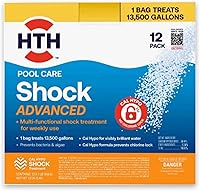
HTH uses calcium hypochlorite powder. CPDI Champion uses sodium hypochlorite liquid at 12.5 percent.
Those two chemistries drive most of the trade-offs below.
The pack sizes also signal intent. HTH sells sealed powder doses in a 6 pack and a 12 pack.
CPDI sells liquid in 2 gallon and 4 gallon totals.
The two side by side
Powder adds calcium and no CYA; liquid adds no calcium and no CYA. That shared lack of CYA matters, because stabilized tablets are the main source of CYA creep.
| Point | Granular calcium hypochlorite | Liquid sodium hypochlorite |
|---|---|---|
| Common form | Powder or granules | Liquid in jugs |
| Chemistry | Calcium hypochlorite | Sodium hypochlorite |
| Adds | Calcium | No calcium |
| CYA added | No | No |
| Residue | Can cloud if not dissolved | No residue |
| Mixing | Dissolve or broadcast | Pour or pump |
| Product | Best for | Form | Type | Pack | Our score |
|---|---|---|---|---|---|
| HTH 52037R | weekly granular shocks | Powder | Calcium hypochlorite | 12 pack | 9.7 |
| CPDI Champion 4 Pack Pool Shock Liquid | large pools and pumps | Liquid | Sodium hypochlorite | 4 x 1 gallon | 9.6 |
| HTH 52036R | smaller starter supply | Powder | Calcium hypochlorite | 6 pack | 9.5 |
| CPDI Champion Pool Shock Liquid Chlorine 12.5 | cost-effective liquid shocks | Liquid | Sodium hypochlorite | 2 x 1 gallon | 9.4 |
For a wider view of swimming pool chemicals, start with your water balance and CYA before you pick a shock form.
Pack size in practice
The HTH 12 pack totals 192 ounces, while the 6 pack totals 96 ounces. That makes the larger pack a weekly routine supply and the smaller pack a starter supply.
The Champion 4 pack totals 512 fluid ounces, while the 2-pack totals 256 fluid ounces. That volume fits large pools, but it also needs shelf space and fast turnover.
What each shock actually is
Calcium hypochlorite is a dry chlorine; sodium hypochlorite is liquid chlorine. Pool shock bleach is a common search term, but bleach strength and additives make household bleach a poor substitute.
Calcium hypochlorite vs sodium hypochlorite is the core chemistry split. The first is a solid that releases chlorine as it dissolves.
The second is already dissolved chlorine in water.
HTH 52037R is a calcium hypochlorite powder in a 12 pack. HTH 52036R is the same formula in a 6 pack.
You get measured doses in sealed packs, which helps with storage.
CPDI Champion liquid is 12.5 percent sodium hypochlorite. The 4 pack gives you four 1-gallon jugs.
The 2-pack gives you two 1-gallon jugs. Both pour straight in or feed a pump.
The HTH formula is described as 4-in-1 because it sanitizes, kills algae, reduces chlorine odor, and restores clarity in one treatment. The Champion formula is described around rapid sanitation and clear water without cloud or residue.
Strength and how fast it works
Liquid chlorine at 12.5 percent often raises free chlorine faster per pour; powder strength varies by dose. Fast-dissolving HTH powder is made for weekly use and quick clarity.
HTH says its 4-in-1 formula kills bacteria and algae, reduces chlorine odor, and restores clarity. It is aimed at solving most common water problems within 24 hours when used as directed.
CPDI Champion says its liquid formula delivers swim-ready water sooner. That claim fits the form, because liquid mixes through the water as you pour it while the pump runs.
Strength on the label is only part of the story. How much you add, pool volume, sunlight, and whether the pump runs all change the result.
Powder strength depends on dissolving fully before it works through the full pool. Liquid strength depends on pouring evenly so no pocket of high chlorine sits in one corner.
CYA and chlorine lock
Neither calcium hypochlorite shock nor liquid chlorine adds CYA. That makes both useful when CYA is already high and you need to shock without overstabilizing.
HTH states its calcium formula sanitizes without adding cyanuric acid. That helps prevent overstabilization or chlorine lock from the shock itself.
Liquid sodium hypochlorite also adds no CYA. That is one reason many owners use it as a shock when tablet use has pushed CYA up.
Our related post on non chlorine shock vs chlorine shock explains when a non-chlorine product fits instead. Chlorine shock is still the usual choice when you need to kill algae or sanitizer demand.
If CYA is high, you still need to drain or dilute water over time. Shock choice stops the problem getting worse, but it does not lower CYA by itself.
Calcium buildup and water balance
Calcium hypochlorite adds calcium with every shock; liquid chlorine does not. Over a season, that difference can move your calcium hardness up.
If your calcium hardness is already high, repeated powder shocks can push it higher. That can raise the risk of scale on surfaces and in heaters.
If calcium hardness is low, powder shocks can help nudge it up. Liquid chlorine leaves calcium alone, so you adjust calcium separately.
Saltwater pools are compatible with the HTH powder. Liquid chlorine also works in saltwater pools, but it can raise salt-system output readings in some setups.
For salt systems, our guide to the best pool salt chlorine generator helps you match output to pool volume. For daily sanitizing, a best pool chlorine tablet dispenser adds CYA, so shock choice matters more.
Testing twice weekly, as HTH suggests with its 6-Way Test Strips, helps you see calcium trends before they become scale. That test routine also shows whether your shock actually raised free chlorine.
Residue, clouds, and stains
Liquid chlorine leaves no residue; powder can cloud water if it is not dissolved well. CPDI states its liquid will not cloud water or leave residue that stains surfaces.
Granular shock should be dissolved in a bucket or broadcast evenly over a large area. Undissolved granules sitting on a liner can bleach or stain vinyl.
HTH powder is described as fast-dissolving. Even so, you should broadcast it while the pump runs and avoid dumping it in one spot.
Liquid chlorine spreads fast, but it is still strong. Pour it slowly in front of a return jet so it mixes instead of pooling.
Cloudiness after powder usually means the granules did not disperse, not that calcium hypochlorite failed. Brushing and running the pump longer helps that cloud clear as the last granules dissolve.
Storage and shelf life
Dry powder stores longer and takes less space; liquid is heavy and loses strength in heat. That trade-off decides a lot for small sheds and garages.
A 6 pack or 12 pack of powder packs flat and stacks. You can keep doses separate and use them one at a time.
Four 1-gallon jugs weigh a lot and spill risk matters. Liquid chlorine also weakens over time, especially in heat, so large packs need faster turnover.
Powder needs dry storage away from heat and other chemicals. Keep calcium hypochlorite away from acids, oils, and organic material.
Liquid needs upright storage and gloves and eye protection when you pour. Keep jugs out of direct sun and use older stock first.
A 2-pack of liquid is easier to rotate than a 4 pack in a hot garage. A 12 pack of powder is easier to store for months because each dose stays sealed until you open it.
Cost per shock
Liquid chlorine often costs less per gallon of chlorine; powder costs less per trip to the store. Measure cost per shock, not cost per pack.
A 2 gallon liquid pack may cover many shocks in a small pool. A 4 gallon pack fits large pools or owners who shock often.
A 6 pack of powder suits a smaller pool or a first season. A 12 pack suits weekly users who do not want to reorder often.
Do not buy more liquid than you can use before it weakens. Do not buy so much powder that it sits for years in a damp shed.
Cost also changes if liquid weakens before you use it, because you may need to pour more to reach the same free chlorine. Powder keeps its strength longer, so a stored dose is more likely to work as labeled.
Ease of use
Liquid wins on ease: pour and run the pump. Powder wins on control: dissolve, broadcast, and store doses.
Your pool size and routine decide which ease matters.
Liquid needs no mixing. You pour it directly into the pool or feed it through a peristaltic metering pump.
CPDI lists that pump option for both liquid packs.
Powder needs a bucket or broadcast method. HTH recommends testing twice weekly with test strips.
That routine pairs well with a weekly powder shock.
For a deeper walk-through, see non chlorine pool shock how to use. It covers timing, pump use, and when to wait to swim.
Pump feeding changes liquid use from an occasional shock to a repeatable routine. That matters for owners who want steady chlorine without handling jugs each time.
Pool bleach and household bleach
Pool shock bleach searches usually point to strength, not to household bleach. Household bleach often has additives and lower strength, and it is not labeled for pools.
Use only products labeled for pool use. Pool liquid chlorine at 12.5 percent is made for pools and carries NSF/ANSI 60 certification on the CPDI packs.
Calcium hypochlorite powder is also labeled for pools. That labeling covers dose rates, safety steps, and storage rules you should follow.
Never mix pool chemicals with acids or other cleaners. Pour one chemical at a time and let the pump run between additions.
Certification detail matters here because NSF/ANSI 60 sets quality and safety expectations for pool chemicals. Household bleach does not carry that same pool labeling for dose and use.
Who should buy which
Pick HTH powder if you want weekly shocks, dry storage, and no CYA. Pick CPDI liquid if you want fast pours, pump feeding, and no residue.
The pool shock vs liquid chlorine split is practical, not medical.
Pick the best calcium hypochlorite pool shock style powder if you store chemicals in a small space. Powder doses are light and sealed.
Pick liquid if you have a large pool, a pump feeder, or a history of cloudy water from powder. No mixing is a real time saver.
Pick liquid if calcium hardness is high. Pick powder if calcium hardness is low and you want each shock to add a little calcium.
Pick the 12 pack if you shock weekly and want fewer reorders. Pick the 6 pack if you are testing the routine or have limited storage.
Pick the 4 pack if you run a large or commercial style pool. Pick the 2-pack if you want liquid speed with less weight to move and store.
How to shock with each form
Shock in the evening, pump on, and test before swimming. That routine works for both forms and helps chlorine work without sunlight burning it off.
For liquid, pour slowly in front of a return while the pump runs. Let the pump run for at least a few hours, then test free chlorine.
For powder, dissolve in a bucket or broadcast evenly. Keep the pump on and brush the floor so granules do not settle in one place.
Read our guide on can you use liquid chlorine to shock pool for dose ideas by pool size. Always follow the dose on your product label for your volume.
Evening shocks work best because sunlight breaks down free chlorine quickly. A night shock gives the chlorine more contact time to kill bacteria and algae.
Saltwater pools and daily chlorine
Both shock forms work in saltwater pools; liquid can affect salt cell readings. Run the pump and let the cell catch up before you judge output.
If you compare systems, our salt water vs chlorine pool guide explains how salt chlorine works day to day. A salt system still needs shocks after heavy use or algae.
Do not over-shock a salt pool and then raise cell output at the same time. Test first, shock once, and let the system respond.
HTH lists compatibility with saltwater systems for its powder. That means you do not need a separate shock just because the pool makes its own chlorine.
Final verdict: pool shock vs liquid chlorine
Choose liquid chlorine for fast, residue-free shocks in large pools. Choose granular shock for storage, control, and weekly care in smaller pools.
That is the clear rule for this pool shock vs liquid chlorine comparison.
If CYA is high, both forms help because neither adds CYA. If calcium is high, liquid is safer.
If storage is tight, powder wins.
Next step: test your water, check CYA and calcium, then pick the form that fits your pool and storage.
Frequently asked questions
Is pool shock the same as liquid chlorine?
No. Pool shock often means granular calcium hypochlorite, while liquid chlorine is sodium hypochlorite in water.
Both sanitize and shock, but powder adds calcium and liquid adds no calcium.
Strength, storage, and dosing differ between the two forms.
Can you shock a pool with liquid chlorine?
Yes, you can shock with liquid chlorine if you dose for the free chlorine you need. Liquid chlorine at 12.5 percent can raise chlorine fast and clear cloudy water.
Our guide on can you use liquid chlorine to shock pool explains dosing and timing in plain steps.
Does liquid chlorine add CYA like tablets?
No, liquid sodium hypochlorite does not add cyanuric acid. That differs from stabilized chlorine tablets, which do add CYA over time.
If CYA is already high, liquid chlorine helps you avoid making it worse while you shock.
Which shock is safer for vinyl pools?
Both forms can work in vinyl pools when you add them correctly and let them dissolve or dilute. Granular shock should be broadcast so undissolved granules do not sit on the liner.
Liquid chlorine spreads quickly, but you should still pour it while the pump runs.