Pool Shock vs Chlorine Tablets: What Is the Difference? (November 2026)
Pool shock is a fast, high dose for cleaning and clearing water; chlorine tablets are a slow, daily dose for keeping water sanitized. In pool shock vs chlorine tablets, you normally need both, at different times.
On this page (10 sections)
- Pool shock vs chlorine tablets: the quick verdict
- What each one actually does in your pool
- The two side by side
- How fast each one works
- Stabilized vs unstabilized: the CYA question
- How you use each one day to day
- Size, storage and what you actually buy
- Cost per season and value over time
- Which one should you buy first
- The final call on pool shock vs chlorine tablets
Pool shock is a fast, high dose for a reset; chlorine tablets are a slow, daily dose for maintenance. In pool shock vs chlorine tablets, most pool owners need both, used for different jobs at different times.
Shock is made to work in hours. Tablets are made to keep working for days.
That one difference explains almost every other difference in this guide.

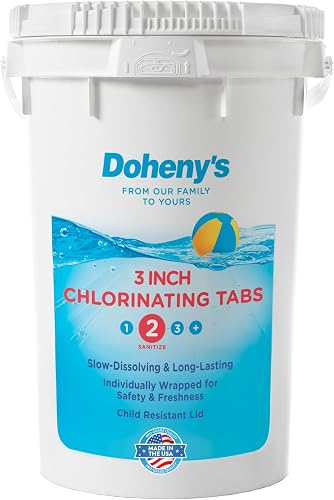 Best for long lasting tablets
Doheny's Doheny’s 3-Inch Stabilized Chlorine Tablets
Pool shock vs chlorine tablets: the quick verdict
Use shock to clear a problem, and tablets to prevent the next one. Shock handles the spike.
Tablets handle the baseline.
Think of shock as a deep clean. Think of tablets as daily hand washing.
Our pool chemicals guide places both products in the same sanitizer category, but they do not do the same work. One corrects.
One maintains.
What each one actually does in your pool
Shock sanitizes fast and clears water; tablets sanitize slowly and keep it sanitized. Speed sets the role.
Pool shock delivers a strong dose of chlorine in a short time. For a comparison with liquid chlorine, read pool shock vs liquid chlorine.
It kills bacteria and algae, breaks down oils and other organic material, and helps restore clarity.
Chlorine tablets, often made from tri-chlor, dissolve a little at a time. They keep a steady level of chlorine in the water as long as they sit in a floater, feeder or skimmer.
Why tablets cannot replace shock
A tablet in a floater might take days to dissolve fully. That slow release cannot clear a green pool in one evening.
If algae is already growing, daily low doses may not catch up. For stubborn cases, see shock for black algae.
The water stays warm, the sun feeds algae, and the tablet dose arrives too slowly.
Shock solves that timing problem. It raises chlorine quickly, holds it high for a short period, then lets the level fall back to a normal range.
Why shock cannot replace tablets
Shock is strong, then it fades. The chlorine breaks down in sunlight and as it reacts with contaminants in the water.
Once that short period ends, your pool has no steady protection left. Bacteria can return within days, especially in warm water.
Tablets keep feeding chlorine back in. That steady feed is what keeps a clean pool clean between shock treatments.
The two side by side
The table shows the core split: shock for speed, tablets for duration. Use it as a quick check before you dose.
| Point | Pool shock | Chlorine tablets |
|---|---|---|
| Main job | Reset and clear water | Maintain sanitized water |
| Speed | Fast, often within 24 hours | Slow, over days or weeks |
| Form | Powder, often Cal Hypo based | Solid 3-inch tablets |
| Dosing | Single treatment dose | Continuous small release |
| Dissolving | Fast dissolving | Slow dissolving |
| CYA effect | Some types add none | Stabilized types add CYA |
| Best time | After a problem or heavy use | Daily, via floater or feeder |
| Storage use | Small packs for weekly use | Large buckets for a season |
The HTH shock products use a Cal Hypo based formula. HTH says that formula sanitizes without adding cyanuric acid, or CYA, to prevent overstabilization.
The tablet products use stabilized tri-chlor. Doheny's says each tablet is 99% pure tri-chlor with 90% available chlorine.
In The Swim says its tablets are 99% Trichloro-S-Triazinetrione with 90% stabilized chlorine.
How fast each one works
Shock works in hours; tablets work over time. That speed gap decides which one you reach for first.
HTH says its shock treatment is for weekly use and can solve 90% of pool water problems within 24 hours. That fits the role of shock: a short, strong treatment to restore clarity.
Tablets work the other way. Doheny's says its highly compressed tablets dissolve slower for longer lasting performance.
In The Swim also describes its tablets as slow dissolving for consistent chlorination.
When speed matters most
Speed matters after a party, a storm, or a week of hot and sunny weather. Swimmers add sweat, sunscreen and body oils.
Rain adds debris and dilutes chlorine.
In those moments, waiting for a tablet to catch up can let cloudiness or algae take hold. A shock treatment gives you a faster path back to clear water.
Speed also matters for odor and eye irritation. Strong chlorine odor often means chloramines are present, which form when chlorine reacts with nitrogen from sweat and urine.
Shock helps break down those compounds. After the reaction, the water often smells fresher and feels less harsh.
When slow matters more
Slow release matters on normal days. You want chlorine present each day without a spike that you must manage.
A floater with tablets keeps dosing while you swim, work or sleep. You check the floater and replace tablets when they shrink.
That steady approach uses less attention. It also avoids the swing of high dose, then low dose, then no dose that shock alone would cause.
Stabilized vs unstabilized: the CYA question
Stabilized tablets protect chlorine from the sun; Cal Hypo shock avoids adding CYA. That trade off affects long term balance.
CYA, or cyanuric acid, acts like sunscreen for chlorine. Sunlight breaks chlorine down, and CYA slows that loss.
Stabilized tablets include CYA for that reason.
Doheny's says its tablets are pre-stabilized against UV rays to prevent chlorine burn off. In The Swim says its tablets are sun stabilized to resist depletion from harmful UV rays.
The risk with too much CYA
CYA builds up over time with stabilized tablets. Each dose adds a little more, and pools do not remove it except by draining and refilling water.
Too much CYA can make chlorine less effective, even when test results show chlorine present. That state is sometimes called chlorine lock.
That is why testing matters. Long term parts still need checks.
Why HTH shock avoids CYA
HTH says its Cal Hypo based formula sanitizes without adding CYA. That helps prevent overstabilization when you shock the pool.
For pool owners who already use stabilized tablets, a non CYA shock can be a useful choice. It clears the water without pushing CYA higher for that treatment.
For saltwater pools, HTH says its shock is compatible with all pool types, including vinyl lined pools and saltwater systems.
How you use each one day to day
Shock is a single dose you add and wait on; tablets are a system you set up and check. The routine is different for each.
For shock, you follow the dose on the package for your pool size. You add the powder as directed, let it work, then test the water before swimming.
HTH says to use its shock for weekly maintenance to restore crystal clarity. It also says to test and balance water twice weekly with test strips for best results.
For tablets, you place them in a floater, skimmer or automatic feeder. Doheny's says to place its 3-inch tablets in a pool skimmer, floater or feeder for hassle free distribution.
In The Swim says its tablets are ideal for floaters or automatic feeders. Our guide on how to use chlorine tablets in pool walks through that setup in more detail.
The weekly rhythm that fits both
A simple rhythm works for many owners. Keep tablets in the floater for daily sanitizing.
Shock once a week or after a problem.
Test the water on a steady schedule. That tells you whether tablets are keeping up or whether shock is due sooner.
Our best pool chlorine tablets picks help you choose a tablet that fits your feeder or floater. Size matters here, since most feeders are built for 3-inch tablets.
Store both products safely and separately. A pool chemical storage cabinet helps keep powders and tablets dry, closed and away from children.
Size, storage and what you actually buy
Shock comes in small packs for repeated short use; tablets come in large buckets for long term supply. The pack size should match how you store chemicals.
The HTH 52037R is a 12 pack of shock powder. The HTH 52036R is a 6 pack of the same formula.
The 12 pack is listed at 192 ounces total and the 6 pack at 96 ounces total.
Doheny's and In The Swim both sell 50 lb buckets of 3-inch tablets. That size suits a full season for many pools, but it needs dry storage space with a secure lid.
Which size fits your pool
A smaller above ground pool may go through tablets slowly. A large inground pool in a hot climate will use them faster.
Our picks for the best chlorine tablets for inground pool focus on the larger, warmer pools that need steady supply. Our picks for the best chlorine tablets for above ground pool focus on smaller volumes where a bucket can last a long time.
For shock, the 6 pack suits a first season or a small pool. The 12 pack suits an owner who shocks weekly and wants fewer reorders.
Storage rules for both
Keep powders and tablets dry. Keep lids closed.
Keep them away from children and pets.
Doheny's says its bucket has a childproof locking lid. That design helps with home storage, since chlorine products should stay out of reach.
In The Swim says its tablets do not expire and are non-perishable, but best used within 2 years of manufacture. Store them in a cool, dry place.
Cost per season and value over time
Tablets cost less per day; shock costs less per reset, but neither replaces the other. Value comes from using each for its own job.
A 50 lb bucket of tablets spreads its cost across weeks of daily use. You use a small amount each day, so the cost per swim stays low.
Shock packs cost more per dose, but you use them in short bursts. A weekly shock pack can last for months if you dose by pool size.
Where owners waste money
Owners waste money when they use shock every day instead of tablets. That gives strong water for a few hours, then no steady protection.
Owners also waste money when they rely on tablets alone during a problem. Extra tablets in a floater still dissolve slowly, so the problem can grow while you wait.
The cheaper path is usually the correct path: tablets daily, shock when needed, testing to guide both.
A note on safety and testing
Neither product should be mixed with other chemicals unless the label says to do so. Follow the package directions for dose, timing and swim wait time.
Test before you swim after any shock treatment. HTH recommends testing and balancing twice weekly, and that habit helps you catch low chlorine early.
If water stays cloudy after shock, check filtration as well as chemistry. Clean water needs clear circulation, not just the right dose.
Which one should you buy first
Buy tablets first for daily care, and add shock for weekly resets. That order covers both jobs from the start.
If your water is already clear, start with tablets in a floater or feeder. Add a shock pack for your weekly reset or for the first storm that rolls in.
If your water is cloudy or green, start with shock to clear the problem. Once the water is clear and test results are normal, set up tablets for maintenance.
Who should buy HTH shock
Choose HTH 52037R if you want a 12 pack for weekly use through the season. Choose HTH 52036R if you want the same formula in a 6 pack and have less storage space.
Both use a fast dissolving 4-in-1 formula. HTH says it kills bacteria and algae, reduces chlorine odor and irritation, and quickly restores crystal clarity.
Both are Cal Hypo based and add no CYA. That makes them a fit for owners who already use stabilized tablets and want to avoid adding more CYA with each shock.
Who should buy stabilized tablets
Choose Doheny's if you want individually wrapped 3-inch tablets in a 50 lb bucket with a childproof locking lid. Choose In The Swim if you want a similar 50 lb bucket for floaters or automatic feeders.
Both deliver slow dissolving, UV protected chlorine. That slow release is the point: steady sanitation without daily dosing.
Our best pool chlorine tablets guide helps you compare tablet options by size, dissolution and storage needs for your pool type.
The final call on pool shock vs chlorine tablets
For pool shock vs chlorine tablets, the winner depends on the moment, not the product. Shock wins for speed.
Tablets win for steady care.
Pick shock when water is cloudy, smelly, green or after heavy use. Pick tablets for the daily baseline that keeps clean water clean.
A good setup uses both. Tablets in the floater do quiet daily work.
Shock steps in when the water needs a fast reset.
That mix keeps your pool ready for cannonballs, as HTH puts it, without overusing either product.
If you are still deciding between chemical care and mechanical care, our guide on What Is the Difference Between a Pool Vacuum and a Robotic Cleaner? helps you plan the other half of pool maintenance. For coverage patterns, see What Is the Difference Between Random and Mapped Pool Coverage?.
Start with tablets for daily use, add shock for weekly resets, and test the water twice a week. That routine gives you clear water with less waste and less guesswork.
Frequently asked questions
Is pool shock the same as chlorine tablets?
No. Pool shock is a fast, high dose used to clear and sanitize water in hours, while chlorine tablets dissolve slowly to maintain a steady chlorine level day to day.
You use shock for a reset and tablets for ongoing care, not one in place of the other.
Can you use chlorine tablets instead of shock?
Tablets alone will not clear cloudy water or kill algae quickly because they release chlorine slowly. Shock gives a strong short dose to solve a problem fast, then tablets keep the water sanitized after the shock has done its work.
How often should you shock a pool?
HTH describes its shock as a weekly treatment, but your need depends on use, heat, rain and algae signs. Shock after heavy use, storms or visible cloudiness, then test the water before swimming again.
Why do tablets say stabilized?
Stabilized tablets contain cyanuric acid, or CYA, which helps protect chlorine from sunlight. That slows daily chlorine loss in sun, but too much CYA over time can make chlorine less effective, so test and balance regularly.


