Salt Water vs Chlorine Pool: Which Should You Choose? (November 2026)
Pick salt water if you want softer water and less daily chemical handling, and pick traditional chlorine if you want the lowest upfront cost and full control. In this salt water vs chlorine pool comparison, the sanitizer matters less than the maintenance routine you will actually keep.
On this page (12 sections)
- Salt water vs chlorine pool: the quick verdict
- What a salt water system actually does
- How traditional chlorine sanitizes a pool
- Salt water vs chlorine pool side by side
- Water feel, eyes and skin comfort
- Upfront cost and running cost
- Maintenance routines compared
- Chlorine tablets in a salt vs chlorine pool choice
- Sun, stabilizer and chlorine burn-off
- Safety, storage and handling
- Which pool type suits your routine?
- Final verdict on salt water vs chlorine pool
Pick salt water if you want softer water and less daily chemical handling, and pick traditional chlorine if you want the lowest upfront cost and full control. In this salt water vs chlorine pool comparison, the sanitizer matters less than the maintenance routine you will actually keep.
A salt water pool is still a chlorine pool. The salt cell turns salt into chlorine, so algae and bacteria are killed the same way.
The real choice is how you add that chlorine. A cell doses it for you, while tablets and liquid put you in charge of every dose.
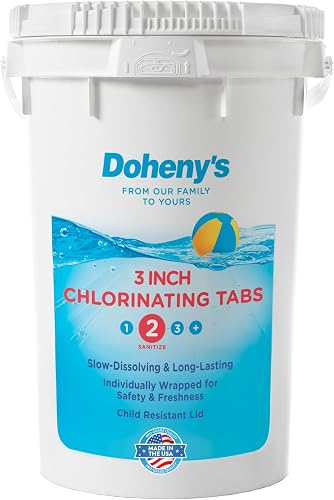 Best for bulk chlorine supply
Doheny's Doheny’s 3-Inch Stabilized Chlorine Tablets
 Best for smaller chlorine pools
TABIT Chlorine Tablets 3 inch 25 Pounds
Salt water vs chlorine pool: the quick verdict
Salt water wins on feel and convenience; traditional chlorine wins on start-up cost and control. Most owners choose well when they match the system to the routine they will keep all season.
Salt water usually feels softer and less sharp on skin and eyes. The reason is a steadier, lower chlorine level rather than a different kind of sanitizer.
Traditional chlorine usually costs less to install or convert. You can start with tablets, liquid or a feeder and adjust the dose for a party, a storm or a hot week.
Choose salt if you swim often and dislike handling strong chemicals. Choose chlorine if you want the simplest system and you do not mind testing and dosing on a schedule.
Pool size also shapes the quick choice. A small above-ground pool may not justify a cell, while a large in-ground pool used daily may benefit from steady cell output.
Season length matters too. A short summer may suit tablets, while a long season may make salt handling feel more worthwhile.
What a salt water system actually does
A salt cell makes chlorine from salt, so you add salt and let electricity do the dosing. That steady output is why the water often feels gentler than a pool dosed in strong bursts.
You add pool salt until the water reaches the level your cell maker specifies. The cell then splits the salt into chlorine as water passes through it.
This system still needs testing. Salt level, chlorine level, pH, alkalinity and stabilizer all change with heat, rain and use.
A best pool salt chlorine generator guide helps you match a cell to your pool size. Our how to do a salt water pool guide walks through the conversion steps in order.
Salt does not disappear the way chlorine does. Rain, splash out and backwashing lower the salt level, so periodic testing and top ups are part of the routine.
Cell output can be adjusted by the hour or by a percentage setting. That control helps in peak heat, but a set and forget approach can drift out of range.
How traditional chlorine sanitizes a pool
Traditional chlorine uses tablets, granules or liquid that you place or pour into the water. You control the strength, so you can react fast to an algae bloom or a heavy swim weekend.
Three-inch tablets are the common choice for steady daily sanitizing. They sit in a floater, skimmer or feeder and dissolve slowly as chlorine is needed.
Liquid chlorine works faster for shocking a cloudy pool. Granules are handy for spot treatment, but they cost more per dose than tablets for routine use.
Our guide to swimming pool chemicals explains each type. If you prefer tablets, the best 3 inch chlorine tablets for pool picks are a good place to start.
Tablet dissolving depends on water flow through the dispenser. More open vents mean more chlorine per day, while fewer vents mean a slower release for cooler weeks.
That adjustability is a strength of traditional chlorine. You can close a feeder after a storm clears, or open it wider before a weekend of heavy swimming.
Salt water vs chlorine pool side by side
The systems differ most in dosing, upkeep and the feel of the water. Both kill bacteria and algae when the chlorine level stays in range.
| Point | Salt water pool | Traditional chlorine pool |
|---|---|---|
| Sanitizer | Chlorine made by a salt cell | Tablets, liquid or granules you add |
| Water feel | Softer, steadier chlorine level | Can feel sharper after a fresh dose |
| Upfront cost | Higher for cell, board and salt | Lower, often just tablets and a dispenser |
| Weekly work | Test water and check cell output | Test water and refill or dose chlorine |
| Main risk | Scale on the cell and low salt | Chlorine burn-off in strong sun |
Neither option removes the need to brush walls and vacuum the floor. Debris in the water raises chlorine demand no matter which system you run.
Neither option is chemical-free. Salt lowers the amount of chlorine you handle, but you still manage salt, stabilizer and the rest of your pool chemicals and sanitizers routine.
Energy use also differs between the two systems. A salt cell adds power draw whenever the pump runs, while a tablet feeder uses no extra electricity at all.
Water feel, eyes and skin comfort
Salt water usually feels softer because the chlorine level stays low and steady. Traditional chlorine can swing from strong to weak between doses.
Many swimmers notice less eye sting in a salt pool. That is mainly because the cell replaces chlorine as it is used, instead of a big dose fading over days.
Sensitive skin can still react to chlorine, and salt water does not remove that risk. A salt pool with a high chlorine reading will sting just like a tablet pool.
If you choose tablets for comfort, use a feeder or floater. That spreads the dose evenly and avoids strong pockets of chlorine near the skimmer.
Rinsing after a swim helps with comfort in either system. It removes chlorine from skin and hair before it can dry and irritate.
Children who swim daily may notice the difference in feel more than occasional swimmers. A steady chlorine level can make daily swims more pleasant for frequent users.
Upfront cost and running cost
Traditional chlorine costs less to start; salt water can cost less in chlorine products over time. The cell and salt are the big first purchase for a salt pool.
A chlorine pool needs a dispenser or feeder plus tablets or liquid. That is a small start, and you can upgrade the feeder later if you want more automation.
A salt conversion needs a cell, a control board, plumbing and pool salt. You also need to plan for a replacement cell, since cells wear out with use.
Our best salt chlorine generator for inground pool guide helps you size that purchase. For a salt pool, the best pool salt cell cleaner is worth buying early so scale does not choke the cell.
Running cost for tablets depends on pool volume and how often the water is used. Larger pools and warmer climates will use a 3-inch tablet faster than a shaded, small pool.
Salt running cost depends on cell life and salt top ups rather than weekly tablet purchases. An undersized cell will run at high output and may wear faster than a properly sized one.
Maintenance routines compared
Salt water pool maintenance is lighter on dosing; chlorine pool maintenance is lighter on equipment care. Both need testing, brushing, skimming and vacuuming every week.
With salt, you check salt and chlorine levels, then clean the cell when scale builds. A dirty cell makes less chlorine even when the salt reading looks fine.
With tablets, you check the feeder or floater, add tablets before they run out and shock after storms or heavy use. Our best liquid chlorine for pool picks help when you need a fast dose.
Heat and sun raise chlorine demand in both systems. A salt cell may need a higher output setting in August, while a tablet pool may need more feeder openings.
Filter care affects both systems in the same way. Clear water lets chlorine work on bacteria instead of spending itself on debris and algae.
Alkalinity and pH control also matter for both. Balanced water protects chlorine performance and helps keep the cell, plaster and equipment in better condition.
Chlorine tablets in a salt vs chlorine pool choice
Tablets are the simplest way to run a traditional chlorine pool all season. A 3-inch tablet dissolves slowly, so one tablet can sanitize for days under normal conditions.
The Doheny's bucket holds 50 lb of individually wrapped 3-inch tablets. Each tablet is 99% pure tri-chlor with 90% available chlorine, and the stabilizer helps resist UV burn-off.
The TABIT bucket holds 25 lb of 3-inch slow-dissolving tablets. TABIT says each tablet typically treats up to 10,000 gallons and lasts several days when used as directed.
Both fit floaters, feeders and skimmers. Both suit vinyl liner, fiberglass, concrete, plaster and tile pools when you follow the dose directions.
How tablet size and wrapping affect daily use
A 3-inch tablet has more mass than a 1-inch tablet, so it dissolves over a longer period. That longer period means fewer refills of the floater or feeder during a normal week.
Individually wrapped tablets help with handling and storage. The Doheny's tablets are wrapped to limit dust and odor, and TABIT focuses on slow dissolving for steady release.
Tablet hardness also shapes the release rate. A highly compressed tablet dissolves slower, which can keep chlorine steadier when the feeder vents are set correctly.
A feeder still needs attention even with slow dissolving tablets. Checking the tablet level every few days prevents the pool from running without chlorine during hot weather.
Sun, stabilizer and chlorine burn-off
Stabilizer matters in both systems because sun breaks chlorine down fast. Without it, you will dose more often and spend more on chlorine.
Tablets are usually pre-stabilized, which is why they last longer in a sunny pool. Liquid chlorine has no stabilizer, so it fades faster when the sun is strong.
Too much stabilizer is also a problem. It can lock chlorine so it works more slowly, while algae grows in water that tests as if it were safe.
Test stabilizer a few times each season and adjust your dose to the reading. That one habit saves money in a salt pool and a tablet pool alike.
Salt water pools still need stabilizer for the same reason. The cell makes chlorine, but sunlight can break that chlorine down before it sanitizes the water.
Safety, storage and handling
Salt water reduces handling of strong chlorine products, but it does not make pool care risk-free. You still store salt, acid and shock with care.
Chlorine tablets need dry, ventilated storage away from children and pets. The Doheny's bucket has a childproof locking lid, and the tablets are individually wrapped to limit dust and odor.
Never mix chlorine products with acids or other chemicals unless the maker directs it. Keep liquid chlorine and tablets in their original containers and out of direct heat.
A salt cell adds electrical equipment near water. Follow the maker’s wiring and grounding rules, and have a qualified person handle the install if you are unsure.
Handling tablets with dry hands and keeping the bucket sealed helps keep them effective. Moisture can damage tablets in storage and change how they dissolve later.
Which pool type suits your routine?
Pick salt water if you want the cell to dose chlorine while you swim more and handle less. Pick traditional chlorine if you want low cost and direct control.
Choose salt if you host swimmers often and want a steadier chlorine level. It suits owners who will clean the cell on schedule and check salt each month.
Choose chlorine tablets if you want a simple feeder and a bucket that lasts for weeks. It suits owners who test weekly and do not mind refilling a floater.
Our guide on how does a robotic pool cleaner filter water can help either system. Cleaner debris means lower chlorine demand, so your salt cell or tablets work less hard.
Travel schedules can also tip the choice. A cell can keep dosing while you are away if power and circulation stay on, while a tablet feeder depends on tablets lasting until you return.
Daily swimmers often prefer salt for comfort, while weekend pools often suit tablets for simplicity. Matching the system to how often the pool is used keeps maintenance realistic.
Final verdict on salt water vs chlorine pool
Choose salt water for softer water and easier daily dosing, and choose traditional chlorine for lower cost and direct control. Your calendar matters more than the chemistry, since both pools need clean water and steady chlorine.
If you go salt, size the cell to your pool, add the right amount of salt and clean the cell before scale slows it down. That routine keeps the water steady with less handling.
If you stay with chlorine, use 3-inch tablets in a feeder for steady dosing and keep liquid on hand for shocks. The Doheny's 50 lb bucket suits a large pool all season, while the TABIT 25 lb bucket suits a smaller pool that needs less at a time.
Start with the system you will maintain every week without fail. A well-kept chlorine pool beats a neglected salt pool, and a well-kept salt pool beats a chlorine pool you dread dosing.
Frequently asked questions
Is a salt water pool the same as a chlorine pool?
A salt water pool still uses chlorine to sanitize. The salt cell converts dissolved salt into chlorine, so the difference is how the chlorine is made and dosed, not whether chlorine is present.
Which is cheaper over a full season?
Traditional chlorine usually costs less at the start because you skip the salt system, cell and boards. Salt can cost less in tablets and liquid chlorine over time, but cell replacement and salt add their own costs.
Is salt water pool maintenance easier?
Salt water pool maintenance is often simpler day to day because the cell makes chlorine on schedule. You still need to test the water, brush, vacuum and clean the cell, so the savings are mainly in chemical handling.
Can you swim right after adding chlorine tablets?
Wait until the tablets are fully dissolved and the chlorine level is back in the safe range for your pool. Never swim with undissolved tablets in a floater or feeder in reach of swimmers.
Should you convert a chlorine pool to salt?
Convert if you dislike storing and handling chlorine products and you will keep the cell clean. Keep traditional chlorine if you want simple, low-cost sanitizing and you are fine testing and dosing each week.


